





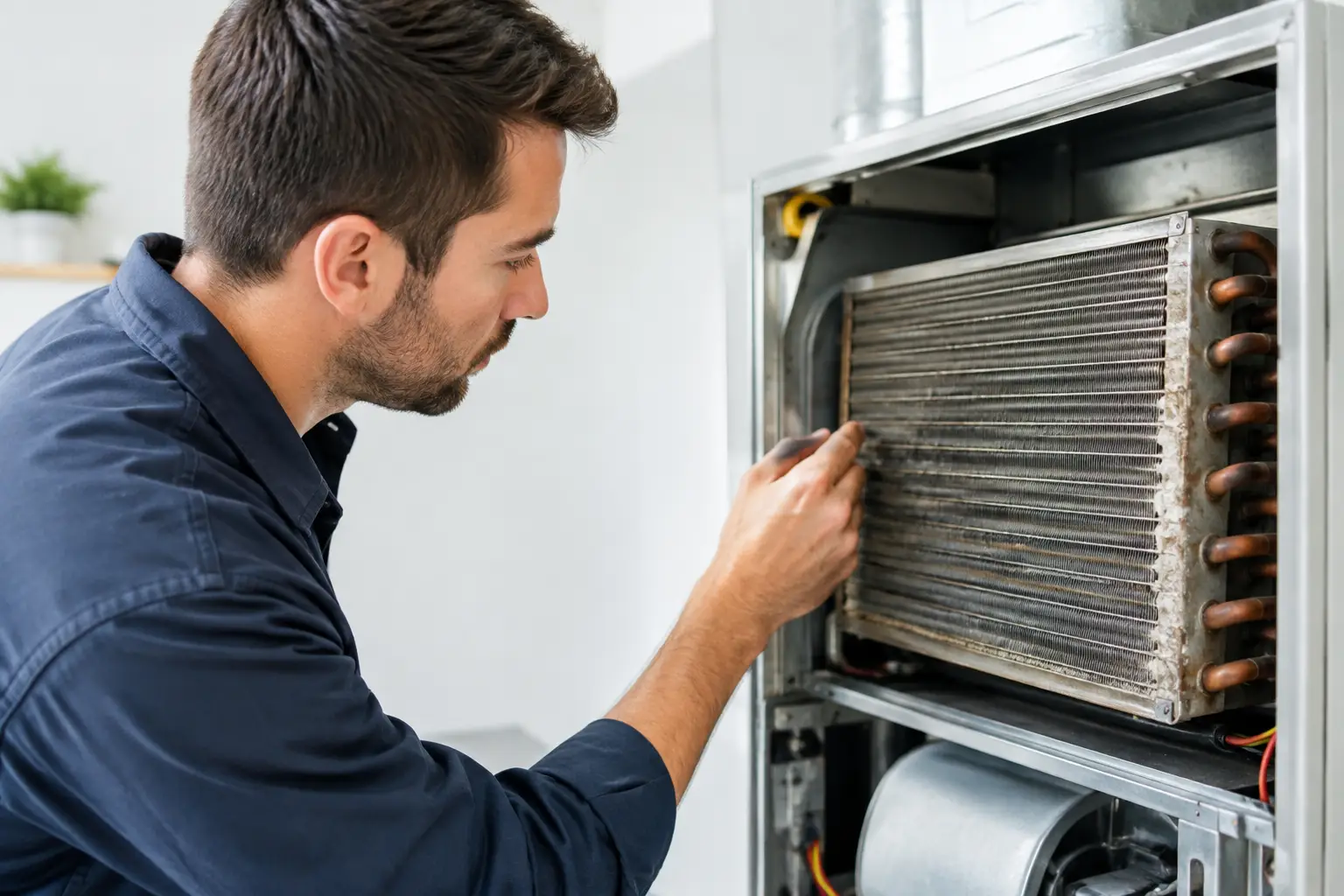

A boiler leaking water is more than an inconvenience, especially when Chicago temperatures drop and your home or building depends on steady heat. The source may be a minor fitting or a problem that affects system pressure, safety, and long-term reliability. Acting promptly can limit water damage and help prevent a small repair from becoming a larger heating emergency.
What to Do When You Notice a Boiler Leak
Start by looking at the amount of water and where it is collecting. A few drops under a pipe connection require attention, but a growing puddle, active dripping, or water coming from the boiler cabinet calls for faster action. Place a towel or shallow container under the leak if you can do so safely, keeping water away from electrical outlets and controls.
If the leak is substantial, turn off the boiler using its normal on-off control if you know where it is. Do not remove panels, disconnect wiring, or attempt to repair gas, electrical, or pressurized components. If you smell gas, hear hissing near a gas line, or see water near electrical equipment, leave the area and contact emergency services and a qualified HVAC professional.
Take a clear photo of the leak and note when you first noticed it. Is the system heating normally? Did the leak begin after the boiler ran? Is the pressure gauge reading higher than usual? Those details help a technician narrow down the cause without guessing.
Why Is Your Boiler Leaking Water?
Boilers can leak for several reasons, and the location of the water often provides the first clue. A trained technician should confirm the cause before recommending a repair, since replacing the wrong part can leave the underlying problem unresolved.
Loose connections and worn seals
Pipes, valves, pumps, and fittings can develop slow leaks as seals age or connections shift over many heating seasons. These leaks are often found around joints or beneath a circulation pump. In some cases, a technician can replace a gasket, seal, or fitting and restore reliable operation. The important question is why the seal failed – age, vibration, corrosion, or improper system pressure can all play a role.
High boiler pressure
A hot-water boiler needs pressure to move heated water through radiators, baseboards, or in-floor piping. Too much pressure can force water out through the pressure relief valve, commonly through a pipe that terminates near the floor. Water from this pipe is a warning sign, not a nuisance to ignore.
Pressure may rise because of a problem with the expansion tank, a faulty fill valve, or another issue affecting the closed-loop system. Simply draining water or repeatedly resetting the boiler may temporarily change the symptom without correcting the cause. A professional can test the pressure controls and determine whether a targeted repair is appropriate.
Circulator pump leaks
The circulator pump is responsible for moving heated water through the system. A leak around the pump may result from a worn seal, deteriorated gasket, or corrosion. Because the pump is an electrical and mechanical component, it should be inspected by a qualified technician rather than repaired as a homeowner project.
A failing pump can also create uneven heat, unusual noises, or longer heating cycles. Addressing it early can help protect other components and reduce the chance of a no-heat call during severe winter weather.
Corrosion inside or around the boiler
Rust, mineral buildup, and corrosion can weaken pipes, fittings, and the boiler itself. Older equipment is more vulnerable, particularly when it has gone years without consistent maintenance. A technician may find corrosion on an external connection that can be repaired, or identify damage to a major internal component.
The trade-off is straightforward: a focused repair can make sense when the rest of the system is sound, while repeated leaks from aging or corroded components may make replacement the more dependable long-term choice. A clear inspection should explain both options, along with the condition of the equipment, rather than pushing a replacement before the facts are known.
A damaged heat exchanger
A leak from inside the boiler can be more serious. In some systems, a cracked or deteriorated heat exchanger may allow water to escape from the unit. This is not a repair to delay, particularly if the boiler is losing pressure, shutting down, or showing signs of corrosion.
Heat exchanger damage can be influenced by age, poor water quality, repeated overheating, or years of deferred maintenance. Depending on the boiler’s condition and the availability of parts, repair may be possible, but replacement is sometimes the safer and more practical recommendation.
Condensation that looks like a leak
Not every puddle means the boiler itself is failing. High-efficiency boilers produce condensate during normal operation, which drains through dedicated piping. A blocked, damaged, or disconnected condensate line can allow water to collect near the unit.
Condensate issues still deserve professional attention. The drain path, trap, and related components must be set up correctly to protect the boiler and prevent recurring water problems.
How a Professional Diagnoses a Boiler Water Leak
A dependable repair begins with finding the true source. Water can travel along a pipe or collect beneath the boiler, making the first visible drip misleading. A technician will inspect the boiler cabinet, piping, valves, pump connections, relief discharge, expansion tank, and pressure readings.
They may also evaluate whether the system is losing water over time, whether pressure changes from cold to hot operation, and whether corrosion or sediment is present. This process matters because a boiler leak may be one symptom of a system-wide pressure or maintenance issue.
At Shad Heating & Cooling, the goal is to explain what is leaking, why it happened, and what the repair involves before work begins. Honest upfront pricing and clean workmanship give homeowners and property managers a clear path forward, whether the right answer is a repair, maintenance, or a planned replacement.
When a Leaking Boiler Becomes an Emergency
Some leaks can wait for a scheduled service visit if they are minor, contained, and the system is operating safely. Others need immediate attention. Call for emergency boiler service when water is actively flowing, the leak is near electrical components, boiler pressure is unusually high, heat has stopped during cold weather, or you notice a gas odor.
Landlords and small-business owners should also take recurring leaks seriously. A leak in a utility area can damage finishes, create slip hazards, affect occupied spaces, or lead to a sudden heating failure when tenants or customers need heat most.
Do not rely on frequent refilling as a solution. A boiler that repeatedly loses water may have an ongoing leak, and adding water again and again can introduce minerals and oxygen that contribute to further corrosion.
Preventing Future Boiler Leaks
Annual boiler maintenance is one of the best ways to catch small concerns before they disrupt your heat. During a service visit, a qualified technician can check operating pressure, inspect safety controls, look for corrosion, assess pumps and valves, and identify drainage concerns.
Homeowners can also help by keeping the area around the boiler accessible and dry. Avoid storing boxes, paint, or cleaning supplies against the unit. If you see moisture, rust stains, or unexplained changes in heating performance, schedule service before the issue grows.
A small puddle deserves a real answer, not a temporary workaround. Timely diagnosis protects your home, your heating system, and the reliable comfort you depend on all winter.
Written by the Shad Heating & Cooling team
Frequently Asked Questions
Can I use my boiler if it is leaking water?
It depends on the source and severity of the leak. A small external drip may allow limited operation, but active leaking, high pressure, water near electrical parts, or any gas odor requires prompt professional assessment.
Why is water coming from my boiler relief valve?
A relief valve commonly releases water when system pressure is too high. The valve may be doing its job, but the pressure problem behind it needs diagnosis.
Is a leaking boiler always a sign that it needs replacement?
No. Many leaks come from serviceable seals, valves, fittings, pumps, or condensate components. Replacement may be worth considering when corrosion is extensive, major components fail, or repairs are becoming frequent.
How often should a boiler be maintained?
Most boilers benefit from professional maintenance once a year, ideally before the heating season. Regular inspections can identify pressure, corrosion, and drainage issues early.