






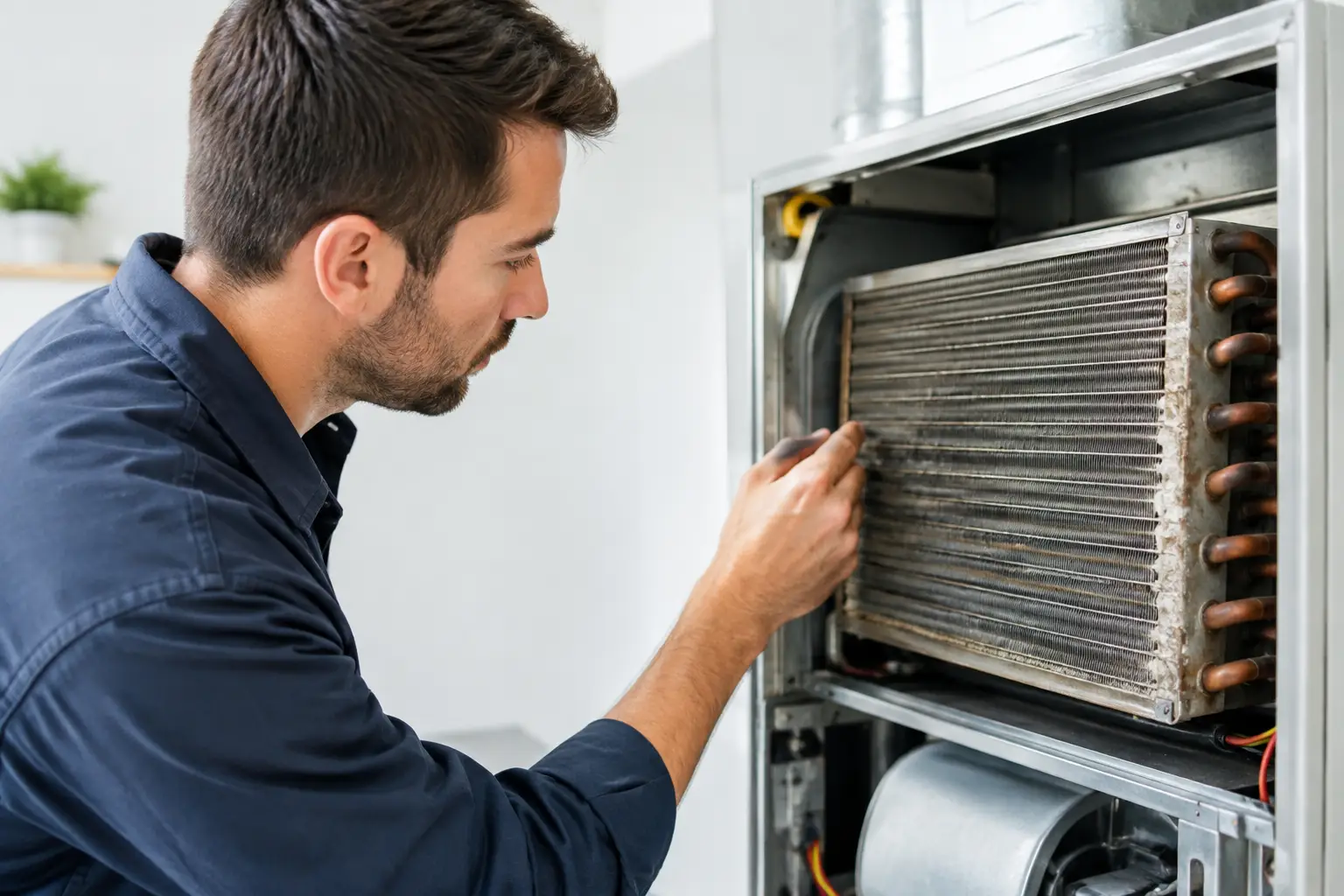
A furnace can still blow warm air even when a serious internal problem is developing. That is what makes the signs of heat exchanger failure so concerning: they can look like an ordinary heating issue at first, yet a damaged heat exchanger may allow combustion gases to move where they do not belong. For Chicago homeowners, landlords, and business owners relying on heat through a hard winter, this is a safety issue first and a comfort issue second.
A heat exchanger is not a part to diagnose or repair on your own. If you suspect a problem, turn the furnace off if it is safe to do so, make sure working carbon monoxide alarms are in place, and arrange a professional inspection. A qualified technician can determine whether the issue is the heat exchanger itself or another furnace component creating similar symptoms.
What a Heat Exchanger Does
Inside a gas furnace, the heat exchanger separates the combustion process from the air circulating through your home. Burners heat the exchanger’s metal surfaces, and the blower sends household air across those surfaces and into your ducts. Under normal operation, exhaust gases leave through the venting system while the air you breathe remains separate.
Over years of expansion, contraction, moisture exposure, airflow restrictions, and normal wear, the metal can crack, corrode, or develop holes. A failed heat exchanger cannot simply be treated as a minor nuisance. Depending on the nature and location of the damage, it can affect safe furnace operation and may require a major repair or furnace replacement.
7 Signs of Heat Exchanger Failure
No single symptom proves the heat exchanger has failed. However, the following warning signs deserve prompt attention, especially when more than one appears at the same time.
1. A Carbon Monoxide Alarm Sounds
A carbon monoxide alarm is never something to ignore or reset without investigating. Carbon monoxide is colorless and odorless, and it can be produced when fuel does not burn or vent correctly. A cracked heat exchanger is one possible cause, but so are venting problems, a malfunctioning burner, or another combustion appliance in the building.
Move people and pets to fresh air if anyone feels unwell or if the alarm instructions call for evacuation. Contact emergency services as appropriate, then have the furnace and other fuel-burning appliances inspected before using them again.
2. Soot Around the Furnace or Vents
Black, dusty residue around furnace registers, the burner area, or nearby surfaces can point to incomplete combustion. A properly operating gas furnace should not leave visible soot in your living space.
Soot does not automatically mean the heat exchanger is cracked. It may stem from burner problems, airflow concerns, or venting issues. Still, it is a clear reason to schedule service because incomplete combustion can create safety and performance concerns.
3. Unusual Furnace Flame Color
When viewed through the furnace’s designated inspection area, burner flames are commonly steady and mostly blue. Yellow, flickering, or irregular flames can indicate a combustion problem that needs professional evaluation.
Do not attempt to clean, adjust, or disassemble burners yourself. Gas pressure, ignition components, venting, and combustion settings all affect flame appearance. A trained technician can test the system safely and identify whether a heat exchanger issue is involved.
4. Persistent Chemical or Burning Odors
A faint dusty smell when heat first runs after months off can be normal. Persistent odors are different. A sharp, chemical-like smell, a burning odor that does not fade, or exhaust-like odors near the furnace should be checked promptly.
Odors alone cannot confirm heat exchanger damage, because electrical components, wiring insulation, filters, or debris can also produce unusual smells. The practical rule is simple: if the odor is new, strong, or recurring, do not wait for the next maintenance visit.
5. Furnace Performance Changes and Short Cycling
A furnace with a compromised heat exchanger may overheat or trigger safety controls that shut the system down. You may notice the unit starting and stopping more often than usual, delivering inconsistent heat, or running but failing to maintain the thermostat setting.
These symptoms also occur with clogged filters, blower problems, thermostat issues, or restricted ductwork. That is why a complete diagnosis matters. Replacing one visible part without finding the root cause can lead to another breakdown and leave the underlying safety concern unresolved.
6. Rattling, Popping, or Metal Noises
Furnaces make some normal operating sounds, particularly as metal warms and cools. Loud rattling, popping that has become more frequent, or a banging sound that occurs with burner ignition or blower operation is not normal wear to dismiss.
A damaged heat exchanger can make noise as weakened metal expands, but loose panels, duct movement, ignition issues, and failing mechanical parts can sound similar. Note when the noise occurs and share that information with your HVAC technician. It helps narrow the inspection quickly.
7. Visible Corrosion, Cracks, or Water Damage
Rust and corrosion around the furnace cabinet, flue pipe, or drain components can signal excess moisture. High-efficiency furnaces produce condensate by design, but drainage and venting must work correctly to prevent moisture-related damage. Older standard-efficiency furnaces can also corrode when venting conditions are poor.
Some heat exchanger damage is visible during a professional inspection, while other cracks require specialized tools and testing to confirm. Do not rely on a quick glance inside the cabinet. Heat exchangers have passages that are difficult to see without proper access and equipment.
Why Heat Exchangers Fail
Age is a common factor, but it is not the only one. Repeated heating cycles place stress on metal, particularly in systems that have operated for many Chicago winters. Restricted airflow can make a furnace run hotter than intended, increasing stress on internal components. A neglected filter, blocked return air path, undersized ductwork, or blower issue may contribute to overheating.
Venting and combustion problems matter too. Improper draft, moisture, dirty burners, or installation conditions can affect how the furnace burns fuel and how exhaust leaves the system. That is why a heat exchanger diagnosis should include the whole heating system, not just a search for a crack.
What to Do if You Suspect a Problem
If you notice a carbon monoxide alarm, visible soot, unusual flame behavior, or strong exhaust-like odors, treat the situation seriously. Avoid operating the furnace until it has been evaluated. If there is an immediate concern for carbon monoxide exposure, follow your alarm’s safety instructions and contact emergency services.
For less urgent but concerning changes, schedule a professional heating inspection as soon as possible. A NATE-certified technician can inspect the heat exchanger, test combustion and venting, check safety switches, evaluate airflow, and explain the findings in plain language.
The answer may be a repair unrelated to the heat exchanger. If the exchanger is damaged, the right recommendation depends on the furnace’s age, overall condition, availability of approved repair options, efficiency, and the cost of restoring dependable operation. A trustworthy contractor should show you what was found, explain the practical choices, and provide honest upfront pricing without pressure.
Prevention Starts With Furnace Maintenance
Annual professional furnace maintenance cannot prevent every failure, but it can catch developing issues before they become an emergency. A thorough visit should include a visual inspection of key components, airflow checks, safety-control testing, filter guidance, and attention to combustion and venting conditions.
Homeowners can also help by replacing filters on schedule, keeping supply and return vents clear, and responding to unusual changes instead of waiting for a complete shutdown. Those small habits support safe airflow and can reduce unnecessary strain on your heating equipment.
When your furnace is showing warning signs, a careful inspection brings clarity faster than guesswork. Shad Heating & Cooling provides clear explanations and safety-focused heating service so you can make the next decision with confidence.
Written by the Shad Heating & Cooling team
Frequently Asked Questions
Can a furnace run with a cracked heat exchanger?
It may still turn on and produce heat, but it should not be considered safe to continue using until a qualified technician has inspected it and advised you on the next step.
Does a heat exchanger failure always trigger a carbon monoxide alarm?
No. Carbon monoxide alarms are essential protection, but they do not diagnose furnace components. A damaged heat exchanger may not always trigger an alarm, and an alarm can have other causes.
Can a heat exchanger be repaired?
It depends on the furnace model, the location and extent of the damage, manufacturer requirements, and the unit’s overall condition. In many cases, replacement of the furnace is the safer long-term recommendation.
How often should a furnace be inspected?
Schedule professional maintenance once a year, ideally before the heating season. Call sooner if you notice soot, strange odors, cycling problems, unusual noises, or a carbon monoxide alarm.