





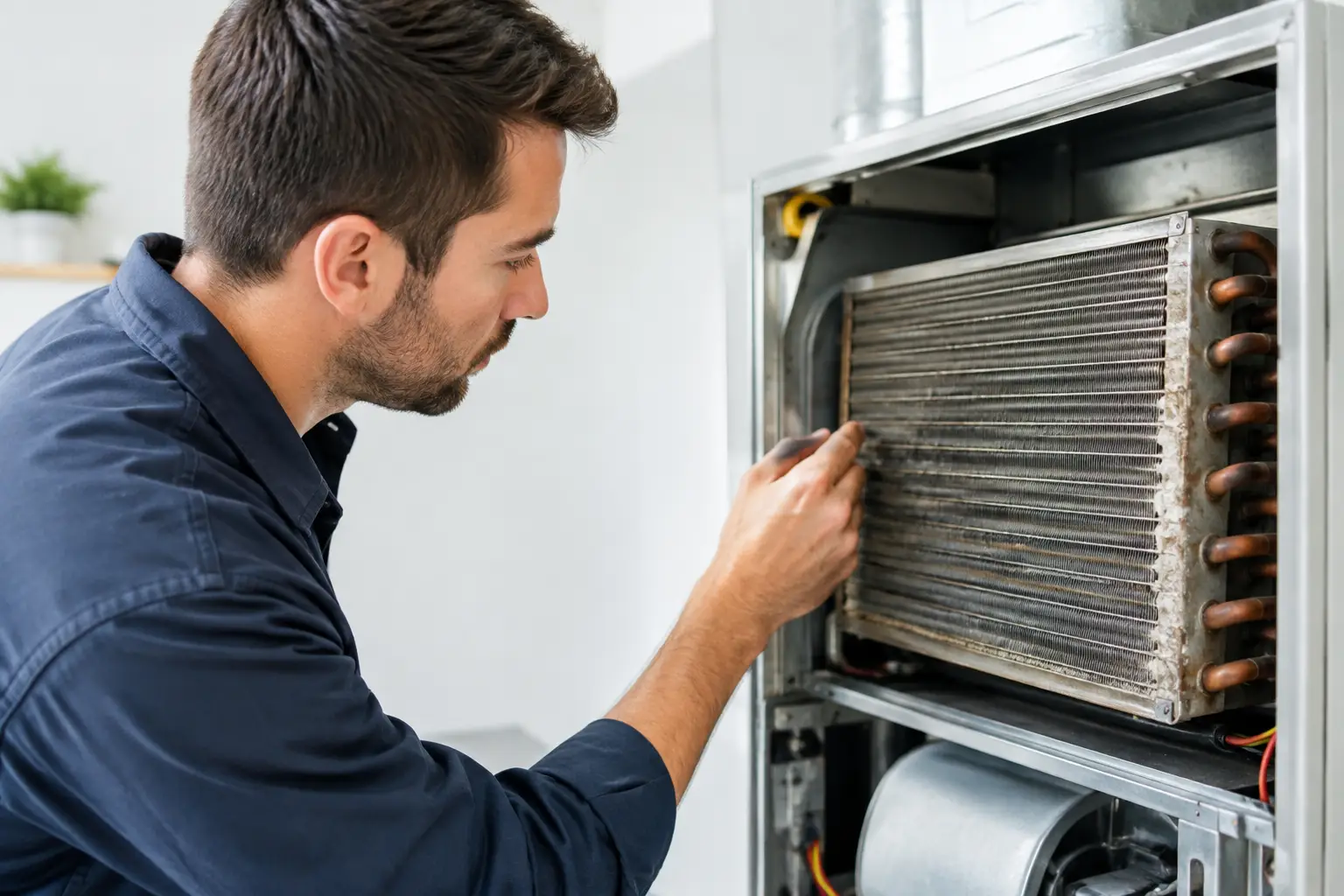

A furnace rarely chooses a convenient time to fail. It may start short-cycling during the first cold snap, leave one apartment colder than the rest, or stop producing heat on a weekend. These furnace replacement examples show how homeowners and property owners can move from a stressful heating problem to a well-supported decision without being pushed into equipment they do not need.
The right answer depends on the furnace’s condition, the home’s layout, repair history, safety findings, and long-term comfort goals. A careful assessment should distinguish a repairable problem from a system that is nearing the end of reliable service.
When Furnace Replacement Makes More Sense Than Repair
A repair is often the responsible choice when a furnace is relatively new, the issue is isolated, and the system has otherwise provided consistent heat. Replacing a worn ignition component or correcting an airflow issue is different from repeatedly addressing major failures on an aging unit.
Replacement becomes more practical when repairs are frequent, parts are difficult to source, efficiency has declined, or a technician identifies a safety concern. For Chicago homeowners, reliability matters as much as efficiency. A furnace that can technically run but cannot be trusted through a prolonged freeze may not be the right system to keep investing in.
Example 1: The 20-Year-Old Furnace With Repeated Breakdowns
A homeowner has a furnace that is more than two decades old. It needed a repair last winter, began making unusual noises this fall, and now has a major component failure. The home also has uneven temperatures, with upstairs bedrooms noticeably colder than the main floor.
In this situation, replacing the furnace can be a reasonable long-term decision. The issue is not one repair alone. It is the combination of age, repeat service calls, declining reliability, and comfort concerns. Continuing to repair the unit may restore heat temporarily, but it does not reset the system’s age or improve its overall performance.
A replacement consultation should include more than choosing a new furnace of similar size. A qualified technician should review duct condition, airflow, return-air capacity, thermostat operation, and whether the existing equipment was properly sized in the first place. Installing an oversized or undersized furnace can create new comfort problems, even when the equipment itself is high quality.
Example 2: A Furnace With a Safety-Related Finding
During a maintenance visit, a technician identifies a concern involving the heat exchanger or combustion performance. The furnace may still turn on, but operating it could pose a risk to the household. This is a different category from a routine mechanical repair.
The appropriate next step is to clearly explain the finding, shut down equipment when safety requires it, and provide replacement options based on the property’s needs. Homeowners deserve a straightforward explanation of what was found, why it matters, and what work is recommended. They should not be left guessing whether a concern is urgent or merely optional.
For a rental property or small business, this example also carries operational consequences. Delaying a necessary replacement can mean unhappy tenants, interrupted business activity, and a greater chance of an emergency call during severe weather. Planning the installation promptly can protect people and reduce disruption.
Furnace Replacement Examples Based on Comfort Problems
Not every replacement begins with a complete no-heat emergency. Some start with a home that never feels consistently warm, despite regular repairs and a furnace that appears to be running.
Example 3: Cold Rooms and High Heating Use in a Bungalow
A homeowner in an older Chicago bungalow notices that the living room is warm, but bedrooms at the far end of the home remain chilly. The furnace runs for long periods, utility use seems high, and the system struggles on windy days.
A new furnace may be part of the solution, but it may not be the entire solution. Before recommending equipment, the contractor should evaluate airflow and duct distribution, inspect the return system, and consider insulation, air leakage, and thermostat location. In some homes, zoning, duct improvements, or a properly selected variable-output system can make a meaningful difference.
This example shows why a replacement should not be treated as a simple swap. A dependable recommendation addresses the cause of poor comfort, not just the age of the furnace.
Example 4: A Furnace That Is Too Large for the Home
A property owner may have a furnace that heats quickly but shuts off again within short cycles. This pattern can increase wear on components, create temperature swings, and leave certain areas uncomfortable. It may happen when a prior system was oversized or when renovations changed the home’s heating needs.
During replacement, proper load calculations and equipment selection are essential. The goal is not to install the biggest available unit. It is to select capacity that matches the building, supports steady operation, and works with the existing duct system. That approach can improve comfort while helping the equipment operate more efficiently.
Examples for Multifamily Properties and Small Businesses
Property owners often face a different set of replacement decisions. One failed furnace may affect several tenants, a common area, or an active business space. The priority is to restore safe, dependable heat while keeping occupants informed and minimizing disruption.
Example 5: Replacing a Furnace Between Tenants
A landlord has a furnace that still operates but has a history of service calls and is near the end of its expected service life. A unit is about to become vacant, creating a practical window to replace the furnace before the next tenant moves in.
This is often a smart planned-replacement scenario. The work can be scheduled without disturbing an occupied household, and the owner can avoid waiting for a failure during winter. The installation should include a clean work area, careful protection of the property, appropriate permits where required, and testing before the space is reoccupied.
Example 6: A Small Business With an Unreliable Rooftop or Mechanical-Area System
A neighborhood business may rely on a heating system that has become inconsistent. The owner is concerned about employee comfort, customer experience, and unexpected closures during cold weather. While a repair may restore operation, repeated interruptions can make replacement the better business decision.
The assessment should account for operating hours, building use, ventilation needs, access for installation, and whether work can be scheduled around business activity. Clear scope, upfront pricing, and realistic planning matter because commercial comfort problems affect more than a single household.
What a Thoughtful Replacement Process Should Include
A furnace replacement should begin with inspection and questions, not pressure. The technician should ask about cold rooms, noise, utility concerns, repair history, allergies, humidity, and future plans for the property. Those details help identify whether a standard replacement, airflow correction, zoning adjustment, or indoor air quality upgrade is appropriate.
The installation itself should be handled with the same care as the recommendation. That includes verifying safe venting and combustion, evaluating electrical and gas connections, setting up controls correctly, testing performance, and leaving the work area clean. NATE-certified technicians bring valuable training to this process, but homeowners should also expect clear communication in plain language.
It is also worth considering maintenance at the time of replacement. Routine inspections, filter changes, and performance checks help protect a new system and can catch small concerns before they become a no-heat emergency. For homes with dry winter air, excessive humidity, or persistent dust, a furnace project can be a useful time to discuss whole-home comfort options without treating them as mandatory add-ons.
A good furnace replacement is not about reacting to fear or choosing the most expensive option. It is about selecting a safe, properly matched system that gives your household, tenants, or business reliable comfort when the weather is at its worst.
Written by the Shad Heating & Cooling team
Frequently Asked Questions
How do I know whether to repair or replace my furnace?
Consider the furnace’s age, repair history, safety condition, reliability, and overall comfort. A professional inspection can clarify whether a repair is likely to provide dependable service.
Should a new furnace be the same size as the old one?
Not necessarily. The existing furnace may be oversized or undersized. Proper sizing should account for the building, ductwork, insulation, and heating load.
Can a new furnace fix cold rooms by itself?
Sometimes, but not always. Cold rooms can also result from duct restrictions, inadequate returns, air leaks, insulation gaps, or thermostat placement.
When is the best time to plan a furnace replacement?
Before a complete failure is often best. Replacing an unreliable system during milder weather or between tenants can provide more scheduling flexibility and less stress.