
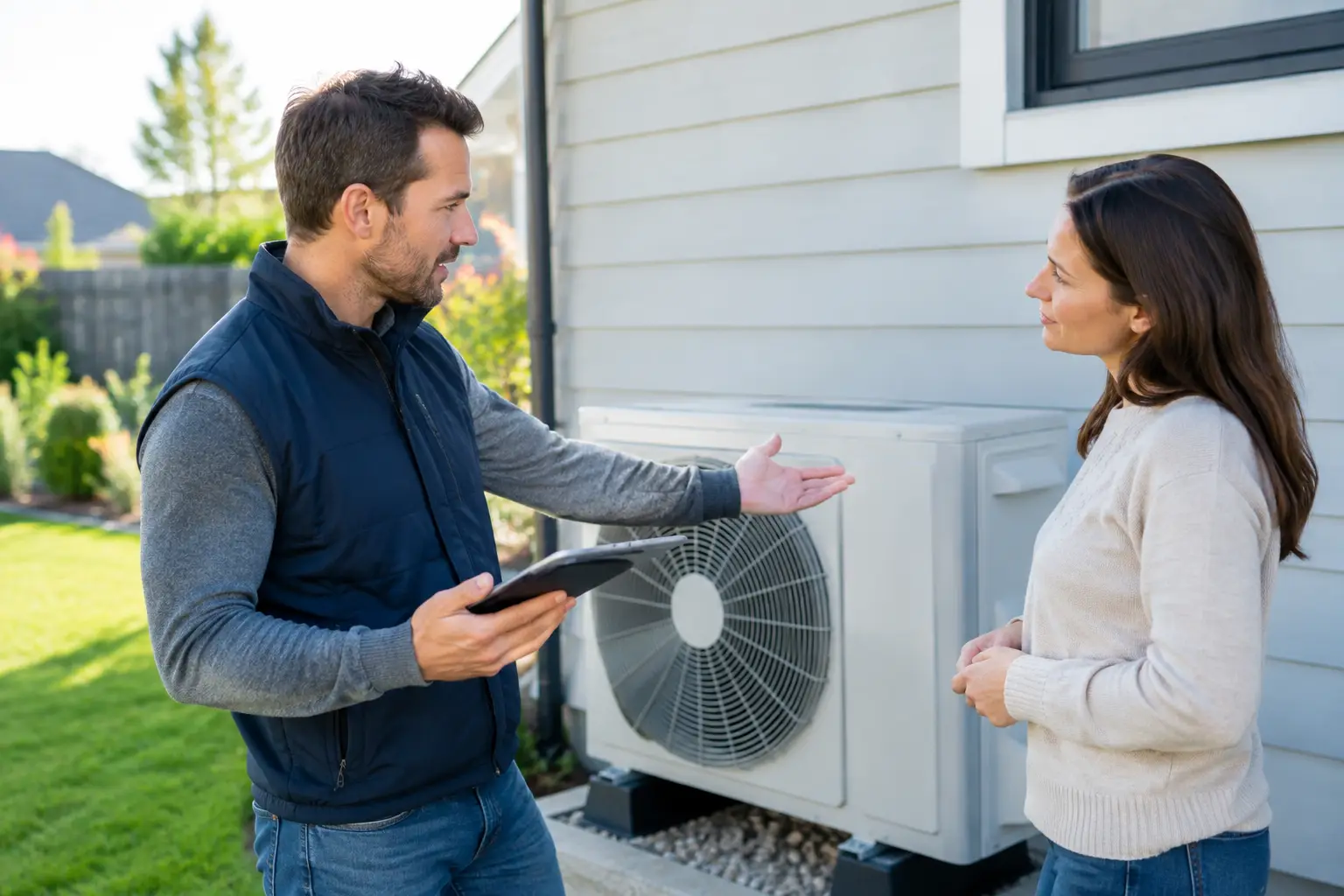
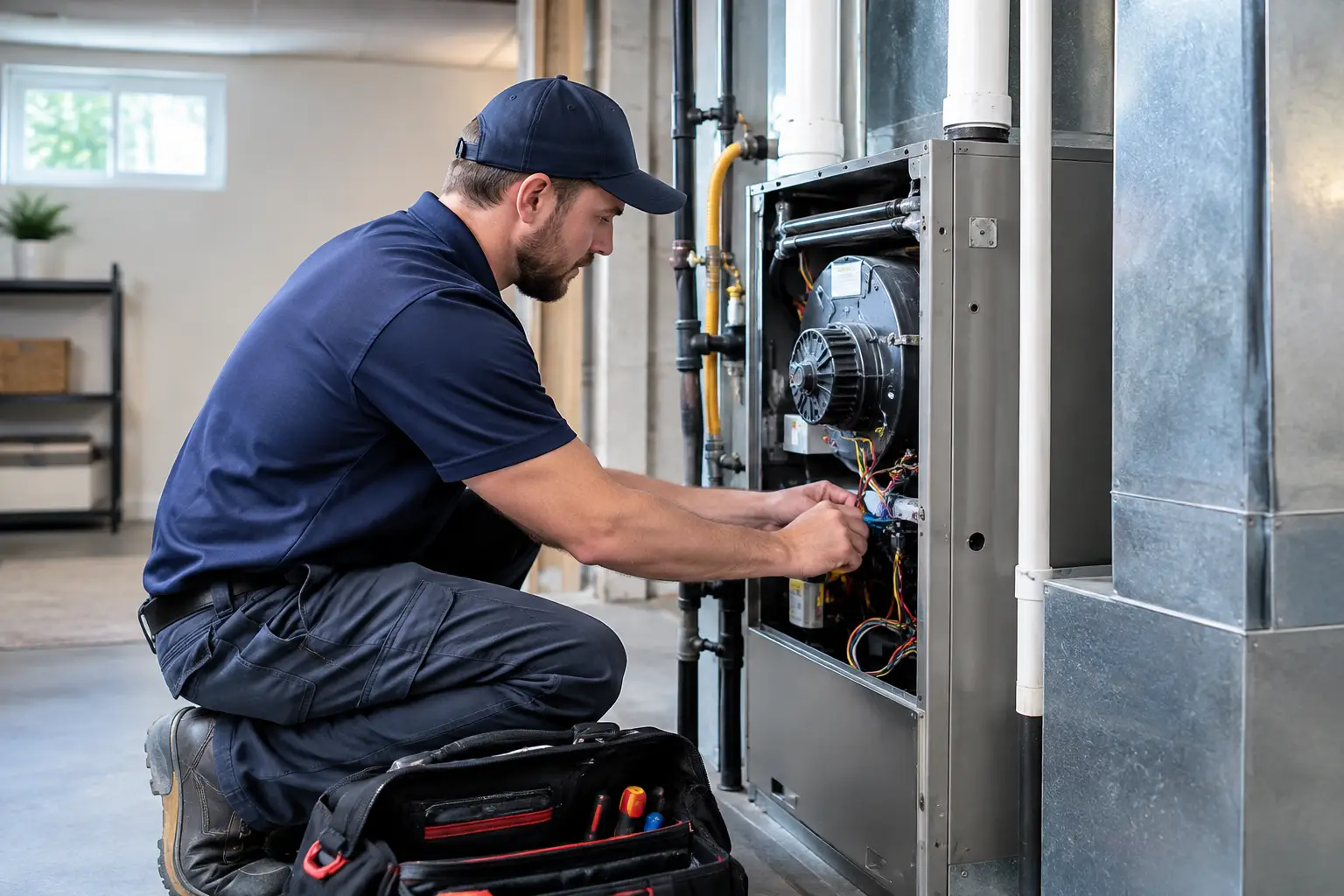
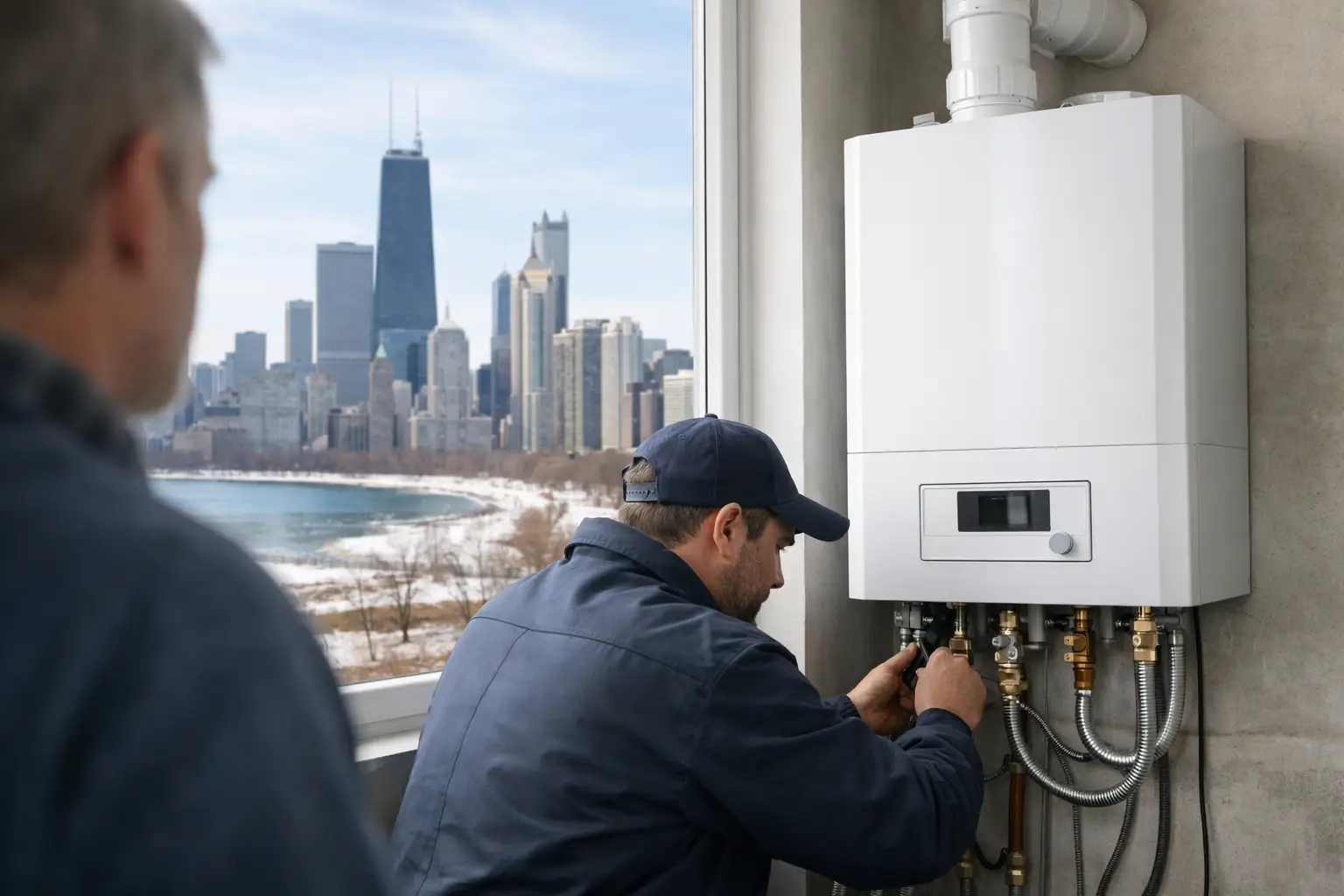
A boiler that struggles on the first hard freeze is more than an inconvenience. For a Chicago homeowner, landlord, or small-business owner, it can mean cold rooms, unhappy tenants, frozen-pipe risk, and an urgent decision made under pressure. This Chicago boiler installation guide explains what to consider before replacing a boiler, what a professional installation should include, and how to protect the investment for years to come.
When Boiler Replacement Makes More Sense Than Another Repair
A repair is often the right call when the issue is isolated and the boiler is otherwise operating safely and efficiently. A failed control, circulator, valve, or ignition component does not automatically mean the entire system needs replacement. A qualified technician should explain the problem, repair options, and likely next steps clearly before recommending a new unit.
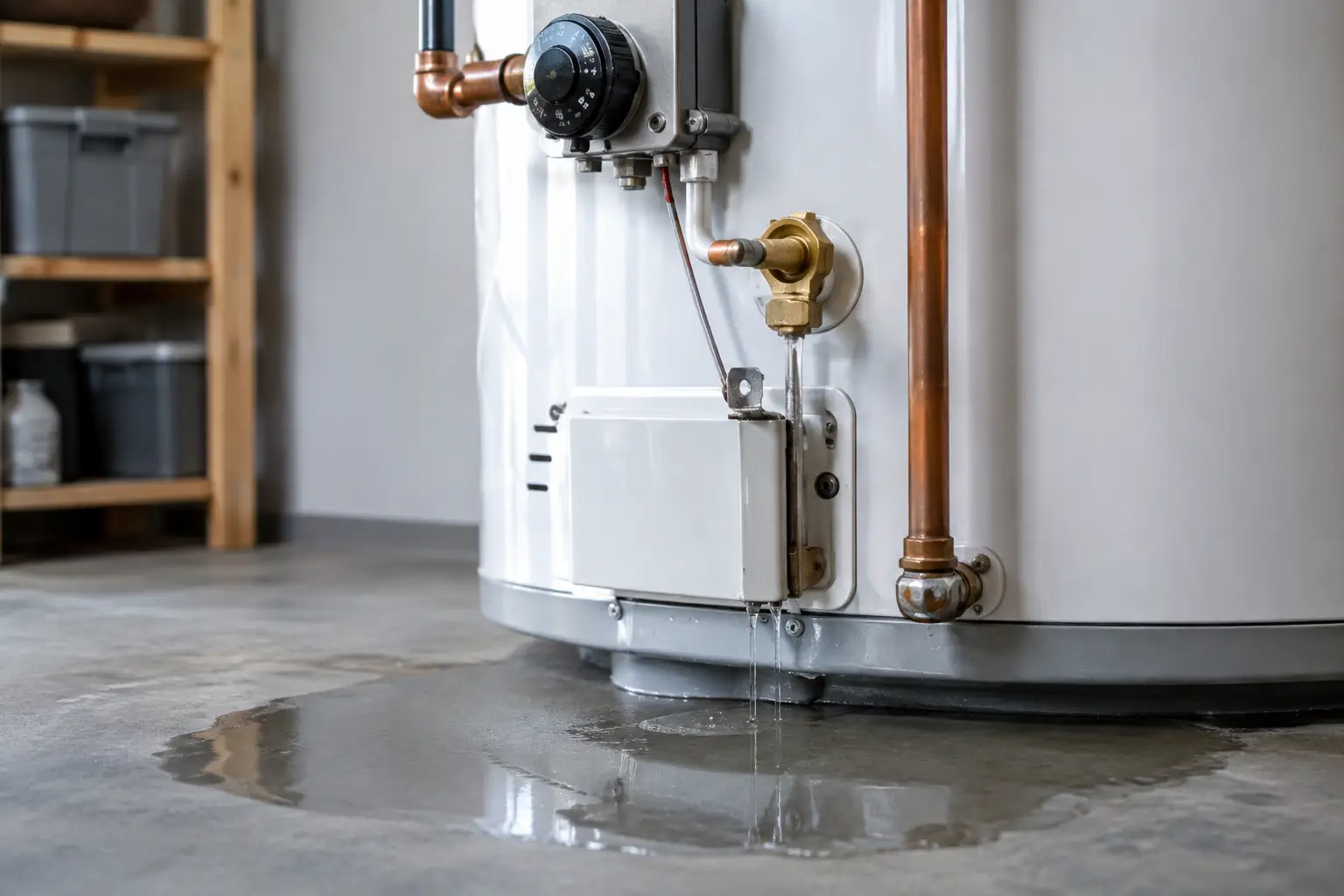
Replacement becomes more practical when repairs are becoming frequent, the boiler is near or beyond its expected service life, parts are difficult to source, or heating performance has become inconsistent. Rising fuel use, uneven temperatures, recurring water leaks, unusual noises, and repeated shutdowns are all signs that the system deserves a closer evaluation.
For multifamily properties and small commercial spaces, reliability often carries even more weight. One boiler can affect multiple apartments, common areas, or customer-facing spaces. In those cases, planning a replacement before a complete failure may reduce disruption and help avoid emergency scheduling during the busiest part of winter.
Start With the Building, Not Just the Old Boiler
The correct replacement is not simply the same size as the boiler being removed. A property may have changed since the old system was installed. Insulation may be better, windows may have been replaced, an addition may have been built, or parts of the building may no longer be used in the same way.
A proper assessment considers the building’s heat loss, square footage, layout, insulation, existing radiators or baseboard, hot-water needs, and the condition of the piping. This helps prevent two common problems: an undersized boiler that cannot keep up in severe weather and an oversized boiler that cycles too frequently.
Short cycling wastes energy and can add wear to system components. A boiler that is appropriately matched to the property can run more steadily, maintain more even temperatures, and support better long-term performance. The right answer depends on the building, which is why a site visit matters more than a quick estimate based only on the old unit’s label.
Efficiency Should Be Considered in Context
Higher efficiency can lower fuel consumption, but it is not the only factor in a good replacement decision. The installation must also account for venting requirements, condensate drainage where applicable, available space, and the condition of the distribution system. A high-efficiency boiler may be an excellent fit for one building and less practical for another.
It is also worth considering how the property is used. A single-family home with predictable schedules has different needs than a three-flat with several tenants, or a small business that must remain comfortable during operating hours. An honest recommendation weighs upfront investment, operating efficiency, maintenance requirements, and reliability instead of forcing every property into one solution.
What a Professional Boiler Installation Includes
Boiler replacement involves fuel, combustion, water, venting, electrical controls, and pressure safety devices. It should be performed by a licensed and insured HVAC professional who understands local requirements and the specific needs of hydronic heating systems.
Before installation begins, the work area should be protected and the scope should be clear. Homeowners and property managers should know what equipment is being installed, what existing components will be evaluated or replaced, and what work may be needed around piping, venting, drainage, or controls. Transparent upfront pricing helps prevent surprises after work is underway.
During the installation, the old equipment is removed carefully, and the new boiler is connected to the building’s heating system according to manufacturer requirements and applicable code. Depending on the system, this may include updating circulators, expansion tanks, air elimination equipment, safety valves, controls, or near-boiler piping.
Clean workmanship matters. Organized piping, properly supported venting, labeled controls, and a tidy mechanical area make future service easier and help show that the job was completed with care. The installation team should also remove job-site debris and leave the space in good condition.
Commissioning Is Where the Details Count
Installing a boiler is only part of the work. Commissioning verifies that the system operates safely and as intended. This includes checking combustion, venting, water pressure, ignition, temperature response, safety controls, and heat delivery throughout the system.
A technician should also explain basic operation to the person responsible for the property. That conversation should cover thermostat use, normal operating sounds, what warning signs deserve a service call, and when to schedule annual maintenance. You do not need to become a boiler expert, but you should leave the appointment knowing how your system is expected to operate.
Plan Installation Before Winter If Possible
Boilers can fail at any time, and emergency replacement is sometimes unavoidable. Still, spring through early fall is usually a better time to evaluate an aging system. Scheduling is often more flexible, the building is less dependent on daily heating, and there is more room to make decisions without a cold-weather emergency driving the process.
For landlords and property owners, advance planning also makes tenant communication easier. You can choose a service window, prepare affected areas, and address concerns before heat is urgently needed. If the property has a boiler that has required multiple repairs, a pre-season assessment can clarify whether another winter is realistic.
Even with a planned project, Chicago weather can shift quickly. Ask how temporary comfort concerns will be handled during the work and how long the building may be without regular heat. A responsible contractor will set realistic expectations rather than making promises that do not account for equipment availability, permitting, or site conditions.
Protect Your New Boiler With Annual Maintenance
A new boiler is not a set-it-and-forget-it appliance. Annual professional maintenance helps identify combustion concerns, water-pressure issues, venting problems, worn components, and control faults before they become a no-heat call. It also gives a technician the opportunity to confirm that the system is operating efficiently and safely.
Between service visits, pay attention to changes in performance. Rooms that suddenly heat unevenly, new banging or whistling sounds, visible water around the boiler, frequent pressure changes, or a system that turns on and off unusually often deserve prompt attention. For gas-fired equipment and electrical components, leave diagnosis and repair to trained professionals.
Maintenance is especially valuable in older Chicago buildings, where the boiler may be new but the radiators, valves, pumps, and piping have decades of history. The heating system works as a whole. Maintaining the boiler while ignoring the rest of the system can limit comfort and efficiency.
Choosing a Contractor You Can Trust
The lowest initial proposal is not always the lowest long-term cost. Look for a contractor that provides clear recommendations, explains what is included, carries appropriate licensing and insurance, and has qualified technicians for boiler work. Ask how the company approaches sizing, commissioning, cleanliness, and follow-up support.
You should never feel pressured to choose equipment you do not understand. A trustworthy contractor will explain the trade-offs in plain language, answer questions directly, and recommend only work that supports safety, comfort, and reliable operation. At Shad Heating & Cooling, that means treating the boiler room and the rest of the property with the same care as the heating equipment itself.
A well-planned boiler installation can turn a recurring winter worry into dependable, even heat. If your current boiler is showing its age, arranging an evaluation before the next cold spell gives you more control, clearer options, and time to make a decision that fits your property.
Written by the Shad Heating & Cooling team
Frequently Asked Questions
How long does a new boiler typically last?
Service life depends on the equipment, water quality, installation quality, and maintenance history. With professional annual service, many boilers provide reliable heat for well over a decade.
Can I replace only the boiler and keep my existing radiators?
Often, yes. Existing radiators can work well with a new boiler, but the piping, valves, controls, and overall system condition should be evaluated before installation.
Does a higher-efficiency boiler always save the most money?
Not always. Efficiency savings depend on proper sizing, installation requirements, building conditions, and how the heating system is used. The best option is the one that fits the property correctly.
When should I schedule boiler maintenance?
Schedule maintenance once each year, ideally before the heating season. If you notice leaks, unusual noises, inconsistent heat, or repeated shutdowns, arrange service sooner.