





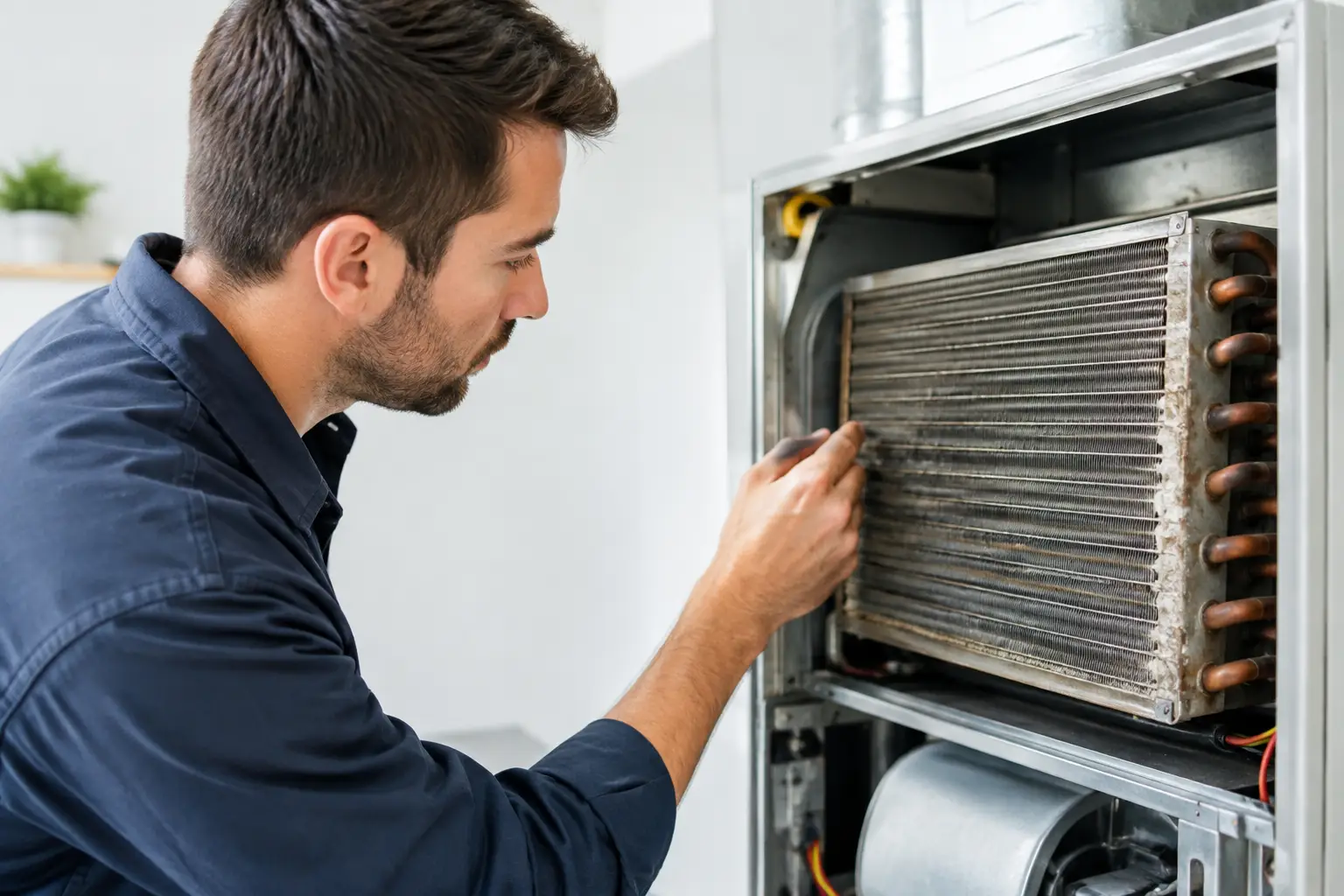

A radiator that is cold at the top and warm at the bottom is usually not failing – it often has trapped air inside. Knowing how to bleed radiators can restore more even heat, reduce irritating gurgling sounds, and help your boiler system run as intended. In a Chicago winter, that small maintenance task can make the difference between a room that feels usable and one that never quite warms up.
Bleeding is appropriate for many hot-water radiator systems, but it is not the answer to every heating problem. The key is recognizing when a simple release of trapped air is sensible and when uneven heat points to a boiler, circulation, valve, or pressure issue that needs professional attention.
What Bleeding a Radiator Actually Does
Hot-water radiators heat a room by circulating heated water from a boiler through pipes and radiator panels. Over time, small pockets of air can collect near the top of a radiator. Air prevents hot water from reaching that upper area, leaving part of the unit cool even while the rest is hot.
Bleeding opens a small valve long enough to let that air escape. Once water begins to emerge in a steady stream, the air pocket is generally gone and the valve can be closed. It is a straightforward task when the system is operating normally, but it should be done carefully. Water from a heating system can be hot, and forcing a stuck valve or overlooking a pressure problem can create a larger issue.
Radiators on a steam system are different. Steam radiators use air vents and should not be bled with a radiator key. If you are unsure whether your home has a hot-water or steam system, pause before touching any valve. Older Chicago properties can have either type, and the right maintenance steps are not interchangeable.
Signs Your Radiators May Need Bleeding
A cold spot alone does not always mean trapped air, but the pattern can be revealing. A radiator that is noticeably cooler at the top than at the bottom is a common sign. You may also hear bubbling, gurgling, or water-moving sounds as the heating system runs.
Other clues include rooms that take much longer to warm than the rest of the home or radiators that feel only partly warm despite the thermostat calling for heat. Start by checking whether the radiator valve is open and whether furniture, curtains, or covers are blocking heat from entering the room. If those basics are in order, bleeding may help.
If every radiator is cold, the boiler is not producing heat, or you see water around a radiator, do not treat bleeding as a cure-all. Those conditions can point to a system-wide issue. Likewise, a radiator that stays cold after bleeding may have a stuck valve, poor circulation, sludge buildup, or an improperly balanced system.
What You Need Before You Start
For most hot-water radiators, you need a radiator key that fits the bleed valve, a small cup or shallow container, and a dry towel. Some newer radiator valves can be opened with a flat-head screwdriver, but do not assume that is the case. Using the wrong tool can damage the valve.
Wear gloves if the radiator or nearby pipework is still warm. Keep the towel directly below the bleed valve to protect walls, flooring, and painted surfaces from drips. It also helps to have someone nearby if you are working in a large home or a multifamily building with several radiators to check.
Before beginning, identify the bleed valve. It is typically a small square or slotted fitting near the top corner of the radiator, often opposite the larger control valve. Do not loosen pipe connections, larger nuts, or fittings at the bottom of the radiator. Those are not bleed points and can release much more water than intended.
How to Bleed Radiators Step by Step
For a standard hot-water system, follow these steps slowly and stop if anything does not look right.
- Turn the heat off and allow the radiators to cool enough to handle safely. Many homeowners prefer to let the system rest for 30 to 60 minutes. This reduces the chance of hot water spraying from the valve.
- Set the thermostat so the boiler is not actively heating while you work. Place your towel below the bleed valve and hold the cup close to the opening.
- Insert the radiator key and turn it slowly counterclockwise, usually no more than a quarter turn. You should hear a soft hissing sound as trapped air escapes. There is no need to remove the valve or open it widely.
- Keep the valve open only until water begins to come out in a consistent stream. A few drops are normal at first. Once the stream is steady, the air has likely been released.
- Turn the key clockwise to close the valve snugly. Do not overtighten it. Wipe the area dry and check for any continued drips.
- Repeat the process for other affected radiators, then restore the thermostat setting and allow the system to run. Check that each radiator warms more evenly over the next heating cycle.
In a multi-story home, it is often practical to begin with radiators on the lowest floor and work upward. However, system layouts vary. If you repeatedly need to bleed the same radiator, the order is less important than finding out why air continues to enter the system.
Check Boiler Pressure After Bleeding
Releasing air can slightly affect pressure in a sealed hot-water system. After bleeding several radiators, look at the boiler pressure gauge only if it is safely accessible and you know its normal operating range. Many residential systems show a lower pressure when cool and a somewhat higher pressure while heating, but the correct range depends on the equipment and building.
Do not attempt to adjust boiler pressure, open internal components, or work around gas or electrical connections without qualified service. If the gauge appears unusually low, unusually high, or changes dramatically, schedule a professional inspection. Adding water improperly can create excess pressure, leaks, or air problems that return quickly.
Common Mistakes to Avoid
The most common mistake is opening the valve too far. A radiator bleed valve requires a small turn, not several rotations. Opening it excessively can make it difficult to control the water release or damage an older valve.
Another mistake is bleeding a radiator while the system is very hot. The job can still be done under certain conditions, but for most homeowners, allowing the system to cool is the safer and cleaner approach. Never place your face or hands directly in front of the valve opening.
Avoid assuming that a cold radiator always contains air. If the radiator is cold at the bottom, cold everywhere, or leaking at a valve, bleeding may not help. In buildings with older boilers, sediment and mechanical wear can cause symptoms that look similar to trapped air. Repeatedly bleeding without diagnosing the cause may only delay the repair.
When to Call for Boiler Service
A single radiator that heats unevenly can often be addressed with careful bleeding. Recurring problems deserve a closer look. Call for service if a radiator will not heat after bleeding, a bleed valve leaks or will not close, boiler pressure appears abnormal, or you find water around the radiator or boiler.
Professional service is also the better choice when multiple rooms have poor heat, pipes make loud banging noises, the boiler cycles irregularly, or the heating system needs frequent attention throughout the season. A licensed technician can evaluate circulation, valves, controls, system pressure, and boiler performance without guesswork.
For landlords and owners of multifamily properties, prompt attention matters even more. A heating imbalance in one unit may signal a larger issue affecting other areas of the building. Addressing the root cause protects tenant comfort and helps prevent an inconvenient no-heat call when temperatures drop.
Keep Heating Problems From Returning
Radiator bleeding should be occasional maintenance, not a weekly routine. If your system needs frequent bleeding, air may be entering through a leak, an automatic air vent may be failing, or the boiler system may need adjustment. Annual boiler maintenance is the most reliable way to catch those concerns before they become a heating emergency.
Keep radiator areas clear, watch for minor drips, and pay attention to changes in how long rooms take to warm up. Those small observations give a technician useful information and can lead to a more precise repair. Shad Heating & Cooling approaches boiler service with clear explanations, clean workmanship, and recommendations based on the condition of your system – not pressure to replace equipment prematurely.
A radiator should provide quiet, even heat without becoming another winter worry. If bleeding does not restore that comfort, a focused inspection can provide the answer and help protect reliable heat for the season ahead.
Written by the Shad Heating & Cooling team
Frequently Asked Questions
Should I bleed radiators with the heat on?
It is generally safer to turn the heat off and let radiators cool before bleeding them. Hot water can escape from the valve and cause burns or damage nearby surfaces.
How often should radiators be bled?
Most homes need radiator bleeding only when there are signs of trapped air, such as cool tops or gurgling sounds. Needing it repeatedly is a reason to have the system checked.
Can I bleed a steam radiator?
No. Steam radiators use a different venting method and should not be bled like hot-water radiators. If a steam radiator is not heating properly, schedule a professional evaluation.
Why is my radiator still cold after bleeding?
The issue may involve a closed or stuck valve, poor circulation, low system pressure, sediment, or a boiler problem. A qualified technician can identify the cause and recommend the right repair.