






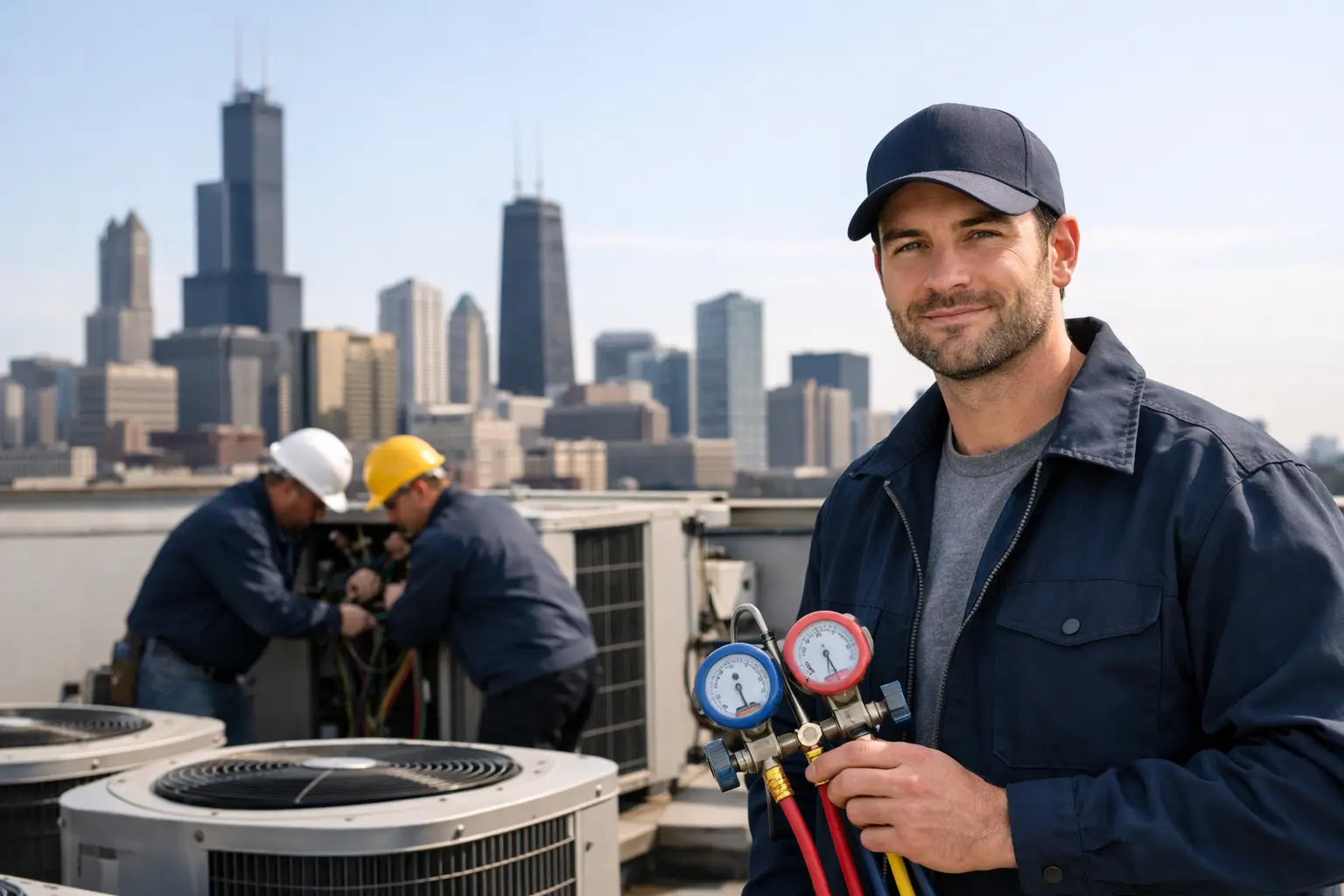
A furnace that quits during a January cold snap, a boiler that begins leaking, or an air conditioner that cannot keep up with a humid July afternoon creates the same immediate question: who can you trust to fix it correctly? Choosing a Chicago HVAC company is not just about getting someone to the door. It is about protecting your home, your tenants or customers, your safety, and the useful life of equipment that costs real money to replace.
The right provider should make a stressful situation clearer, not more confusing. That means listening to the symptoms, diagnosing the cause, explaining practical options, and giving you straightforward pricing before work begins. Whether you need emergency repair, seasonal maintenance, or a planned replacement, these are the standards worth looking for.
Start With Credentials and Local Experience
Heating and cooling work involves fuel combustion, electrical connections, moving equipment, drainage, ventilation, and in some cases refrigerant. A company should be licensed and insured, with technicians trained to work safely on the systems found in Chicago homes, apartments, and small commercial spaces.
Ask whether the technicians hold NATE certification. NATE-certified technicians have demonstrated knowledge in HVAC service and installation specialties, which is a meaningful sign that the person assessing your system understands more than a single quick fix. Credentials alone do not solve every problem, but they give you a stronger starting point when the work involves a furnace, central air conditioner, heat pump, ductless system, or boiler.
Local experience matters, too. Chicago buildings vary widely. A technician may need to work with an older radiator and boiler setup in a two-flat, a high-efficiency furnace in a newer home, zoning in a multi-level property, or cooling challenges caused by limited ductwork. A company familiar with these conditions can recommend solutions that fit the building rather than pushing a one-size-fits-all answer.
Look for a Clear Diagnostic Process
A dependable HVAC visit starts with investigation, not a sales pitch. The technician should ask what changed, inspect the relevant equipment, test system operation, and explain what they found in plain language. If a repair is recommended, you should understand what part or condition is causing the issue and what can happen if it is left unresolved.
This is especially important when the initial symptom could have several causes. Uneven temperatures might relate to duct design, airflow restrictions, thermostat settings, insulation gaps, equipment sizing, or a zoning issue. A furnace that cycles repeatedly could involve airflow, controls, combustion, or other conditions requiring professional assessment. Good diagnosis prevents homeowners and property managers from paying for a repair that addresses only the symptom.
For older equipment, a trustworthy company will discuss the trade-off between repair and replacement honestly. A repair may be the sensible choice when the system has years of reliable service left and the issue is isolated. Replacement may deserve consideration when breakdowns are recurring, repair needs are escalating, efficiency is poor, or parts are becoming difficult to obtain. The recommendation should reflect your system’s condition, not a pressure-filled attempt to sell new equipment.
Expect Upfront Pricing and Straight Answers
Heating and cooling decisions are easier when the numbers and scope are clear. Before approving work, ask for an explanation of what is included, what problem the service is intended to correct, and whether there are conditions that could affect the final scope. Honest upfront pricing should not come with vague language designed to leave room for surprise charges.
A professional company will also be willing to answer direct questions. Ask what repair is being proposed, why it is needed now, what maintenance could help prevent similar trouble, and what warranty coverage applies to new equipment or parts. You do not need HVAC expertise to ask for an explanation you can understand.
Be cautious if a provider insists on a major replacement without examining the system carefully or cannot explain why a recommended repair is necessary. Likewise, the lowest estimate is not always the best value if it leaves out needed safety checks, proper installation practices, cleanup, or follow-up support. Comfort equipment needs to be installed and serviced with attention to the complete system, not just the most visible component.
Choose a Chicago HVAC Company That Plans for the Whole System
A furnace or air conditioner does not operate alone. Airflow, filtration, humidity, thermostat controls, ductwork, ventilation, and maintenance all influence comfort and efficiency. The best Chicago HVAC company looks beyond the immediate service call when appropriate, while keeping recommendations relevant to your actual needs.
For example, replacing an air conditioner without considering airflow may leave rooms unevenly cooled. Installing a larger unit is not automatically the answer, either. Equipment that is improperly sized can create comfort problems and unnecessary wear. A thoughtful contractor considers the home or space, existing equipment, usage patterns, and the system’s ability to deliver conditioned air where it is needed.
Indoor air quality deserves the same practical approach. Whole-home humidification can make dry winter air more comfortable, while dehumidification may help a home feel less sticky during the cooling season. Air purification and improved filtration can be useful in certain households, particularly when dust, odors, or allergies are ongoing concerns. These upgrades should be explained as options with a clear purpose, not bundled into a service visit without a reason.
Maintenance Is a Sign of Long-Term Service
Emergency repair availability matters when comfort equipment fails, but planned maintenance is what helps reduce avoidable surprises. A company that offers maintenance plans is showing that its relationship with customers does not end when the immediate problem is solved.
Seasonal service gives a technician an opportunity to inspect operation, identify developing concerns, and keep the system prepared for demanding weather. Heating maintenance is particularly valuable before sustained winter use, while cooling tune-ups help prepare air conditioning for the summer workload. For landlords and small-business owners, a maintenance relationship can also make it easier to keep records organized and address concerns before they disrupt tenants, employees, or customers.
Maintenance cannot eliminate every breakdown. Parts can fail without warning, and older equipment may still reach the end of its useful life. But routine attention often gives you more choices and more time to make a sound decision instead of reacting under pressure.
Pay Attention to Respect for Your Property
Technical ability should be matched by professional conduct. The people working in your home, apartment building, or business should treat the space with care. That includes arriving prepared, communicating clearly, protecting the work area, keeping the job site clean, and removing materials when the work is complete.
This is not a minor detail. HVAC projects can involve access to basements, utility rooms, attics, mechanical spaces, and living areas. Clean workmanship reflects an organized process, and an organized process is often connected to better attention to the equipment itself.
At Shad Heating & Cooling, that approach means pairing qualified service with clear recommendations, clean job sites, and work focused on lasting system reliability. The goal is not merely to get equipment running for the moment. It is to help customers make informed decisions about safe, dependable comfort.
Questions to Ask Before You Schedule
Before selecting a provider, confirm that the company is licensed and insured, uses trained technicians, and can service the type of system you own. Ask how the diagnostic visit works, whether pricing will be reviewed before repairs begin, and what options are available if a repair is no longer the best value.
If you manage a rental property or small business, ask about ongoing maintenance, scheduling coordination, and service for multiple systems. If you are considering replacement, ask how the company evaluates sizing, airflow, and installation requirements. Specific answers are a good sign. General promises without details are not.
When your heat or cooling fails, speed matters. So does the quality of the decision made after the technician arrives. Choose a company that gives you room to understand the issue, weighs the practical options, and treats your comfort and property with the care they deserve.
Written by the Shad Heating & Cooling team
Frequently Asked Questions
How do I know if my HVAC system needs repair or replacement?
A professional inspection can help you compare the system’s age, repair history, current condition, efficiency, and the cost of the needed repair. Replacement is not always necessary, but recurring failures may make it the more practical long-term choice.
Should I schedule HVAC maintenance if my system seems to be working?
Yes. Seasonal maintenance can identify developing issues, support safe operation, and help prepare heating and cooling equipment for heavy seasonal use.
What should I expect during an HVAC service visit?
The technician should discuss the symptoms, inspect and test the system, explain the findings, and review pricing and options before beginning approved work.
Can an HVAC company help with uneven temperatures in my home?
Yes. Uneven comfort may be related to airflow, controls, ductwork, equipment performance, or zoning. A careful evaluation can identify the most appropriate next step.