
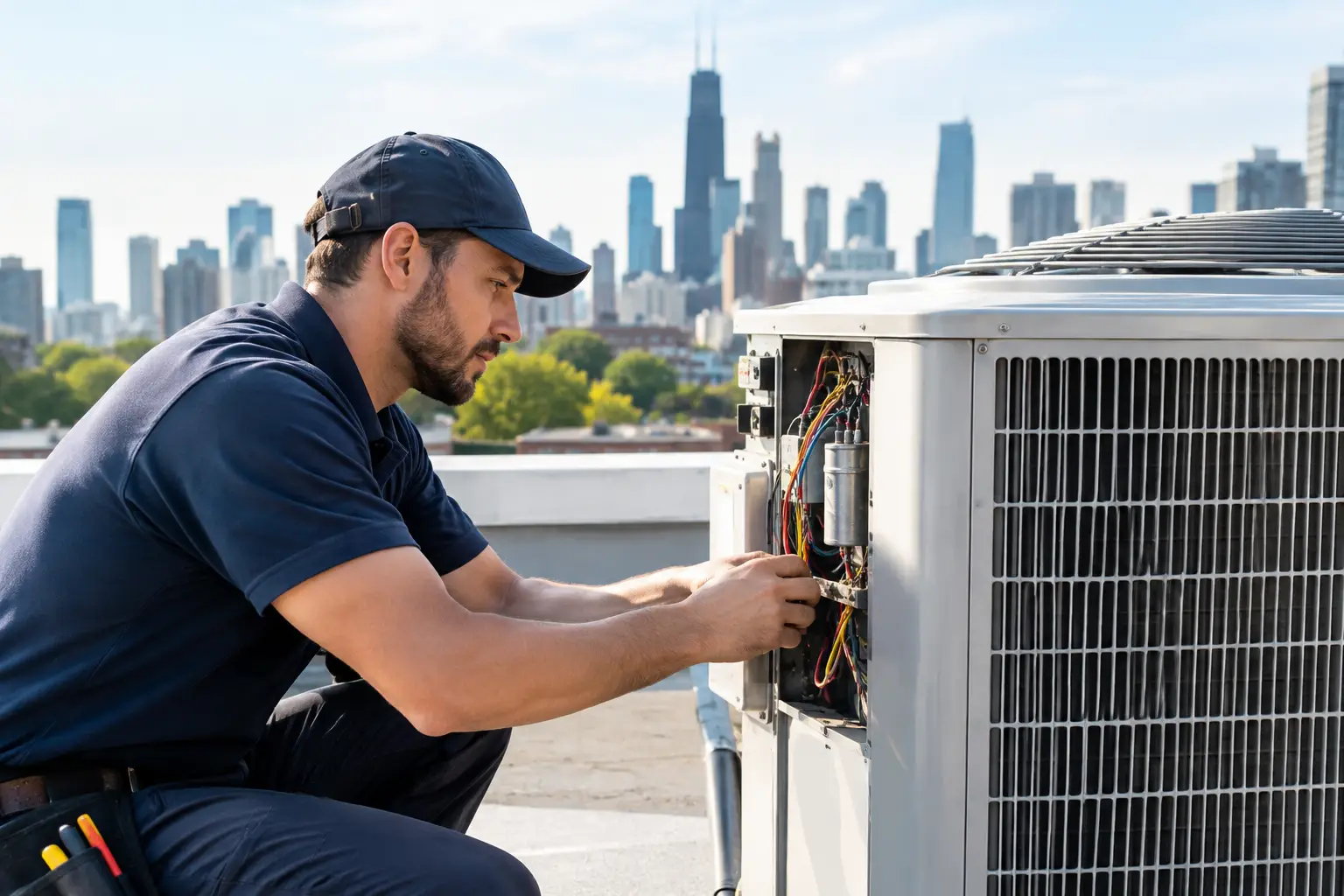
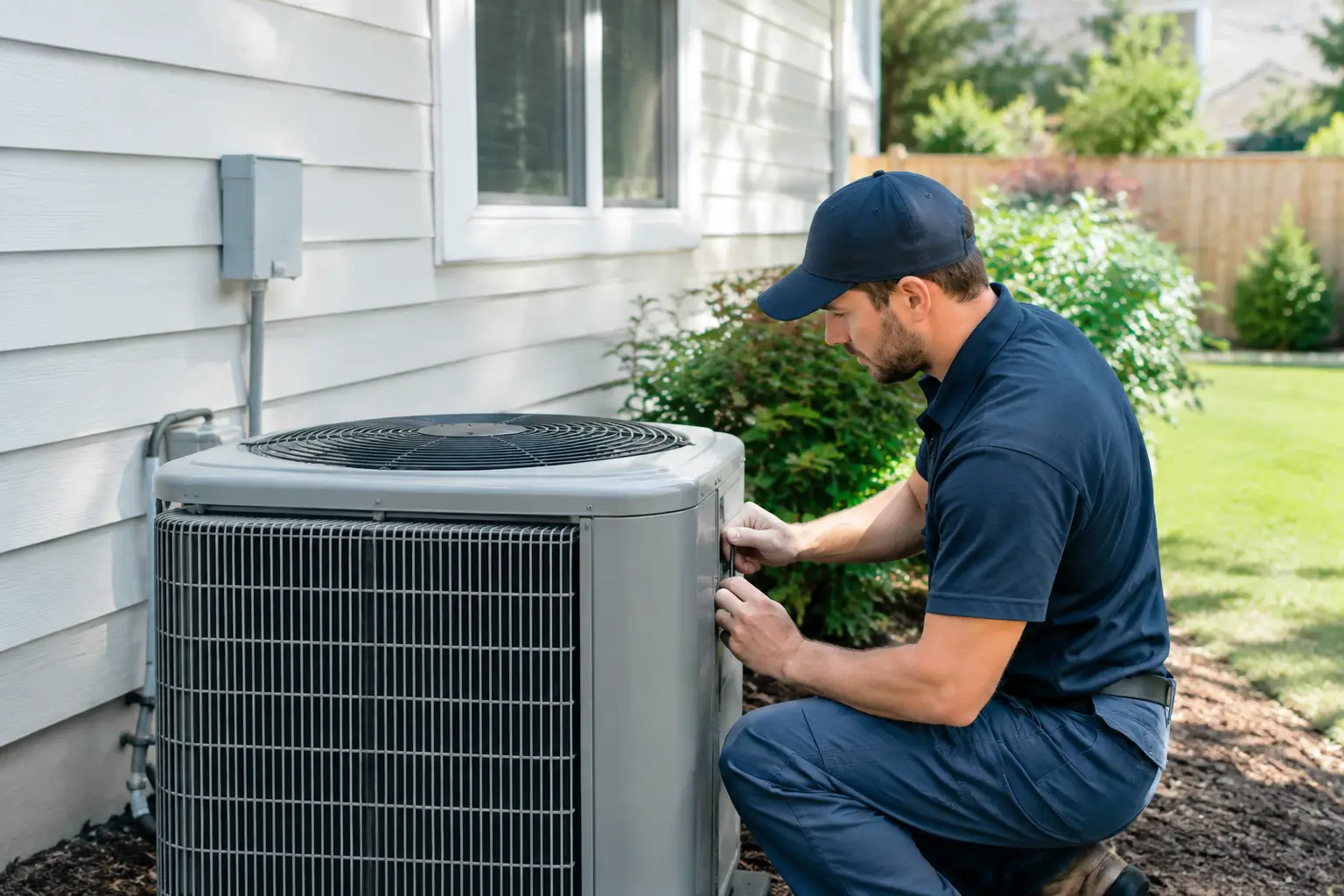

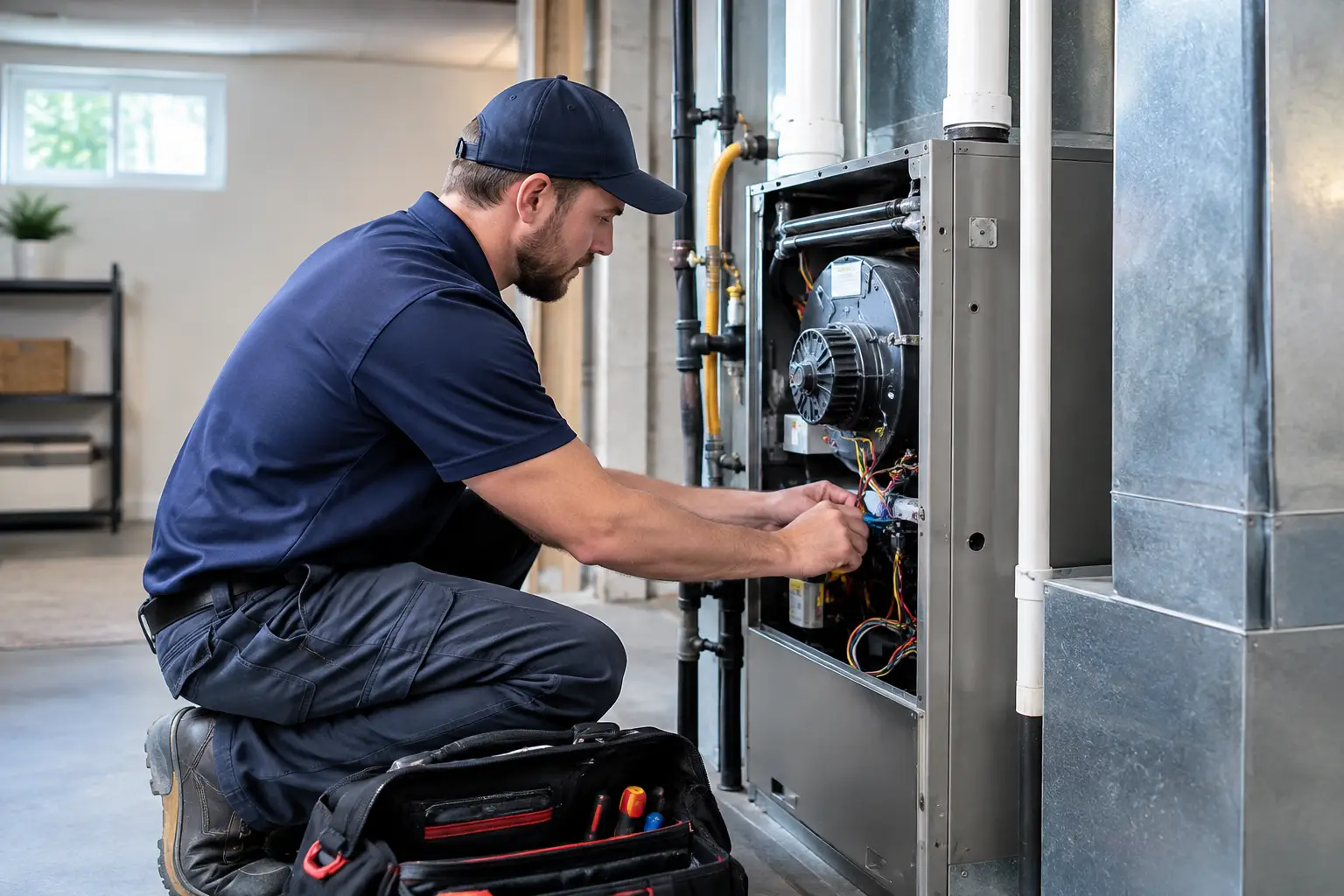
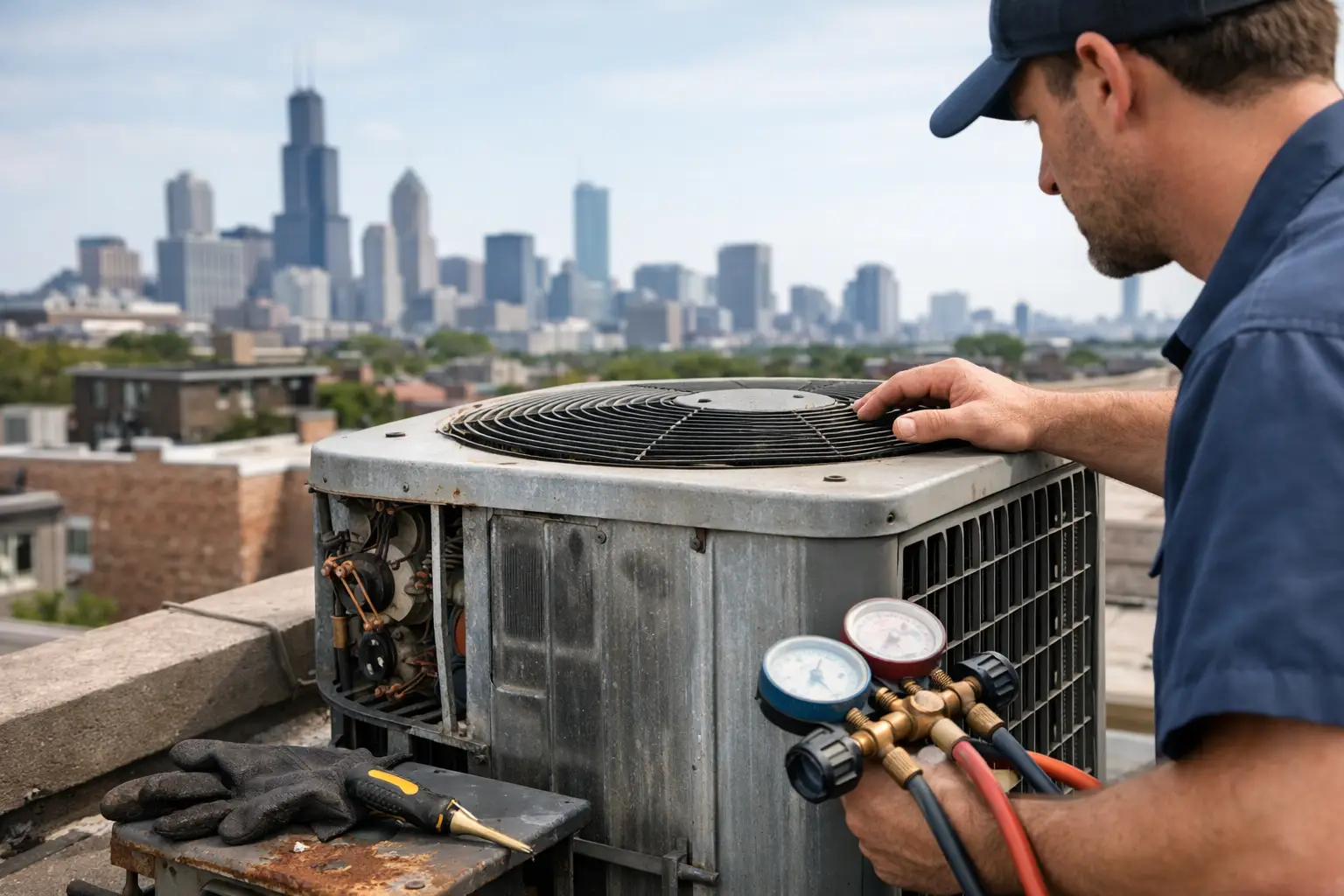
A Chicago air conditioner rarely fails at a convenient time. It usually starts with a system that runs longer than it used to, rooms that never quite cool down, or a repair bill that arrives during the first humid stretch of summer. When you are considering AC replacement Chicago homeowners need more than a quick equipment quote. You need clear answers about whether replacement is justified, what size system your property requires, and what the installation will involve.
A new air conditioner is a significant decision for a home, rental property, or small business. The right system can improve comfort, lower unnecessary energy use, and provide dependable service for years. The wrong system can leave you with uneven temperatures, humidity problems, and avoidable operating costs. A careful evaluation protects both your comfort and your budget.
1. Your AC Needs Frequent or Costly Repairs
One repair does not automatically mean it is time for a new system. Capacitors, contactors, drain line issues, and electrical components can often be repaired reliably. However, repeated service calls are a different story, especially when the unit is nearing the end of its expected service life.
If you have paid for several repairs in the past two cooling seasons, ask for a straightforward comparison between the repair cost and replacement options. Major issues involving the compressor, evaporator coil, or refrigerant leaks can be expensive. Continuing to repair an aging system may make sense temporarily, but it may not be the best long-term value.
A qualified technician should explain the condition of the equipment, the likely repair, and the trade-off without pressure. The goal is not to replace equipment that can still perform safely and reliably. It is to prevent you from putting more money into a system that is becoming unpredictable.
2. The System Is 12 to 15 Years Old
Many central air conditioners last around 12 to 15 years, though maintenance history, installation quality, run time, and local conditions all affect that timeline. A well-maintained unit may operate beyond that range. Still, age matters when efficiency declines and replacement parts become harder to source.
Chicago summers place a particular demand on cooling equipment. A system may sit mostly idle through the long heating season, then be expected to manage high humidity and rapid temperature swings. If an older unit struggles to start, runs constantly, or cannot maintain the thermostat setting on hot afternoons, replacement may be more practical than waiting for a complete failure.
Age alone should not force the decision. It should prompt an honest inspection and a plan, particularly if you manage a rental property or business where an unexpected outage can quickly become a tenant or customer issue.
3. Your Home Has Hot Rooms, Cold Rooms, or Humidity Problems
Uneven cooling is not always an air conditioner problem. Leaky ductwork, poor insulation, blocked returns, an undersized system, or incorrect thermostat placement can all affect comfort. That is why simply installing a larger AC is not a reliable fix.
An oversized system can cool the air too quickly and shut off before it removes enough humidity. The result can be a space that feels cool but clammy. An undersized unit may run for long periods without reaching the desired temperature. Both situations can increase wear and energy costs.
Before recommending an AC replacement in Chicago, the system should be evaluated as a whole. That includes the existing equipment, ductwork, airflow, electrical connections, drainage, and the cooling needs of the property. For additions, converted attics, garden units, or areas without practical duct access, a ductless system may be a better fit than extending an already strained central system.
4. Energy Bills Keep Rising Without a Clear Reason
Utility bills naturally rise during hotter weather, but a noticeable increase with similar use can signal an efficiency issue. Older systems generally use more electricity than current equipment, especially if they have lost capacity, have airflow restrictions, or were not properly maintained.
A replacement system may reduce cooling costs, but savings depend on several factors: the condition of your home, your thermostat habits, the system’s efficiency rating, and whether the equipment is correctly sized and installed. It is wise to be cautious of promises that a new unit will cut bills by a specific percentage. A professional should help you compare realistic equipment options and explain where savings are likely to come from.
5. Your Current Refrigerant Creates a Long-Term Concern
Some older air conditioners use R-22 refrigerant, which is no longer produced or imported in the United States. Limited reclaimed supplies can make repairs involving refrigerant more costly and less predictable.
If your R-22 system has a minor, contained issue and otherwise operates well, repair may still be reasonable. If it has a recurring leak, requires a major component replacement, or is already near the end of its service life, replacement often provides a more stable path forward. Modern systems use currently supported refrigerants and are designed to meet newer efficiency standards.
6. You Are Remodeling or Changing How the Property Is Used
A renovated kitchen, finished basement, home office, new addition, or commercial layout change can alter a building’s cooling load. The AC that served the original layout may no longer be appropriate. This is common in older Chicago homes, where insulation levels, window upgrades, and room usage can change significantly over time.
Property owners should also consider who uses the space and when. A home occupied during the day has different cooling demands than one empty until evening. A storefront with equipment, lighting, and customer traffic has different needs than a quiet office. Replacement is an opportunity to match the system to the property as it is now, not as it was years ago.
7. You Want More Predictable Comfort and Fewer Emergencies
Some systems still run but require constant attention. They may be loud, slow to cool, difficult to control, or prone to shutting down on the hottest days. Choosing replacement before the system fails gives you time to evaluate options without making a rushed decision during an emergency.
That planning matters for landlords and small-business owners. Scheduling work before peak summer demand can reduce disruption, give occupants advance notice, and make it easier to coordinate access. It also gives you time to address related needs, such as a failing thermostat, poor indoor air quality, zoning concerns, or a maintenance plan for the new equipment.
What a Proper AC Replacement Should Include
A dependable installation begins well before the new unit is set in place. The contractor should inspect the existing system and discuss your comfort concerns, property layout, budget, and priorities. Equipment selection should be based on a load calculation and the home’s actual requirements, not solely on the size of the old unit.
The installation should also account for refrigerant line condition, electrical capacity, condensate drainage, pad or mounting requirements, airflow, and thermostat compatibility. If ductwork needs repair or modification, that should be explained clearly before work begins. These details influence performance as much as the equipment brand or efficiency rating.
During installation, clean workmanship matters. Technicians should protect the work area, remove old equipment responsibly, test the system after startup, and leave you with clear operating information. Upfront pricing should identify what is included so there are no surprises after the work is underway.
Choosing the Right Replacement Option
There is no single best air conditioner for every Chicago property. A standard central AC system may be the practical choice for a home with sound ductwork. A heat pump can provide efficient cooling and supplemental heating, though the right setup depends on the home’s existing heating equipment and winter comfort needs. Ductless mini-splits can solve targeted comfort problems in additions, top-floor rooms, or spaces without ducts.
Efficiency is worth considering, but the highest-rated model is not automatically the best value. A moderate-efficiency unit installed correctly may be a smarter investment than premium equipment that exceeds the needs of the property. Focus on proper sizing, dependable components, warranty coverage, and the quality of the installation.
For a clear recommendation, work with a licensed and insured HVAC company that can explain the options in plain language. NATE-certified technicians bring tested technical knowledge to equipment selection, installation, and system startup. At Shad Heating & Cooling, the focus is on reliable comfort, clean work, and honest upfront pricing so you can make the decision with confidence.
If your air conditioner is becoming unreliable, arrange an evaluation before the next heat wave turns a manageable concern into an urgent problem. A careful assessment now can give you a replacement plan that fits your property, your timeline, and the comfort of everyone inside.