






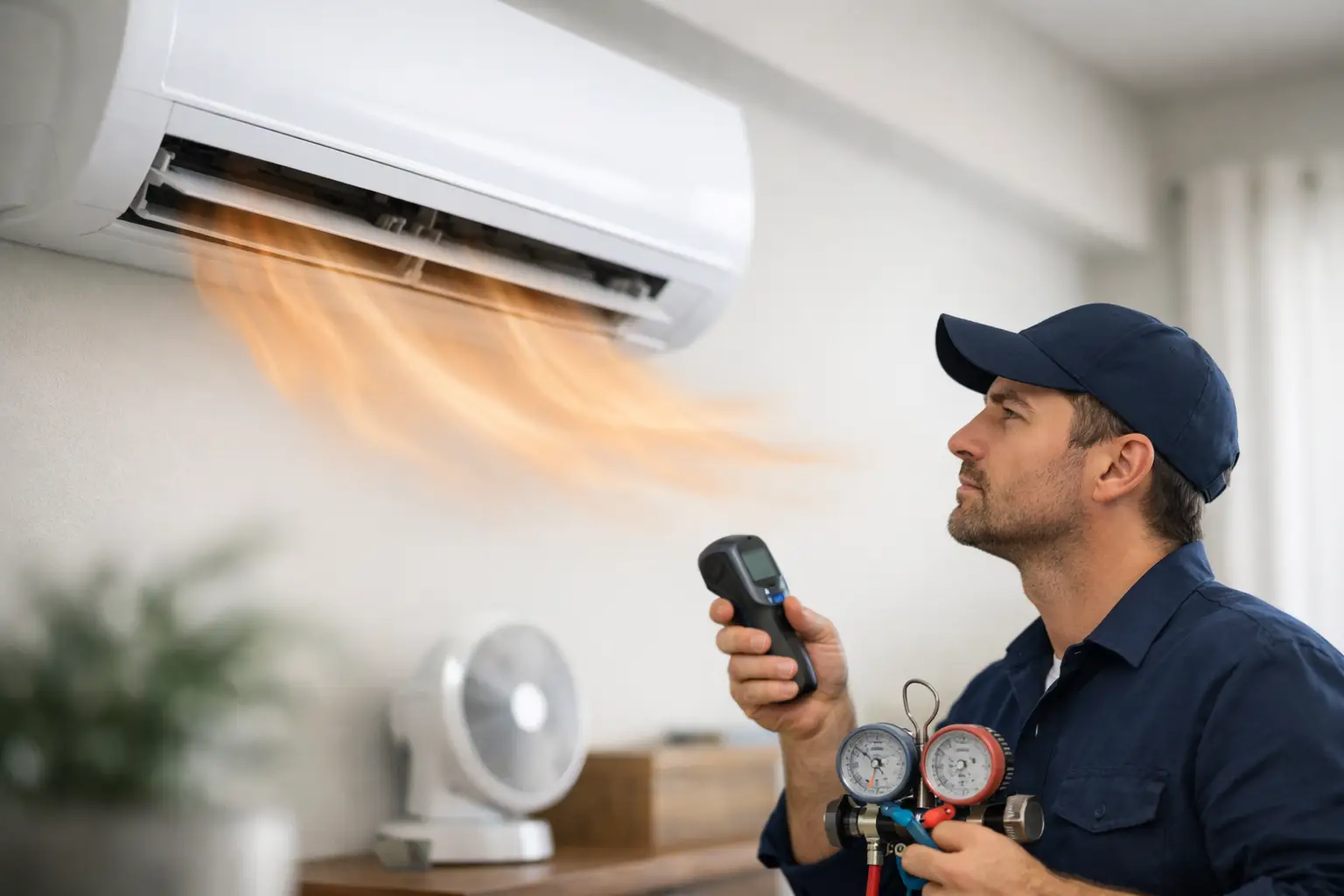
A hot Chicago afternoon can turn stressful fast when your AC is blowing warm air instead of cooling the room. The system may still be running, air may still be moving through the vents, and yet the temperature indoors keeps climbing. That combination usually means your air conditioner needs attention – but the cause is not always a major failure.
A few simple settings can create the same symptom as a mechanical problem. Other causes, including electrical issues, frozen components, drainage problems, or refrigerant leaks, require a trained technician. Knowing the difference helps protect your comfort, your equipment, and your budget.
Start With These Safe Checks
Before scheduling a repair, take a moment to rule out a basic operating issue. These checks do not involve opening equipment panels or handling electrical or refrigerant components.
Confirm that the thermostat is set to Cool, not Heat or Fan. Set the target temperature at least a few degrees below the current room temperature. If the fan is set to “On,” switch it to “Auto.” In the On position, the blower keeps circulating air between cooling cycles, which can feel warm even when the AC itself is functioning.
Next, check the air filter. A heavily clogged filter restricts airflow and can contribute to poor cooling or a frozen indoor coil. If it is visibly dirty, replace it with the correct size and type for your system. Also make sure supply vents are open and not blocked by furniture, rugs, or window coverings.
Finally, look at the outdoor unit from a safe distance. Leaves, grass clippings, and stored items can limit airflow around it. Clear loose debris from the surrounding area, leaving adequate space around the unit. Do not remove panels or attempt to clean internal components yourself.
If these basic checks do not restore cool air, turn the system off and arrange professional service. Continuing to run an AC that is struggling can turn a smaller repair into a larger one.
Why Is My AC Blowing Warm Air?
The answer depends on what the system is doing, when the problem began, and whether airflow has changed. A technician will inspect the full cooling process rather than replacing parts based on a single symptom.
Thermostat or control issues
A thermostat can be set incorrectly, lose calibration, develop a wiring problem, or stop communicating properly with the HVAC system. Smart and programmable thermostats can also follow schedules that override manual changes. This is often one of the simpler causes, but it still deserves a proper diagnosis before replacing equipment.
A tripped breaker or power problem
Central air conditioning uses separate electrical components for the indoor and outdoor equipment. If the outdoor unit loses power while the indoor blower continues running, air will still come from the vents but it will not be cooled.
You can check whether a breaker has visibly tripped and reset it once. If it trips again, leave it off and call for service. Repeated tripping can indicate an electrical fault or a failing component. It is not a problem to keep resetting.
Dirty coils or restricted airflow
Your AC removes heat from indoor air through the evaporator coil and releases that heat outdoors through the condenser coil. Dirt, blocked airflow, or a neglected filter can interfere with that process. The system may run longer, cool unevenly, or eventually send warm air through the home.
Regular maintenance addresses the areas homeowners cannot fully inspect on their own. It also gives a technician an opportunity to spot worn electrical connections, drainage concerns, and declining performance before the hottest part of summer.
A frozen evaporator coil
Ice on the indoor coil prevents normal heat transfer. The vents may deliver weak airflow, lukewarm air, or no air at all. A dirty filter, blocked return air path, blower issue, or low refrigerant level can all contribute to freezing.
If you suspect a frozen coil, turn off cooling at the thermostat and set the fan to Auto. Do not chip away at ice or run the system in hopes that it will correct itself. The ice may melt, but the underlying cause will remain and the problem is likely to return.
Low refrigerant from a leak
Refrigerant is not fuel that an air conditioner simply uses up. If the level is low, there is usually a leak that needs to be found and repaired. Low refrigerant reduces cooling capacity, can cause coil freezing, and may place added strain on the compressor.
A responsible repair involves more than adding refrigerant. The system should be evaluated for the source of the loss and checked for safe, reliable operation afterward. Temporary fixes can leave homeowners facing the same problem again during the next heat wave.
Condensate drainage or safety switch problems
Air conditioning creates moisture as it cools humid indoor air. That water must drain properly. If a drain line clogs or a condensate pump fails, a safety switch may shut down part of the cooling system to prevent water damage.
This is particularly relevant during humid Chicago weather, when the system removes more moisture from the air. A technician can clear the drainage issue and verify that the safety controls are doing their job.
A failing compressor, fan motor, or capacitor
The outdoor unit contains components that are essential to moving heat out of your home. A failing capacitor may prevent a motor from starting correctly. A damaged fan motor can keep the condenser from releasing heat. Compressor concerns can be more significant and deserve a careful assessment of repair options, system age, efficiency, and overall condition.
These failures can produce buzzing, clicking, humming, burning odors, or a unit that starts and stops repeatedly. Shut the system down and request service if you notice these warning signs.
When Warm Air Is an Urgent AC Problem
Not every cooling issue is an emergency, but some symptoms should not wait. Stop using the air conditioner and seek professional help if you smell burning or melting plastic, hear loud grinding or banging, see smoke, notice water pooling near electrical equipment, or find that breakers repeatedly trip.
Households with young children, older adults, pets, or anyone sensitive to heat should also take indoor temperatures seriously. Close blinds against direct sun, use safe portable fans, stay hydrated, and consider a cooler location if indoor conditions become unsafe while you wait for repair.
For landlords and small-business owners, a warm-air complaint can affect tenants, customers, inventory, and operations. Document when the issue began and whether it affects one zone or the entire property. That information helps the technician narrow down the likely cause more efficiently.
What to Expect From a Professional Diagnosis
A thorough AC visit should be clear and methodical. The technician should listen to what changed, inspect thermostat operation and airflow, check electrical performance, assess indoor and outdoor components, and evaluate drainage and refrigerant-related concerns where appropriate.
The goal is to identify the actual cause of the failure, not simply treat the symptom. You should receive an understandable explanation of the findings, available repair options, and honest upfront pricing before work begins. If replacement becomes worth considering, the decision should account for repair history, equipment condition, comfort needs, and long-term operating costs – not pressure.
Shad Heating & Cooling provides professional AC diagnostics and repair with licensed, insured service and NATE-certified technicians. Clean workmanship and lasting performance matter, especially when a cooling problem interrupts your home or business.
Preventing Another Warm-Air Surprise
No air conditioner can be made failure-proof, but consistent care lowers the odds of an inconvenient breakdown. Replace filters on schedule, keep the outdoor unit clear, and arrange seasonal maintenance before sustained summer heat arrives. Maintenance is also the right time to discuss uneven rooms, humidity concerns, frequent cycling, or rising utility bills.
If your AC is blowing warm air now, avoid guessing at the repair. A timely, accurate diagnosis is the best way to restore reliable comfort and prevent unnecessary damage.
Written by the Shad Heating & Cooling team
Frequently Asked Questions
Why is my AC running but not cooling?
The fan may be operating while the outdoor cooling equipment is not. Common causes include thermostat settings, a power issue, a frozen coil, restricted airflow, or a refrigerant-related problem.
Should I turn my AC off if it is blowing warm air?
Yes, especially if the air remains warm after basic thermostat and filter checks. Turning it off can help prevent additional strain while a technician diagnoses the cause.
Can a dirty air filter make an AC blow warm air?
It can. Severe restriction reduces airflow and may contribute to coil freezing and poor cooling performance. Replace a dirty filter, but schedule service if cooling does not return.
Is low refrigerant a normal maintenance issue?
No. Refrigerant should remain in a sealed system. Low levels usually point to a leak that should be located and repaired by a qualified HVAC professional.