






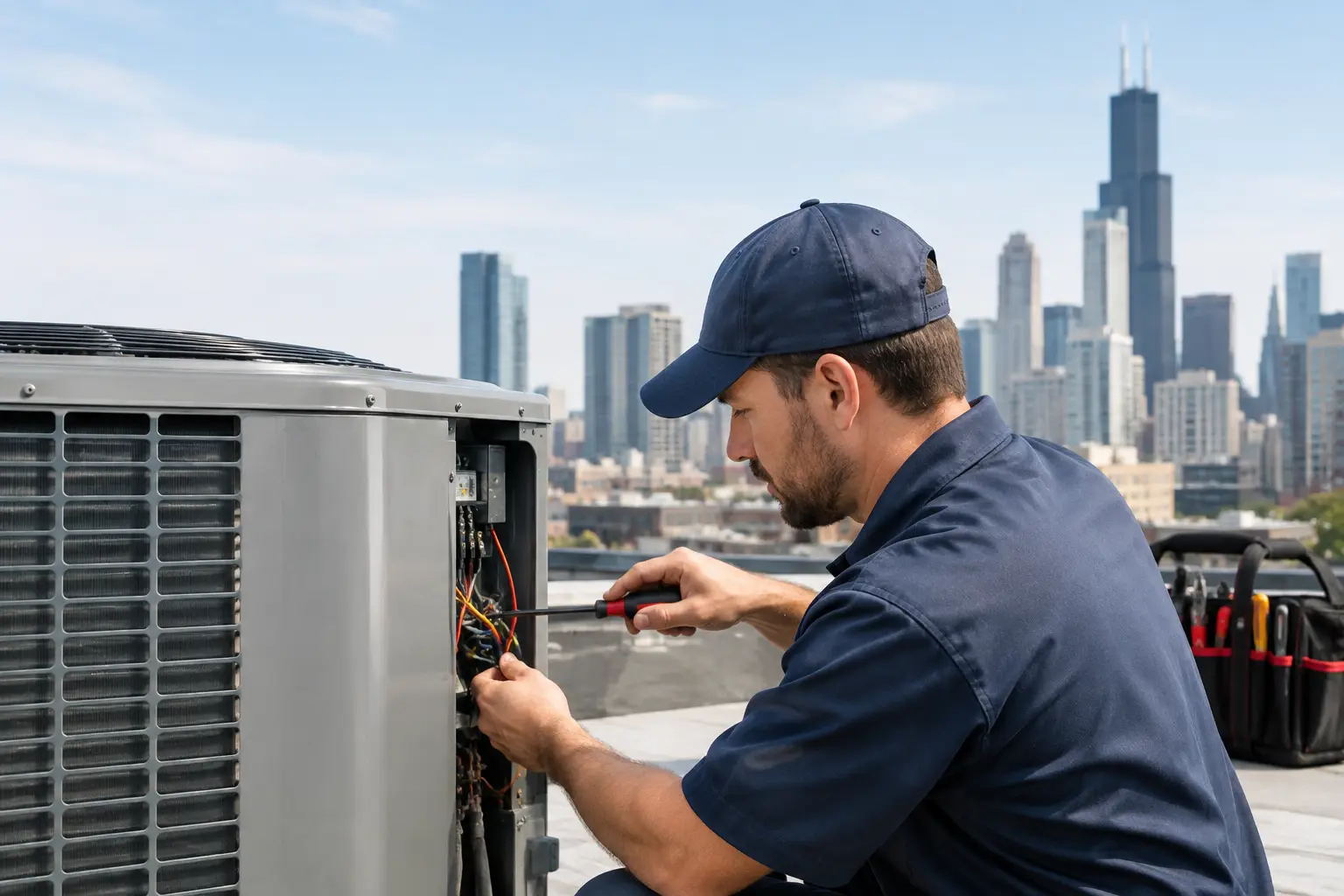
A furnace that stops overnight or an air conditioner that blows warm air creates an immediate question: what HVAC service call costs, and what will you actually receive for that visit? The honest answer is that a service call is not one fixed charge. It covers the professional evaluation needed to identify the problem safely, explain the condition of your system, and give you clear options before repair work begins.
For Chicago homeowners and property owners, that distinction matters. Our weather puts real demands on furnaces, boilers, air conditioners, heat pumps, and ductless systems. A quick guess can lead to a repeat failure, while a careful diagnosis helps protect your comfort, safety, and equipment investment.
What an HVAC Service Call Typically Covers
An HVAC service call begins with a trained technician assessing the reported issue and inspecting the parts of the system most likely to be involved. If your furnace will not start, for example, the technician may evaluate thermostat operation, electrical controls, ignition components, airflow, safety switches, filters, venting, and fuel-related operation as appropriate. For cooling concerns, the process may include checking airflow, condensate drainage, electrical components, thermostat settings, and system performance.
The purpose is to find the cause, not merely reset the equipment and hope it continues running. A reliable diagnosis can take longer when symptoms are intermittent, when several components contribute to the issue, or when the system has not been maintained regularly.
After the evaluation, you should receive a straightforward explanation of what was found, what work is recommended, and the cost of approved repairs before that work moves forward. The service-call charge and the cost of repairs are often separate because the first covers diagnosing the concern, while the second depends on the repair itself.
What HVAC Service Call Costs Depend On
Several practical factors affect the total cost of a service visit. The condition of the equipment is usually the largest factor, but timing, accessibility, and the type of system also play a role.
The Type of Heating or Cooling System
A standard forced-air furnace and central air conditioner may require a different diagnostic process than a boiler, heat pump, ductless mini-split, rooftop unit, or zoning system. Boilers in particular require close attention to water pressure, circulation, controls, piping, and safety devices. Systems with more than one zone or indoor unit can also require more testing to pinpoint where the failure began.
Older equipment may take additional time to assess, especially if prior repairs, discontinued parts, or aging wiring complicate the problem. That does not automatically mean replacement is the right answer. It means the technician should explain the condition honestly and help you weigh a repair against the likely reliability of the system going forward.
The Cause and Complexity of the Failure
Some calls involve a simple operational issue or a part that can be replaced during the appointment. Others require deeper troubleshooting, additional labor, special-order parts, or a return visit. A system may have one visible symptom but more than one underlying concern, such as restricted airflow that contributed to a safety shutdown or drainage problem.
The right repair should address the reason the problem occurred whenever possible. A temporary workaround can be appropriate in limited situations, but you deserve to know when it is temporary and what may still need attention.
When Service Is Needed
A planned weekday appointment is different from an emergency call outside regular hours. Emergency availability requires technicians, dispatch support, equipment, and parts readiness when most businesses are closed. That can affect the cost of a visit.
Still, an after-hours call is often worth considering when there is no heat during freezing conditions, a cooling failure affects a vulnerable occupant, a boiler issue threatens property damage, or you notice a potential safety concern. If you smell gas, leave the area, avoid operating electrical switches, and contact the gas utility or emergency services as appropriate before arranging HVAC service.
Access, Property Type, and System Location
A unit in an open utility room is generally easier to inspect than one located in a tight crawl space, attic, locked mechanical room, or commercial area with restricted access. Multifamily buildings and small businesses may also have scheduling, tenant coordination, or building-access requirements that affect the visit.
Good technicians account for these conditions while respecting the property. That includes using clean work practices, protecting the work area when needed, and explaining what must be accessed before work begins.
Service Call Fees Versus Repair Costs
It helps to separate the cost of coming out and diagnosing the system from the cost of fixing it. The diagnostic visit gives a technician enough information to recommend the correct repair. The repair cost may include parts, labor, materials, and any additional work required to restore safe operation.
A transparent company will not use a vague diagnosis to pressure you into approving work. Instead, it should explain the repair in plain language: what failed, why it matters, what the recommended solution involves, and whether there are reasonable alternatives.
For example, a homeowner may choose between a repair that restores operation now and a larger recommendation based on the unit’s age, repair history, efficiency, or condition. Neither option should be presented as a scare tactic. The best choice depends on the system, your budget, your plans for the property, and how much risk of another breakdown you are comfortable accepting.
How to Avoid Unpleasant HVAC Cost Surprises
You cannot prevent every equipment failure, but you can reduce uncertainty before and during a service call. When you schedule, describe the symptoms clearly. Mention whether the system is making noises, turning on and off repeatedly, leaking water, producing unusual odors, or failing to heat or cool the whole property. Let the dispatcher know the system type and whether the issue is urgent.
Before approving a repair, ask what the diagnosis found and whether the quoted work resolves the root cause or addresses only the immediate symptom. You can also ask whether the repair is expected to improve reliability, whether any related components should be monitored, and whether a maintenance visit would help prevent recurrence.
Upfront pricing matters because it lets you make a decision with information rather than stress. At Shad Heating & Cooling, the goal is to provide clear recommendations, clean workmanship, and repairs that support lasting comfort – not unnecessary work or hidden surprises.
When a Service Call Is the Smart Next Step
Call for professional service when your furnace, boiler, or air conditioner will not operate normally, when comfort has noticeably changed, or when you see signs of a developing problem. Waiting can turn a manageable repair into a larger interruption, particularly during Chicago’s winter cold or humid summer stretches.
A service call is also worthwhile when the system still runs but cycles too often, leaves rooms unevenly heated or cooled, produces unfamiliar sounds, or causes a sudden increase in utility use. Those symptoms do not always indicate a major failure, but they are worth evaluating before the system is pushed into peak-season demand.
Preventive maintenance is the other side of the equation. Seasonal tune-ups give technicians a chance to inspect wear, clean key components, verify performance, and identify concerns before they become an urgent call. Maintenance cannot eliminate every repair, but it can support safer, more dependable operation and give you a clearer picture of your equipment’s condition.
When comfort is on the line, the lowest initial charge is not always the best value. A careful diagnosis, honest upfront explanation, and repair completed with attention to safety can help you make a confident decision for your home or property.
Written by the Shad Heating & Cooling team
Frequently Asked Questions
Is an HVAC service call the same as a repair?
No. A service call generally covers the visit and diagnostic evaluation. Repair costs depend on the work, parts, and labor needed after the issue is identified.
Why can an HVAC repair cost more than expected?
The visible symptom may not reveal the full cause. Additional testing can uncover worn parts, airflow issues, control problems, or safety concerns that need to be addressed.
Should I call for service if my system is still running?
Yes, if it is short cycling, making unusual noises, heating or cooling unevenly, leaking, or using noticeably more energy. Early attention may help prevent a complete breakdown.
Can maintenance reduce service calls?
Regular maintenance can catch wear and performance issues earlier. It is a practical way to support reliable comfort and make better decisions before an urgent problem develops.