






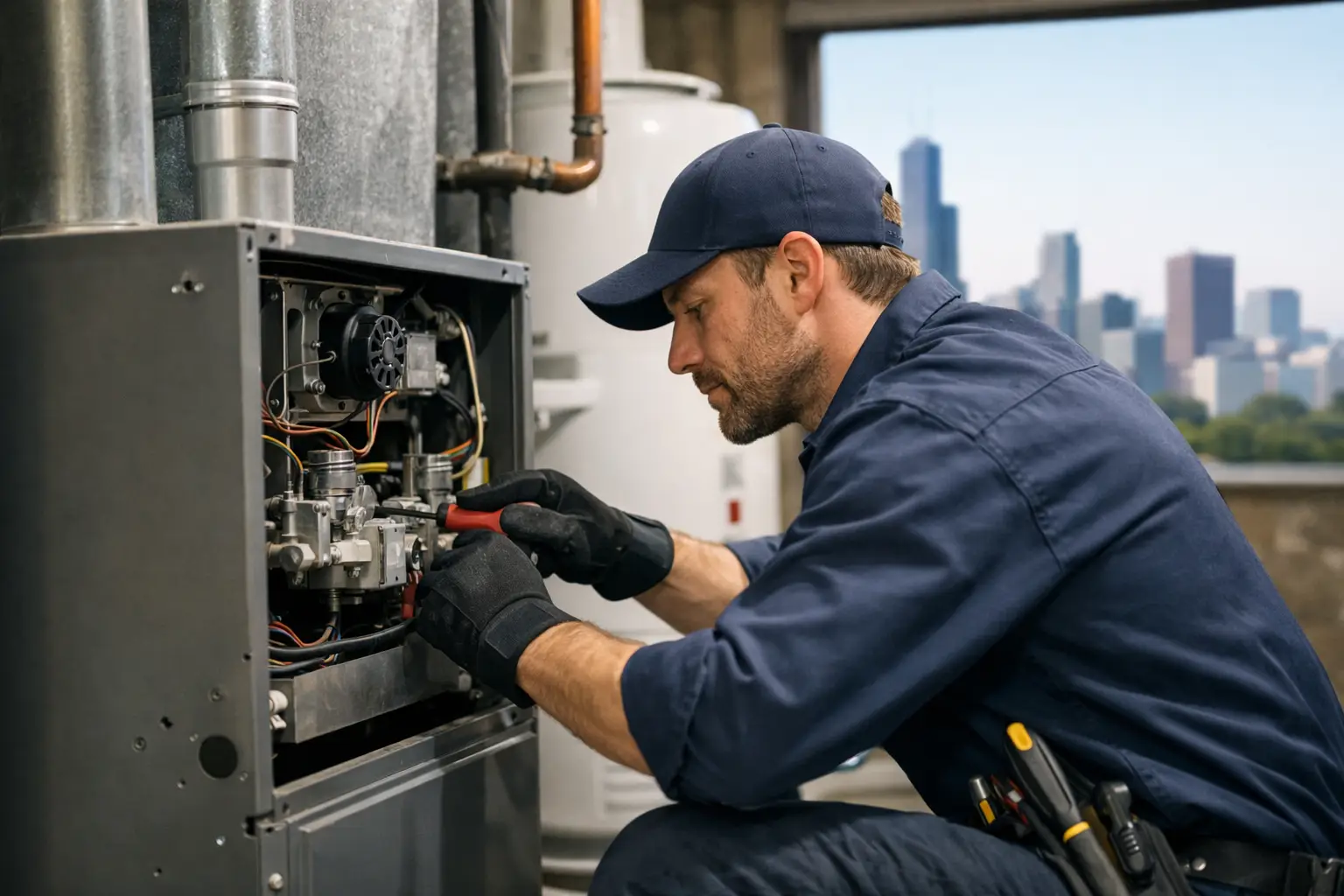
A Chicago furnace rarely chooses a convenient time to stop working. It may begin with cool air from the vents on the first hard freeze, a thermostat that never reaches the set temperature, or an unfamiliar sound in the middle of the night. When you search for furnace repair near me, you need more than the closest available company. You need a qualified professional who can identify the real problem, explain the options clearly, and restore safe, reliable heat without pressure or surprises.
For homeowners, landlords, and small-business owners, a furnace problem can affect comfort, safety, tenants, pipes, and daily operations. Acting early often makes the repair simpler. Just as important, choosing the right technician helps protect you from temporary fixes that leave the underlying issue unresolved.
When a Furnace Problem Needs Prompt Attention
Not every heating concern is an emergency, but some symptoms should not wait for a convenient appointment. If the system is blowing cold air, repeatedly shutting down, making loud banging or scraping sounds, or failing to start at all, schedule professional service as soon as possible. A furnace that runs constantly without warming the space also deserves attention, especially during sustained cold weather.
A gas odor is different. Leave the building, avoid operating electrical switches or appliances, and contact the gas utility or emergency services from a safe location. Do not attempt to restart the furnace or investigate the source yourself. A qualified HVAC technician can inspect the equipment after the immediate safety concern has been addressed.
Carbon monoxide concerns require the same caution. If a carbon monoxide alarm sounds, get everyone outside and contact emergency services. Furnaces should be inspected regularly because combustion, venting, and safety controls all need to work correctly. A working carbon monoxide detector on each level of a home is an essential layer of protection, but it is not a substitute for proper furnace maintenance.
What to Check Before Calling for Furnace Repair Near Me
There are a few safe, basic observations that can help you describe the problem accurately. Confirm that the thermostat is set to heat and set above the current indoor temperature. Look at the air filter and note whether it appears heavily clogged. Check whether the furnace has power and whether a breaker has tripped. For a high-efficiency furnace, also note whether the outdoor vent termination is visibly blocked by snow, ice, or debris.
These observations are not a diagnosis, and they should not turn into a repair attempt. Furnaces involve gas, electricity, hot surfaces, moving parts, and combustion exhaust. If a simple setting or power issue does not explain the problem, it is time for a trained technician to take over.
When you call, share what you have noticed: whether the furnace starts and stops, whether any error lights are visible, when the issue began, and whether the home has uneven temperatures. For rental properties or small commercial spaces, include whether every unit or zone is affected. Clear details help the service team arrive prepared and focus the inspection efficiently.
What a Professional Furnace Repair Visit Should Include
A dependable repair visit begins with diagnosis, not assumptions. The technician should listen to your concerns, inspect the furnace and connected components, and test the system safely. Depending on the symptoms, that may include checking airflow, the filter and blower, ignition components, flame sensing, venting, electrical connections, condensate drainage, thermostat communication, and safety controls.
The goal is to find the cause of the failure, not simply get the furnace running for a few minutes. For example, a furnace that overheats and shuts off may have an airflow problem, a blower issue, or a failing safety component. Replacing one part without identifying why the furnace overheated can lead to another breakdown.
Once the issue is identified, a professional should explain the recommended repair in plain language. You should understand what failed, why it matters, what the work involves, and whether there are reasonable alternatives. Honest upfront pricing should be provided before work begins, so you can make a decision without guessing what the final bill may include.
After the repair, the technician should test furnace operation and leave the work area clean. That process matters. A repaired furnace should be evaluated for safe startup, proper heat delivery, and dependable cycling, not just switched on and declared finished.
Repair or Replacement: How to Make a Clear Decision
A repair is often the right choice when the furnace is relatively young, the issue is isolated, and the rest of the system is operating well. Common wear-related concerns can frequently be repaired when caught early. Routine maintenance also helps reduce strain on parts and can extend the useful life of the equipment.
Replacement may deserve consideration when a furnace has recurring breakdowns, major safety concerns, declining performance, or repair needs that are disproportionate to its age and condition. An older system can sometimes be repaired, but that does not always make it the best long-term value. The right answer depends on the equipment condition, repair history, energy use, comfort needs, and plans for the property.
For a landlord, the decision may also involve reliability across a heating season and the responsibility to maintain habitable indoor temperatures. For a homeowner, persistent hot and cold rooms may point to more than furnace age. Ductwork, thermostat placement, airflow restrictions, insulation, and zoning can all affect comfort. A thoughtful recommendation looks at the whole heating system rather than treating every problem as a furnace replacement opportunity.
Choosing a Heating Company You Can Trust
A search result alone does not tell you how a company will treat your home or property. Look for a licensed and insured HVAC provider with trained technicians, clear communication, and a record of standing behind its work. NATE-certified technicians bring tested knowledge of heating systems and diagnostic practices, which is especially valuable when a problem is intermittent or has multiple possible causes.
Availability matters during a Chicago winter, but quality still matters after the technician arrives. Be cautious of vague diagnoses, high-pressure replacement pitches, or pricing that cannot be clearly explained. A trustworthy company will respect your questions, discuss the condition of the system honestly, and recommend only the work that supports safety and lasting performance.
Clean workmanship is another useful sign. Furnace service may involve access to utility areas, basements, closets, or mechanical rooms. Your technician should protect the work area, handle equipment carefully, and leave the space orderly. These details reflect the care a company brings to the more technical parts of the job as well.
Shad Heating & Cooling provides furnace repair with licensed, insured, NATE-certified technicians, transparent recommendations, and 24/7 emergency service for urgent heating problems. The focus is on identifying the cause, completing the work carefully, and helping customers make informed decisions about their comfort systems.
Preventing the Next No-Heat Call
Even a well-built furnace needs regular attention. Annual professional maintenance is the most practical way to catch worn components, airflow issues, venting concerns, and performance changes before a severe cold spell exposes them. It also gives the technician an opportunity to verify safety controls and evaluate overall system operation.
Between visits, replace filters on the schedule recommended for your system and household conditions. Homes with pets, renovations, allergies, or higher occupancy may need more frequent filter changes. Keep supply and return vents clear, avoid closing too many registers, and pay attention to new noises or longer heating cycles. Small changes are often easier to address before they become a no-heat emergency.
For properties with older equipment, maintenance records are particularly valuable. They help track recurring issues, support better repair-or-replacement decisions, and give property owners a clearer picture of how the system has been performing over time.
Reliable heat is not just about getting through one cold night. It is about having a heating system, and a service partner, you can count on when Chicago weather puts both to the test.
Written by the Shad Heating & Cooling team
Frequently Asked Questions
How quickly should I call if my furnace is blowing cold air?
Call promptly, especially in cold weather. Cold air can result from several issues, and continued operation may not solve the problem or may place added stress on the system.
Is it safe to run a furnace that makes a banging or scraping noise?
No. Turn the system off if the noise is loud or unusual and schedule service. Mechanical sounds can indicate a problem that should be inspected before further operation.
Should I repair my older furnace or replace it?
It depends on its condition, repair history, efficiency, and the nature of the current problem. A professional inspection can provide a clear recommendation without assuming replacement is the only answer.
Can furnace maintenance help prevent emergency repairs?
Yes. Annual maintenance can identify developing issues early and helps support safer, more reliable heating performance throughout the season.