






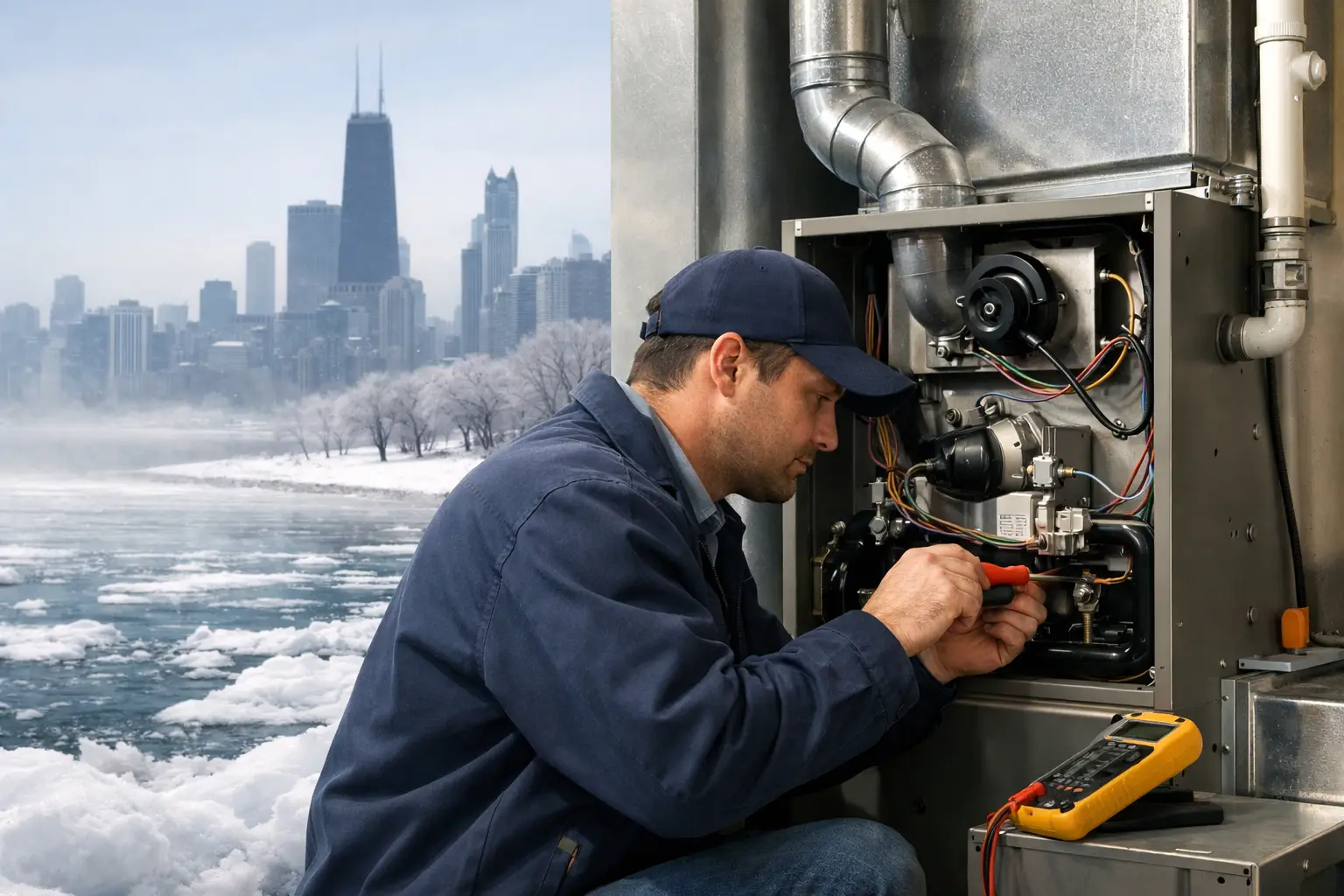
A furnace can appear to be working normally right up until the first hard freeze exposes a weak ignition part, restricted airflow, or a safety control issue. In Chicago, where winter heating systems can run for months with few breaks, furnace maintenance is less about checking a box and more about preventing a no-heat emergency when your household, tenants, or customers need warmth most.
A professional maintenance visit gives your system a careful inspection before minor wear becomes a costly repair. It also helps protect efficiency, indoor comfort, and the safe operation of gas-fired equipment. For homeowners, landlords, and small-business owners, the value is straightforward: fewer surprises, clearer decisions, and a better chance of getting the full useful life from the equipment you already own.
What Furnace Maintenance Actually Covers
A proper maintenance appointment is more than replacing an air filter and turning the thermostat up and down. A qualified technician evaluates how the furnace operates as a complete system, including airflow, electrical connections, combustion-related components, safety controls, and the equipment’s heating cycle.
The exact checklist depends on the age, fuel type, condition, and design of the furnace. A newer high-efficiency unit has different components than an older conventional model, and a furnace serving a multifamily property may have heavier operating demands than one in a small single-family home. Still, a thorough service visit commonly includes inspection and cleaning of accessible components, verification of thermostat operation, testing of safety controls, review of the filter and blower system, and confirmation that the furnace starts, runs, and shuts down properly.
For gas furnaces, combustion and venting deserve particular attention. Problems involving gas, flames, flue piping, electrical controls, or carbon monoxide should always be handled by a licensed HVAC professional. These are not areas for trial-and-error repairs.
A good technician should also explain what was found in plain language. If a part is worn but still operating, you should know whether monitoring it is reasonable or whether replacement is the safer choice. Transparent recommendations matter because not every observation requires an immediate repair.
Why Annual Furnace Maintenance Matters in Chicago
Chicago winters place a real workload on heating equipment. A furnace that cycles occasionally in mild weather may run repeatedly during a cold stretch, putting more stress on motors, igniters, switches, belts, and other moving or electrical parts. Even small performance issues can become more noticeable when the system has to work hard all day and night.
Annual service helps identify conditions that commonly lead to breakdowns: dirty filters, loose electrical connections, blocked condensate drainage on high-efficiency models, dirty flame sensors, worn blower components, and airflow restrictions. Addressing those concerns early can reduce strain on the system and help avoid a loss of heat during severe weather.
Maintenance can also support more consistent comfort. If some rooms feel chilly while others overheat, the cause may be related to airflow, thermostat settings, ductwork, equipment sizing, or zoning – not necessarily the furnace alone. A maintenance visit creates an opportunity to raise those concerns and get a practical assessment instead of simply living with uneven temperatures for another season.
For rental property owners, planned furnace service can be especially valuable. Scheduling maintenance before winter gives you time to address issues on your terms, rather than coordinating an urgent repair after a tenant reports no heat. For local businesses, it can help reduce disruptions to employees, customers, and daily operations.
When to Schedule Furnace Maintenance
The best time to schedule service is generally before the heating season begins, often in early fall. That gives the technician a chance to inspect the system before it enters its most demanding period. It also leaves room to make a thoughtful repair decision if the visit reveals a concern.
That said, a missed fall appointment does not mean maintenance should wait until next year. A furnace can still benefit from service during winter, particularly if you have noticed performance changes. If the system is operating but has become noisier, cycles more often, produces weaker airflow, or struggles to maintain the thermostat setting, it is wise to have it checked.
A maintenance appointment is not a substitute for prompt repair when a safety or reliability concern is present. Contact a professional right away if you smell gas, notice a burning odor that does not quickly clear after seasonal startup, hear loud banging or grinding, see a yellow burner flame where blue is expected, or experience repeated shutdowns. If a carbon monoxide alarm sounds, leave the building, call emergency services, and follow local safety guidance before arranging HVAC service.
The Homeowner Tasks That Support Professional Service
Homeowners can help their furnace operate more reliably without opening panels or working on gas and electrical components. The most useful task is checking the filter regularly and replacing it when it is dirty or according to the filter manufacturer’s guidance. A clogged filter can restrict airflow, reduce comfort, and place unnecessary stress on the blower and heat exchanger.
Keep the area around the furnace clear of storage, boxes, paint, cleaning products, and other combustible materials. Clear space helps protect safety and gives a technician safe access when service is needed. It is also helpful to make sure supply vents and return grilles are not blocked by furniture, rugs, or drapes.
Pay attention to changes rather than waiting for a complete failure. Note unusual sounds, new odors, frequent cycling, colder rooms, or rising utility bills that do not match the weather. These details can help a technician diagnose the issue more efficiently and may prevent a small concern from becoming an emergency call.
If your home has a whole-home humidifier, air purifier, zoning controls, or a smart thermostat, mention that during maintenance. These connected systems can affect comfort and airflow, and they should be considered as part of the larger heating setup.
Maintenance Does Not Eliminate Every Repair
Even a well-maintained furnace can need repairs. Parts wear out, power fluctuations happen, drains clog, and a system nearing the end of its service life may become less reliable despite proper care. Maintenance is risk reduction, not a guarantee that nothing will ever fail.
The trade-off is usually clear. Planned maintenance costs less disruption than discovering an issue during a cold-weather breakdown, but it should never be used to pressure a homeowner into replacing equipment that still has a sensible repair path. Age, repair history, efficiency, safety, and the condition of major components all matter when deciding whether to repair or replace.
A trusted HVAC provider should lay out the findings, explain the options, and give you time to make an informed decision whenever circumstances allow. Shad Heating & Cooling approaches maintenance with that long-term perspective: careful inspection, clean workmanship, and recommendations based on what the system actually needs.
What to Expect From a Professional Visit
Before the appointment, make a note of any comfort concerns and ensure the furnace area is accessible. During service, the technician should inspect the equipment, perform applicable cleaning and testing, and look for signs of wear or unsafe operation. At the end, you should receive a clear explanation of the furnace’s condition and any recommended next steps.
Ask questions if a recommendation is unclear. Useful questions include whether the issue affects safety, whether it requires immediate attention, what could happen if it is deferred, and whether there are steps that can help prevent a repeat problem. Clear answers are part of quality service.
A furnace that has been professionally maintained is easier to rely on when winter settles in. Schedule service before the next extended cold spell, keep up with filter changes, and address changes in performance early so your home or property can stay comfortable without avoidable stress.
Written by the Shad Heating & Cooling team
Furnace Maintenance FAQ
How often should a furnace be maintained?
Most furnaces should receive professional maintenance once a year, ideally before the heating season. Older systems or heavily used commercial equipment may benefit from closer attention.
Does furnace maintenance lower energy bills?
It can help by supporting proper airflow, efficient operation, and timely correction of performance issues. Savings vary based on the furnace’s condition, home insulation, thermostat habits, and weather.
Can I run my furnace with a dirty filter?
You should replace a dirty filter promptly. Restricted airflow can reduce comfort and add stress to furnace components.
What if my furnace is working but making new noises?
New rattling, squealing, grinding, or banging sounds should be evaluated by an HVAC professional. Early diagnosis can help prevent a more serious breakdown.