

Dry indoor air makes itself known quickly during a Chicago winter. You may wake up with a dry throat, notice more static shocks, see gaps in hardwood floors, or find that your home feels cooler than the thermostat setting suggests. Whole house humidifier installation addresses those issues by adding controlled moisture to the air moving through your heating system.
Unlike a portable room unit, a whole-home humidifier works with your furnace or air handler to treat the air throughout the house. It is not a one-size-fits-all upgrade, though. The right equipment, location, settings, and installation method depend on your home, ductwork, water supply, and heating system. A professional evaluation helps prevent the two problems no homeowner wants: air that remains too dry or excess moisture that creates condensation on windows and other cold surfaces.
What a Whole-Home Humidifier Does
A central humidifier adds water vapor to warm air before the blower distributes it through the duct system. Most systems use an automatic humidistat, which measures indoor relative humidity and tells the humidifier when to run. Rather than filling and cleaning a small reservoir every day, the equipment is connected to a water line and drain.
The goal is balance. In winter, many homes benefit from indoor relative humidity around 30% to 40%. The ideal setting can change with outdoor temperatures, insulation levels, and window quality. When it is extremely cold outside, lowering the humidity setting may be necessary to prevent window condensation. A qualified technician will explain how to adjust the control instead of simply setting it once and walking away.
Balanced humidity can make a home feel more comfortable at a reasonable thermostat setting. It can also help protect wood flooring, cabinetry, musical instruments, and other materials that can shrink or crack in very dry air. For many households, it may also reduce the dry-skin and irritated-nasal-passage discomfort associated with heated winter air. It is not a cure for allergies, asthma, or illness, and it should not be treated as one. Proper filtration, ventilation, cleaning, and HVAC maintenance still matter.
Choosing the Right Humidifier Type
The best unit depends on the home and the heating equipment. During a whole house humidifier installation consultation, the technician should consider square footage, ceiling height, system airflow, heat source, duct access, plumbing access, and the home’s air leakage. Larger is not automatically better. Oversizing can make humidity harder to manage, while undersizing may not keep up during cold weather.
Bypass Humidifiers
A bypass humidifier uses the furnace blower and a small duct connection to move warm air through a water panel. Water flows across the panel, and the air picks up moisture before returning to the ductwork. These units are dependable, relatively straightforward, and often a good fit when the existing duct layout supports them.
Their performance depends on warm-air operation and available duct space. They also require a water panel replacement as part of regular seasonal maintenance.
Fan-Powered Humidifiers
A fan-powered model has its own internal fan, which allows it to deliver more moisture than many bypass units without requiring a bypass duct. It can be useful where duct configuration is limited or a home needs additional humidification capacity.
This option uses a small amount of electricity and still needs routine service, but it can offer greater flexibility for homes with challenging installation conditions.
Steam Humidifiers
Steam units boil water to create steam and can provide the highest moisture output. They are often considered for larger homes, tightly controlled comfort needs, or systems that cannot rely on warm supply air in the same way as evaporative models.
Steam humidifiers generally cost more to install and operate. They also require appropriate electrical capacity, plumbing, drainage, and maintenance. A professional should review these requirements carefully before recommending one.
What Happens During Whole House Humidifier Installation
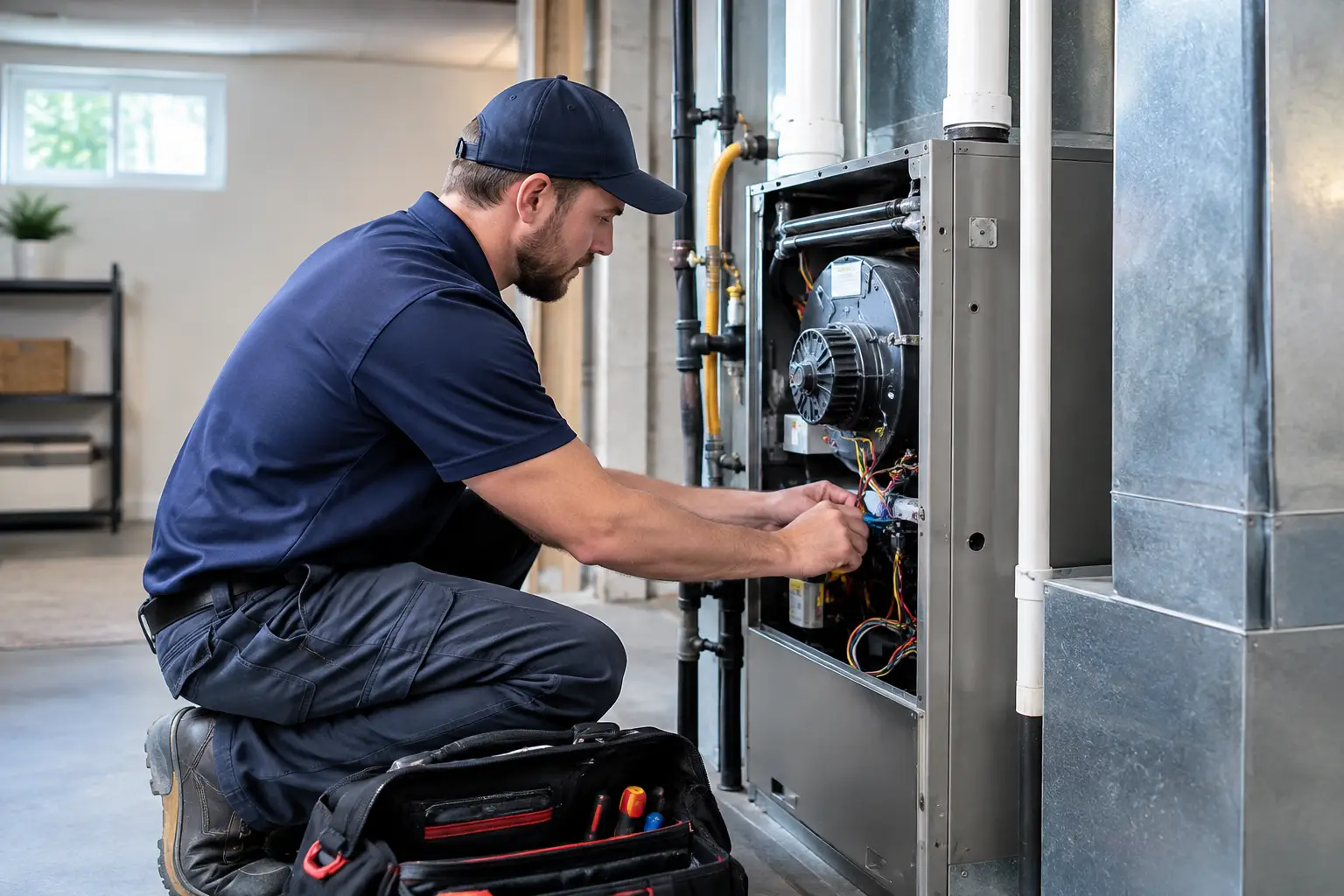
A clean, properly planned installation normally takes a few hours, although timing varies with the system type and the condition of the existing equipment. The work should begin with an inspection, not a guess. The technician verifies the furnace or air handler, identifies a suitable duct location, checks for a nearby water source and drain, and confirms that the selected humidifier matches the home’s needs.
The installation process generally includes four key steps:
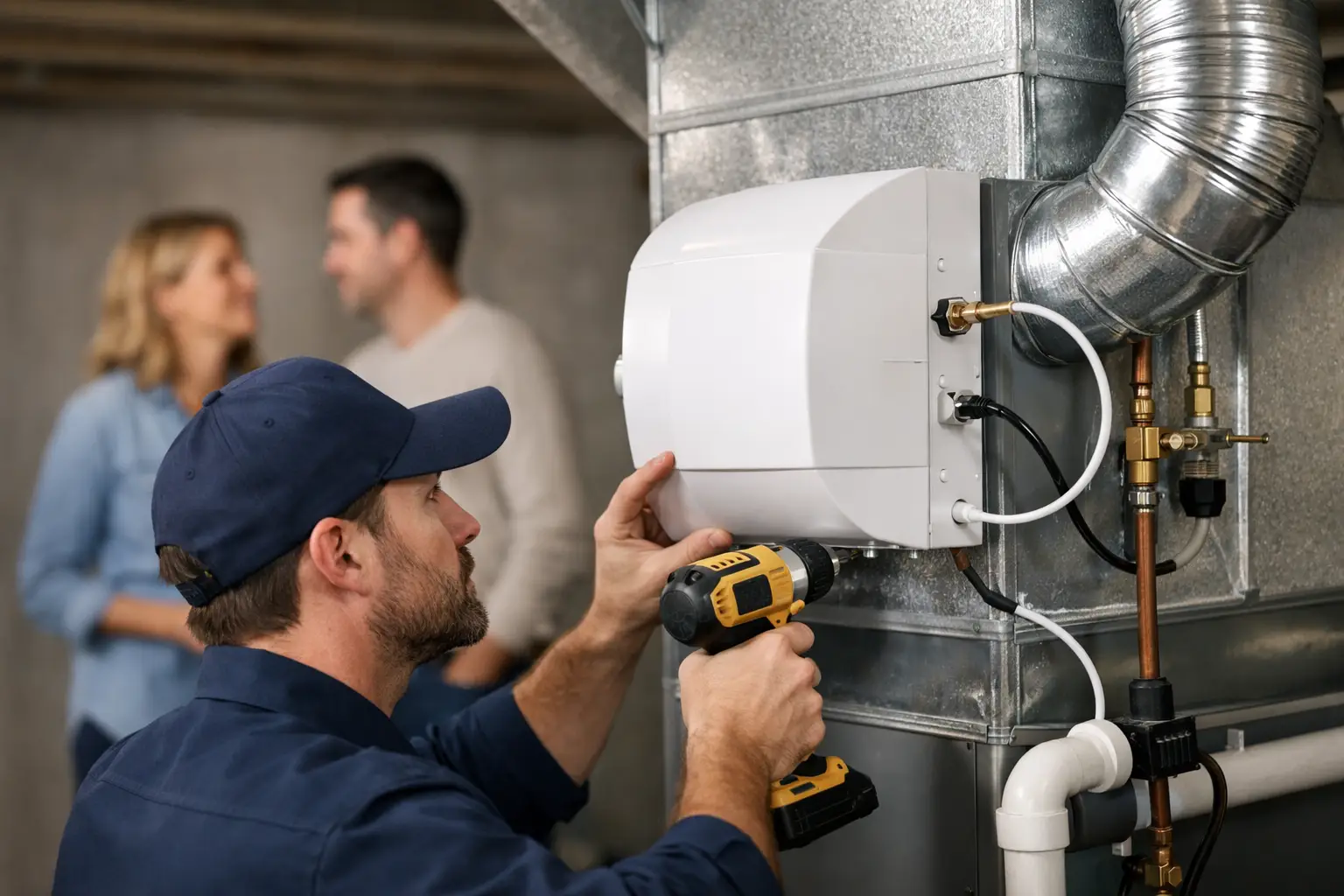
- The humidifier is mounted securely to the appropriate supply or return duct section, based on the equipment manufacturer’s requirements and the home’s layout.
- A water line is installed with the correct shutoff components, while a drain line is routed to carry away excess water safely.
- The unit is connected to the furnace controls or an appropriate power source, then paired with a manual or automatic humidistat.
- The technician tests water flow, drainage, blower operation, and humidity controls, then checks the work area for leaks, loose connections, and clean finishing.
For a bypass model, the installer also creates and seals the duct connection that allows airflow through the humidifier. For a steam unit, electrical and control wiring demand additional attention. Cutting corners on drainage, duct sealing, or electrical connections can lead to water damage, poor performance, or avoidable service calls later.
A professional team should protect the work area and leave it clean. You should also receive a clear explanation of the controls, the recommended humidity range, and the maintenance your specific model needs. If an installer cannot explain where the water will drain or how the unit will be serviced, ask before work begins.
Installation Factors That Affect Price and Timing
There is no honest flat price for every home because installation conditions vary. The humidifier type and capacity are significant factors, but the existing HVAC setup matters just as much. A simple installation with open duct access, a nearby water line, and a suitable drain is different from a project that needs new electrical work, condensate pump installation, duct modifications, or plumbing extensions.
Older homes can present additional considerations. In some Chicago properties, equipment may be located in a tight basement mechanical room, attic, or utility closet. Ductwork may be limited, and older plumbing or electrical systems may need careful evaluation. These conditions do not necessarily prevent installation, but they can change the recommended equipment and labor required.
Transparent upfront pricing should identify the equipment being installed and the work included. It should also distinguish between necessary improvements and optional upgrades. A dependable contractor will not pressure you into the most expensive model when a properly sized bypass or fan-powered unit will meet your needs.
Maintenance Keeps Humidity Under Control
A whole-home humidifier is low-maintenance, not no-maintenance. Minerals in the water can collect on the water panel, drain components, or steam canister. Ignoring service may reduce output, restrict drainage, and contribute to odors or leaks.
Most evaporative humidifiers need a new water panel at least once per heating season. Homes with hard water, heavy use, or extended heating seasons may need more frequent attention. Steam models have their own maintenance schedule, often involving canister inspection or replacement. The humidifier should also be checked during annual furnace maintenance, when a technician can verify the controls, water flow, drain, and overall operation.
Between professional visits, watch for water around the equipment, a persistent musty smell, unusual mineral buildup, or condensation on windows. Do not compensate for dry air by turning the humidistat to its highest setting. If condensation appears, reduce the setting and have the system checked if the issue continues.
When Professional Installation Is the Better Choice
Portable humidifiers can help a single bedroom or small area, but they require frequent filling and cleaning and do not solve dry-air concerns throughout the home. A whole-home system involves water, drainage, ductwork, electrical controls, and your heating equipment. That combination makes professional installation the safer and more reliable choice.
Shad Heating & Cooling can assess your existing system, explain the practical options, and install a properly matched humidifier with clean workmanship and clear pricing. The right system should feel like part of a well-maintained heating system: quiet, controlled, and dependable through the season.
If dry air is affecting comfort or damaging wood finishes, schedule an evaluation before winter is at its worst. A properly installed humidifier gives you a more comfortable home while keeping moisture where it belongs – in the air, not on your windows or around your equipment.