


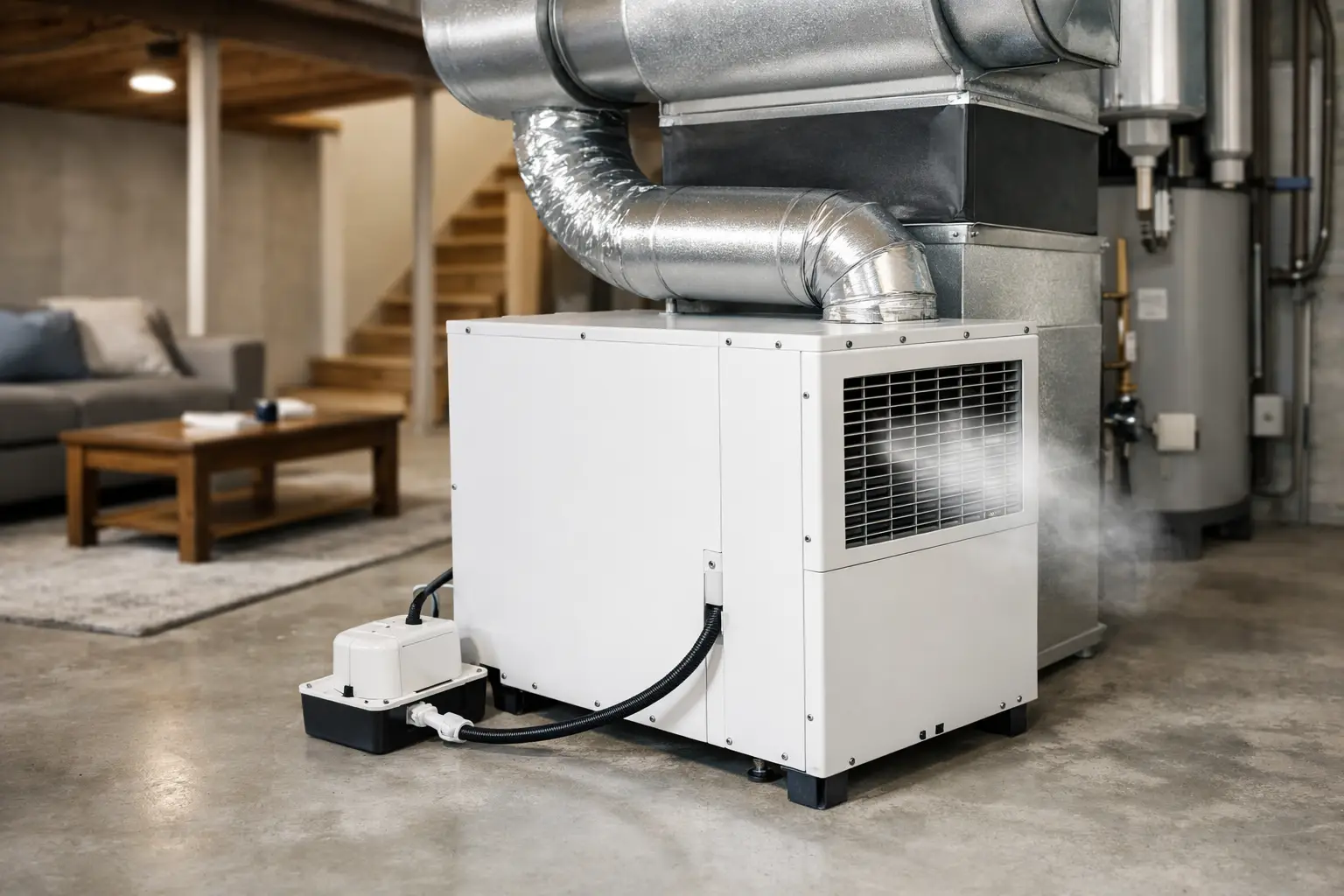
A basement can feel dry enough at first glance while still holding more moisture than the rest of the home. That damp air can create musty odors, condensation on pipes or windows, peeling finishes, and an uncomfortable chill that spreads upstairs. A whole house dehumidifier basement strategy addresses the moisture at its source while helping protect comfort and indoor air quality throughout the home.
For Chicago homeowners, basement humidity is often a seasonal problem with year-round consequences. Summer humidity, spring rain, older foundation construction, and limited basement airflow can all contribute. The right solution is not always a portable unit running nonstop in the corner. In many homes, a professionally sized whole-home system provides quieter, more consistent moisture control with far less daily effort.
Why Basement Moisture Affects the Entire Home
Basements are naturally cooler than upper floors, which makes them more likely to reach the dew point where water vapor becomes condensation. Moisture can enter through foundation walls, floor slabs, small cracks, plumbing leaks, open windows, and humid outdoor air. Even a basement that has never flooded can have a persistent humidity issue.
That moisture does not stay neatly contained downstairs. Air moves through stairways, gaps around pipes and wiring, return-air pathways, and framing cavities. When humid, musty air travels upward, it can affect bedrooms, living areas, closets, and the performance of your air-conditioning system.
High indoor humidity also makes a home feel warmer than the thermostat setting suggests. Your AC may run longer trying to make the house feel comfortable, even when the real issue is moisture. Lowering humidity can make the home feel more comfortable at a reasonable temperature setting, which may reduce unnecessary cooling demand during humid weather.
Signs Your Basement Needs Better Dehumidification
A humidity meter gives the clearest reading, but homeowners often notice warning signs before they see a number. Indoor relative humidity is generally most comfortable around 30% to 50%. A basement that regularly remains above that range deserves attention, especially during warmer months.
Common signs include a musty smell, visible condensation, damp-feeling walls, rusty tools, warped wood, mildew on stored belongings, or recurring moisture around windows. You may also notice that towels and laundry take longer to dry, paper products feel soft, or the basement feels clammy even when it is cool.
It is also worth paying attention to what happens after heavy rain. If moisture levels rise sharply after storms, a dehumidifier may be part of the answer, but it should not be used to cover up active water intrusion. Standing water, foundation seepage, failing drainage, or a plumbing leak need to be corrected first. Dehumidification manages water vapor in the air. It cannot solve a structural or plumbing problem that is continuously adding water to the space.
Portable Unit or Whole House Dehumidifier for a Basement?
Portable basement dehumidifiers can be useful for a small, isolated area or a short-term moisture concern. They are easy to install, but they also require regular maintenance. The bucket must be emptied unless a drain is available, filters need cleaning, and the unit may run loudly or produce noticeable heat in a finished space.
A whole-house dehumidifier is installed as part of the home’s HVAC and air-distribution approach, or as a dedicated ducted system when the layout calls for it. It removes moisture automatically and drains it away, avoiding the daily task of emptying a reservoir. It can also be controlled by a humidistat, allowing the system to respond to actual humidity conditions rather than running only when someone remembers to turn it on.
The better choice depends on the basement size, whether the space is finished, the home’s ductwork, moisture sources, and whether upper levels are also uncomfortable. A portable unit may be reasonable for one small storage room. A whole-home solution is often a better long-term fit when the basement affects the rest of the house or when multiple rooms feel humid every summer.
How a Whole-Home System Handles Basement Humidity
A professionally installed dehumidifier draws in humid air, removes moisture as air passes across cooled components, and sends drier air back into the home. The collected water is routed through a drain line or condensate pump, so there is no bucket to monitor.
Some systems work alongside existing forced-air ductwork. Others use dedicated ducting to serve the basement and other priority areas. The installation method matters because air needs a reliable path back to the equipment. Simply placing a powerful unit in a basement without considering airflow can leave moisture pockets untouched.
A qualified HVAC technician will look beyond the equipment itself. Proper sizing considers the basement’s square footage, ceiling height, insulation, number of occupants, how the space is used, and the level of moisture entering the home. Oversizing can lead to unnecessary operating costs and short cycling. Undersizing may leave the system running constantly without reaching the desired humidity level.
What to Check Before Installation
A good recommendation starts with the cause of the humidity, not a one-size-fits-all product suggestion. Before selecting equipment, a technician should assess the home’s current conditions and identify issues that could reduce performance.
This evaluation commonly includes the condition of existing ductwork, available drainage, basement ventilation, insulation, and signs of water intrusion. It may also include checking whether the air conditioner is sized and operating correctly. An AC system does remove some humidity, but its primary job is cooling. During mild, rainy weather, the AC may not run long enough to control moisture on its own.
For finished basements, the plan should protect the comfort of the occupied space without creating drafts or excessive equipment noise. For unfinished basements, the focus may be protecting stored items, framing, mechanical equipment, and air quality for the home above. In either case, clean installation and dependable drainage are just as important as the unit’s capacity.
Maintenance That Keeps Humidity Control Reliable
Whole-home dehumidifiers are designed for convenience, but they still need routine care. The air filter should be checked and replaced or cleaned according to the manufacturer’s guidance. A clogged filter restricts airflow and can reduce moisture removal.
The condensate drain and pump should also be inspected, particularly before the humid season begins. A blocked drain line can cause a shutdown or water issue around the equipment. During scheduled HVAC maintenance, it is smart to have the dehumidifier checked alongside the air conditioner, thermostat controls, and ductwork.
Shad Heating & Cooling provides professional indoor air quality evaluations and whole-home dehumidification options for homeowners who want a clear answer before investing in equipment. The goal is to identify the source of the problem, explain practical options, and install a solution built for lasting comfort rather than a temporary fix.
When to Call a Professional
Call for an evaluation when a basement odor returns after cleaning, humidity stays high despite a portable unit, condensation appears repeatedly, or upper floors feel sticky during summer. It is also a good time to ask for help if you are finishing a basement, replacing an air conditioner, or planning to protect a rental property from moisture-related damage.
A professional assessment can clarify whether whole-home dehumidification is the right answer, whether a drainage or insulation issue needs attention first, and how the new equipment should work with your existing HVAC system. Honest upfront recommendations help you make a decision based on the home’s actual conditions.
Written by the Shad Heating & Cooling team
Frequently Asked Questions
Will a whole-house dehumidifier help rooms above the basement?
Yes. When it is properly sized and connected to an effective air path, a whole-home system can lower humidity throughout the house, not only in the basement.
What humidity level should I keep in my basement?
Many homes do well between 30% and 50% relative humidity. The best target depends on the season, basement conditions, and your comfort needs.
Can a dehumidifier fix basement water leaks?
No. It removes moisture from the air but does not stop foundation leaks, plumbing leaks, or standing water. Those issues should be repaired first.
Should a whole-home dehumidifier run all year?
It depends on indoor humidity readings. In Chicago, most homes need the most moisture control during humid spring, summer, and early fall weather. A properly controlled system runs when conditions call for it, helping keep your basement dry, comfortable, and ready to use.