






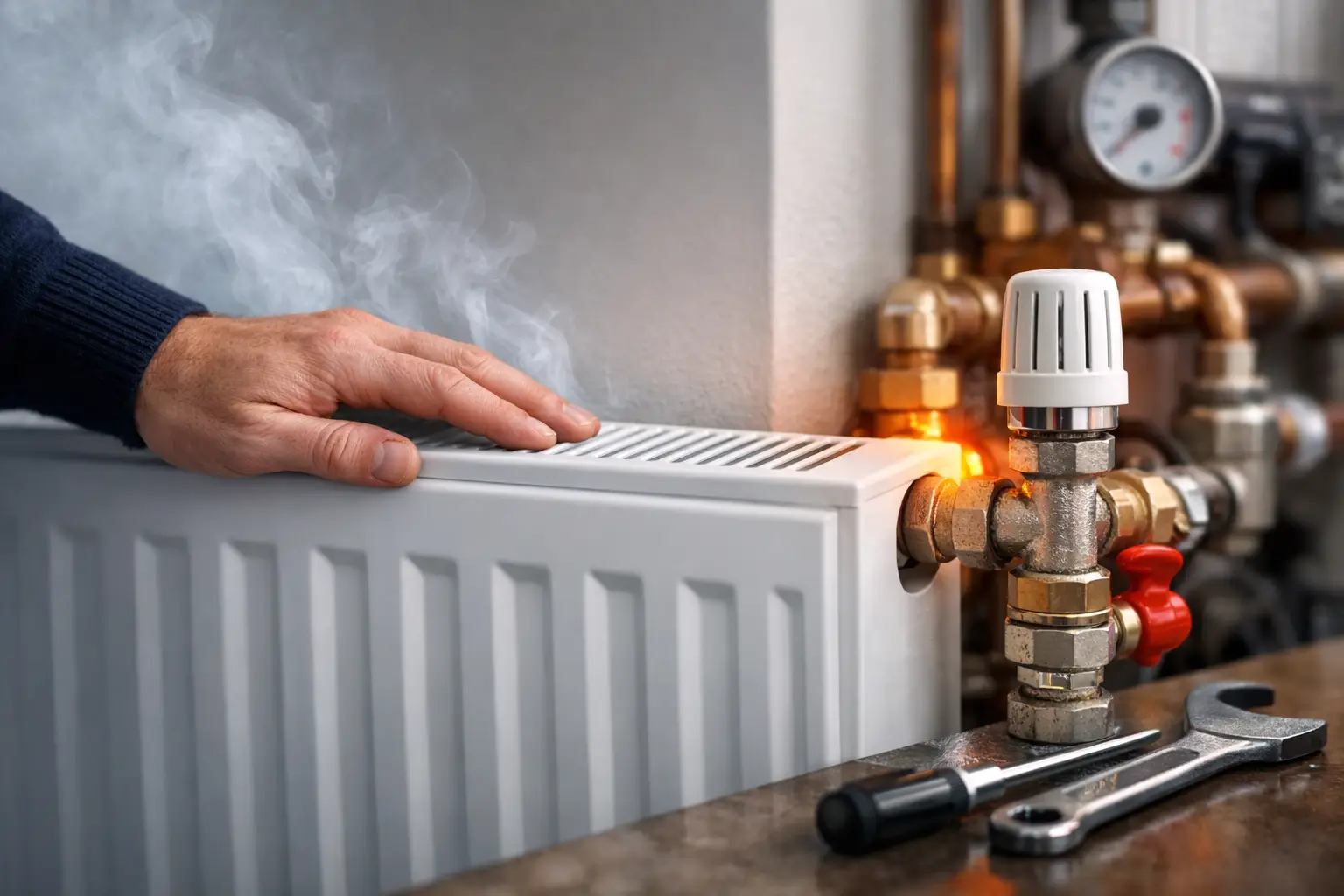
A radiator that stays cold on a Chicago winter morning is more than an inconvenience. It can leave a bedroom uncomfortable, put tenants on edge, and signal a heating-system issue that will worsen if it is ignored. What causes cold radiators depends largely on the pattern: one cold radiator points to a local circulation problem, while every radiator going cold often points back to the boiler, thermostat, or heating controls.
Before assuming the boiler needs replacement, look at what the radiators are doing. Is one unit cold from top to bottom? Is it warm at the top but cold along the bottom? Are radiators warm downstairs but cool upstairs? These details help a qualified technician find the real cause and recommend the right repair rather than a temporary fix.
What Causes Cold Radiators in One Room?
When the rest of the home is heating normally, the issue is usually isolated to that radiator or its connection to the system. Several common problems can restrict hot-water flow.
Trapped air inside the radiator
If a radiator is cold at the top but warmer at the bottom, trapped air is a likely reason. Hydronic heating systems circulate hot water through radiators, but air can collect at high points and block the water from filling the entire unit. The radiator may feel partly warm, make gurgling sounds, or never reach the temperature of nearby radiators.
Air in a system can occur gradually, but repeated air buildup deserves attention. It may be related to a pressure issue, a leak, or a component that is allowing air into the system. Removing air may restore heat in the short term, but identifying why it keeps returning protects the boiler and helps prevent repeat service calls.
A valve that is closed, stuck, or failing
Most radiators have valves that control the flow of heating water. If a valve has been turned down, accidentally closed, or become stuck after a long period without movement, hot water may not enter the radiator. A thermostatic radiator valve can also stick in one position, especially after sitting unused through the warmer months.
A technician can check whether the valve is operating correctly and whether it needs adjustment, repair, or replacement. Forcing a corroded or stuck valve can cause damage or leaks, so it is better not to treat it as a simple fix when the system is under pressure.
Sludge and debris restricting flow
A radiator that is warm at the top but cold at the bottom may have internal sludge buildup. Over time, corrosion particles and mineral debris can settle in radiators and piping, reducing water flow and heat output. In older Chicago buildings with long-serving boiler systems, this is a common concern.
Sludge can make a system work harder, create uneven heating between rooms, and contribute to pump or boiler problems over time. The appropriate solution depends on the amount of buildup and the condition of the overall system. A professional evaluation can determine whether cleaning, system treatment, or a more targeted repair makes sense.
The system needs balancing
Hot water naturally takes the easiest route through a heating system. Without proper balancing, radiators close to the boiler may receive plenty of heat while units farther away, often on upper floors, stay lukewarm or cold. This is especially noticeable in multi-story homes and multifamily properties.
Balancing adjusts how water is distributed across the system. It is not the same as turning every radiator valve fully open. Proper balancing considers pipe layout, radiator size, zones, pump performance, and how each space heats over a full cycle.
When All Radiators Are Cold
If every radiator is cold, focus first on the source of heat and the equipment that moves heat through the building. A boiler may still have power without actually producing or circulating enough hot water.
Thermostat or heating-control problems
The thermostat tells the heating system when to run. Incorrect settings, depleted batteries on certain thermostat models, a programming issue, or a failed control can prevent the boiler from receiving a call for heat. In zoned properties, one thermostat or zone control can affect only part of the building.
Start with safe, basic observations: confirm that the thermostat is set to heat and set above the current room temperature. If it appears to be calling for heat but the system does not respond, professional diagnosis is the next step. Controls can involve electrical components and system safeties that should be tested correctly.
Low boiler pressure or water loss
A hot-water boiler needs the correct pressure to circulate water through radiators. If pressure drops too low, upper-floor radiators may go cold first, or the boiler may shut down to protect itself. Low pressure can result from a leak, a faulty expansion tank, a pressure-relief issue, or a system that needs professional attention.
A pressure reading outside the normal range is useful information for a service technician, but it does not identify the underlying cause by itself. Adding water without understanding why pressure was lost can mask a leak or create another problem. A careful inspection is the better path to reliable heat.
Circulator pump or zone-valve failure
Your boiler may be making heat, but that heat still needs to travel through the pipes. A circulator pump moves heated water through the system. If it fails or performs poorly, radiators may remain cold even when the boiler is operating. Zone valves serve a similar purpose in zoned systems by directing water to the areas requesting heat.
Signs can include a boiler that runs without warming the home, inconsistent temperatures between zones, or heat that comes and goes. These components require electrical and mechanical testing, making this a job for a licensed heating professional.
Boiler lockout or a system safety shutdown
Modern boilers have safety controls that can shut the system down when they detect a problem. Ignition faults, venting concerns, overheating, low-water conditions, or condensate drainage issues can all cause a lockout. The display may show an error code, but the code is a starting point, not a complete diagnosis.
Resetting a boiler repeatedly without correcting the fault is not a dependable solution. If the unit locks out again, arrange service promptly. If you smell gas, notice soot, hear unusual banging, or a carbon monoxide alarm activates, leave the area and seek emergency assistance immediately.
Uneven Heat Is Still a Heating Problem
A radiator does not have to be completely cold to need attention. Rooms that take hours to warm, radiators that only heat halfway, and temperatures that vary widely from one floor to another are all signs that the system is not distributing heat efficiently.
Furniture, radiator covers, and heavy curtains can limit how heat enters a room, but they do not usually explain a radiator that is cold to the touch. Similarly, drafty windows can make a room feel cold even when the radiator is functioning. A technician should separate comfort issues caused by heat loss from equipment issues caused by poor circulation or boiler performance.
For landlords and property owners, uneven radiator heat can also create avoidable tenant complaints and increase the risk of frozen pipes in poorly heated areas. Addressing the source early is usually less disruptive than responding after a complete heating failure.
What You Can Check Safely Before Calling
You do not need to take apart a radiator or boiler to provide useful information. Note whether the problem affects one radiator, one zone, or the entire property. Check that the thermostat is calling for heat, look for any visible boiler error message, and notice whether the radiator is cold at the top, bottom, or throughout.
Also pay attention to timing. Did the issue start after the system was off for months, after construction work, or during a sudden cold snap? Did you hear gurgling, whistling, banging, or water dripping? These observations help shorten the diagnostic process and support a clear, upfront repair recommendation.
Avoid opening boiler panels, handling gas connections, or attempting electrical repairs. Hot-water heating systems operate under pressure, and boiler equipment includes combustion, venting, and safety controls that require trained service.
Preventing Cold Radiators Next Winter
Routine boiler maintenance is the most practical way to catch circulation, pressure, valve, and control concerns before they become no-heat calls. A professional tune-up can include checking system operation, inspecting safety controls, evaluating pumps and valves, reviewing boiler pressure, and looking for early signs of leaks or corrosion.
Older systems may need more than an annual check. If your building has recurring cold spots, frequent pressure changes, or radiators that need repeated attention, it may be time for a broader assessment of the system’s water quality, controls, and distribution piping. Shad Heating & Cooling can explain what is causing the issue, what repair is appropriate now, and what steps can improve long-term reliability.
Reliable comfort starts with treating a cold radiator as a useful warning sign, not something to work around until the next breakdown.
Frequently Asked Questions
Why is my radiator cold at the top but warm at the bottom?
This usually indicates trapped air inside the radiator, which prevents hot water from filling the upper section. If it happens repeatedly, have the system checked for an underlying pressure or leak issue.
Why is my radiator warm at the top but cold at the bottom?
Sludge or debris may have collected in the lower portion of the radiator and restricted circulation. A heating professional can determine whether the radiator or wider system needs cleaning or treatment.
Why are upstairs radiators colder than downstairs radiators?
Low boiler pressure, trapped air, poor system balancing, or weak circulation can affect upper floors first. The exact cause depends on the layout and condition of your heating system.
Should I reset my boiler if all radiators are cold?
One reset may be appropriate if your boiler manufacturer permits it, but repeated lockouts need professional diagnosis. Do not keep resetting a boiler that continues to shut down.
Written by the Shad Heating & Cooling team