A furnace failure during a Chicago cold snap creates an immediate question: repair versus replace furnace? The answer should not be based on panic, a single alarming symptom, or pressure to make a fast purchase. A qualified HVAC technician should first identify the cause of the problem, confirm that the system is safe to operate, and explain what a repair can realistically accomplish.
For some homeowners and property owners, a focused repair restores dependable heat for years. For others, repeated breakdowns, safety concerns, and declining comfort make replacement the more responsible long-term decision. The best choice comes from looking at the full condition of the system, not just the latest repair bill.
Start With Safety and a Clear Diagnosis
Before weighing cost or age, address safety. If you smell gas, leave the building, avoid switches and open flames, and contact your gas utility or emergency services from a safe location. If a carbon monoxide alarm sounds, get everyone outside and seek emergency help. Do not continue operating the furnace until a trained professional has inspected it.
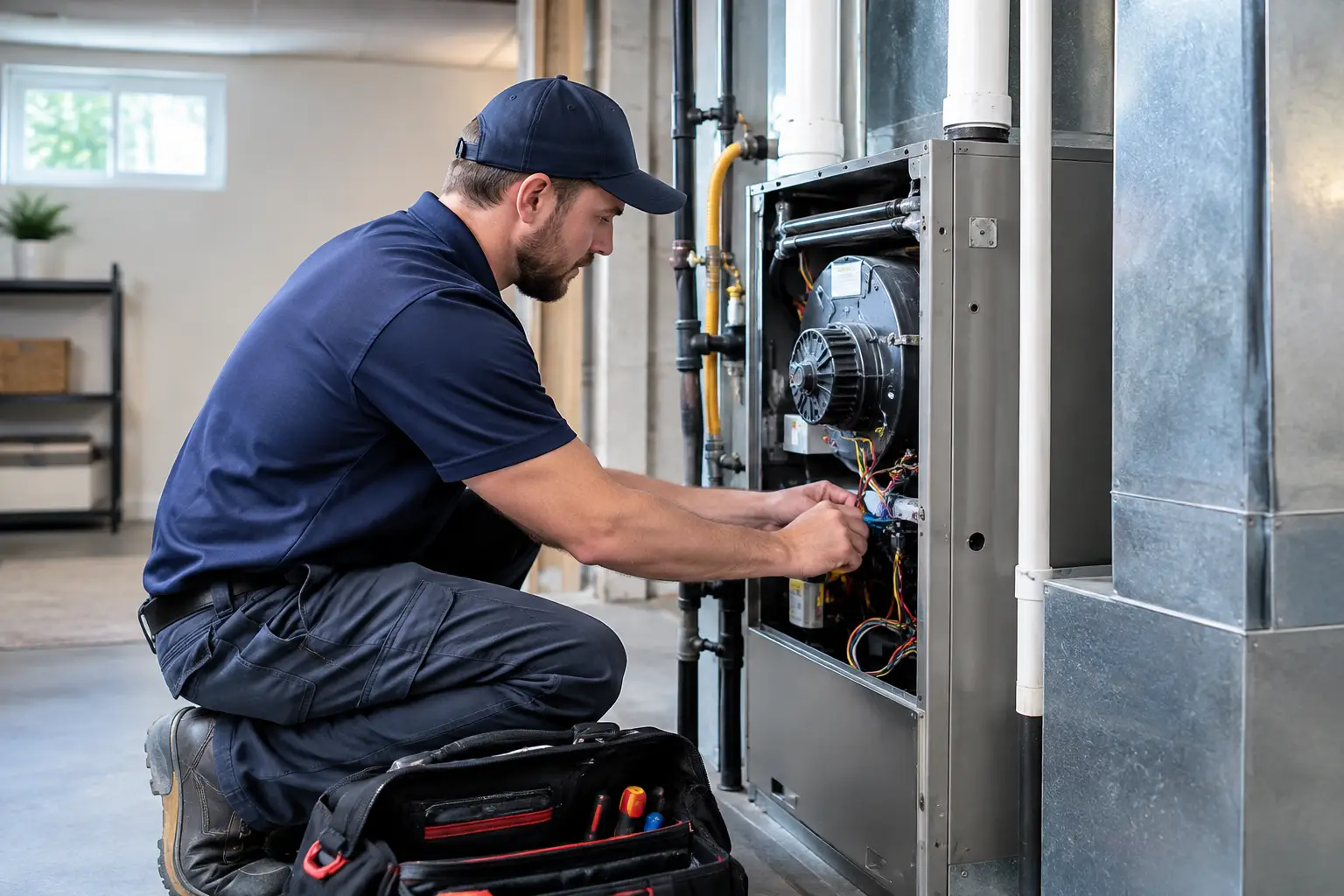
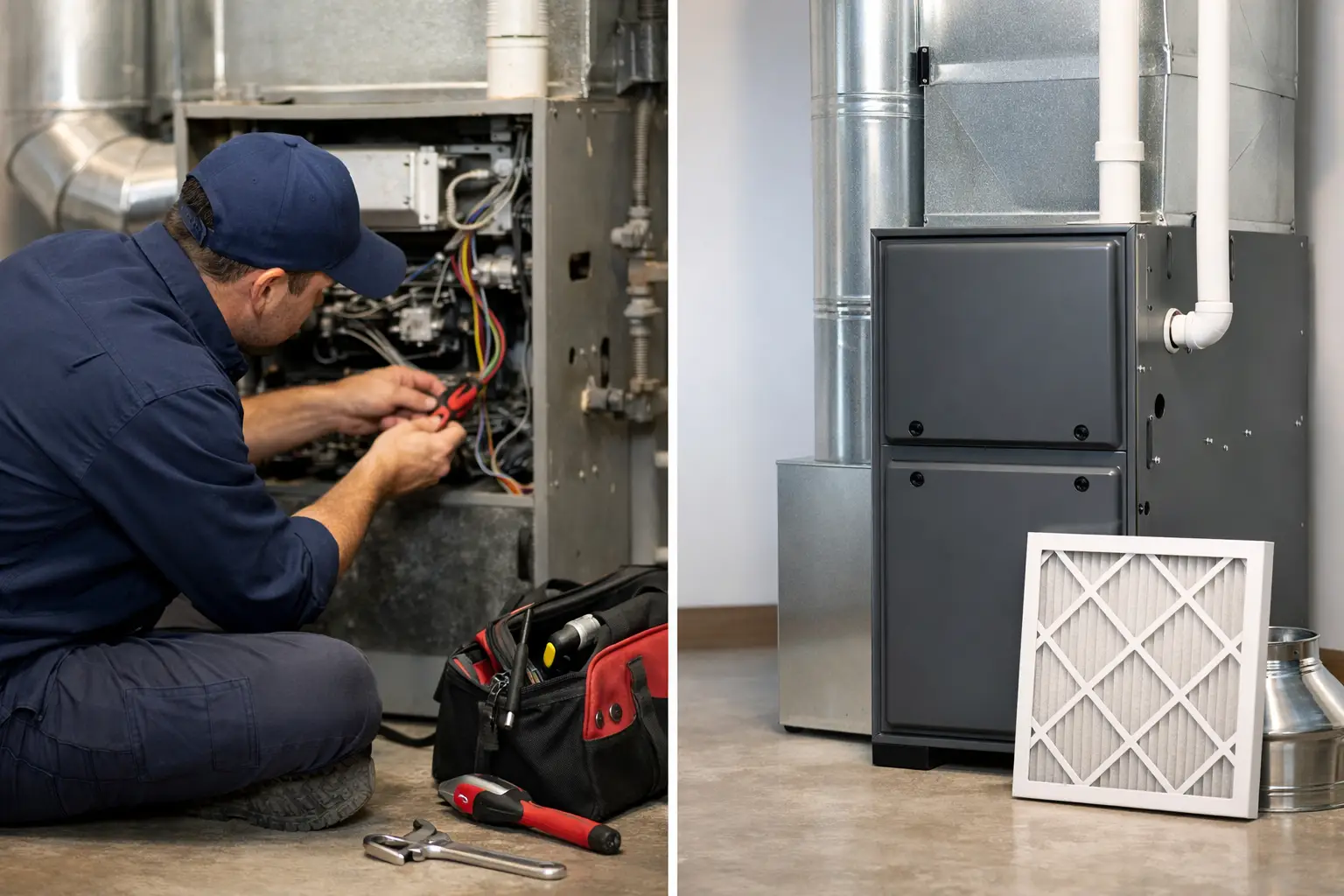
Not every heating problem means the furnace itself has failed. A dirty filter, thermostat issue, airflow restriction, ignition problem, worn electrical component, or venting concern can create symptoms that feel major but may have a straightforward repair. A careful diagnosis separates a repairable fault from a system that has reached the end of its practical service life.
That distinction protects you from two costly mistakes: replacing equipment that could have been reliably repaired or investing in another repair when the furnace is no longer a dependable or safe option.
Repair Versus Replace Furnace: The Factors That Matter
A furnace’s age matters, but it is not the only deciding factor. Many well-maintained furnaces can provide reliable service for roughly 15 to 20 years, while neglected systems may develop serious issues sooner. Installation quality, maintenance history, runtime, airflow, and fuel type all affect longevity.
Age and Overall Condition
If your furnace is under 10 years old and has had few problems, repair is often reasonable when the issue is isolated. A replaceable component can fail even on a newer, otherwise healthy system. In that case, fixing the cause and confirming proper operation is usually the sensible path.
As a furnace approaches or passes the 15-year mark, the calculation changes. Parts may become harder to source, efficiency may lag behind current equipment, and one repair can be followed by another as more components wear down. Age alone does not require replacement, but it raises the need for an honest condition assessment.
Repair History and Reliability
Consider the pattern, not just today’s problem. One repair after several trouble-free seasons is different from service calls every winter. Frequent breakdowns can disrupt tenants, families, employees, and customers, especially when temperatures drop below freezing.
A furnace that repeatedly loses heat, short cycles, makes new noises, or needs ongoing part replacements may no longer offer the reliability your property needs. This is particularly significant for landlords and small-business owners, where a heating failure can affect multiple people and create urgent operational problems.
The Type of Repair Needed
Some repairs are common wear-and-tear corrections. Others point to a much larger decision. A technician should explain whether the failed part is independent of the rest of the system or whether it reflects broader deterioration.
For example, a serious heat exchanger concern is not a routine repair decision. The heat exchanger separates combustion gases from the air circulated through your home. Damage or failure can create a safety issue and often shifts the discussion toward replacement. The same is true when venting, combustion, or multiple major components require attention on an older unit.
Efficiency, Comfort, and Operating Costs
An older furnace can still produce heat, yet it may do so inefficiently or unevenly. Rising utility bills, rooms that never feel comfortable, excessive cycling, and weak airflow are signs worth investigating. Sometimes the furnace is the issue. Other times, the cause is duct leakage, poor return airflow, incorrect system sizing, insulation gaps, or thermostat placement.
Replacement can improve efficiency and comfort when the existing furnace is outdated or poorly matched to the home. But a new unit is not a cure-all. Proper sizing, ductwork evaluation, venting requirements, and careful installation are essential. An oversized furnace can cycle too often, while an undersized system may struggle during severe weather. Lasting performance depends on the entire heating system working together.
When Repair Is Often the Better Choice
Repair is usually worth considering when the furnace has years of expected service remaining, the issue is limited, and the equipment has been maintained consistently. It can also be the right choice when a professional inspection shows that combustion, airflow, electrical connections, and major components are in sound condition.
A repair-first recommendation should include a clear explanation of the problem, the expected scope of work, and any conditions that could affect future reliability. Transparent upfront pricing allows you to compare the immediate repair with the likely cost of continuing to operate an aging system without surprises.
Maintenance also deserves attention after the repair. Seasonal service can help identify worn components, dirty burners, airflow problems, and safety concerns before they become a no-heat emergency. It cannot make a furnace last forever, but it can help you get the most dependable service from equipment that is still in good condition.
Signs Replacement May Be the More Responsible Decision
Replacement is often the stronger option when a system has become unsafe, unreliable, or expensive to keep operating. It may also be appropriate when an older furnace cannot provide the comfort or efficiency your household, tenants, or business requires.
These four situations commonly justify a replacement conversation:
- The furnace has a cracked or compromised heat exchanger, a combustion concern, or another serious safety issue.
- Major repairs are needed on a furnace near or beyond its expected service life.
- Breakdowns are becoming frequent and heat loss is disrupting the property each heating season.
- The system produces persistent comfort problems or high operating costs that cannot be resolved through targeted repairs, airflow corrections, or maintenance.
Replacement should never be presented as an automatic answer simply because equipment is old. A responsible recommendation explains what has failed, why replacement is being considered, what the installation will involve, and what improvements you can reasonably expect.
Think Beyond the Furnace Cabinet
A furnace replacement is also an opportunity to evaluate the supporting parts of the system. The filter setup, return-air capacity, duct condition, humidification needs, thermostat controls, and zoning can all affect comfort. In older Chicago homes, airflow limitations or uneven room temperatures may need attention regardless of whether the furnace is repaired or replaced.
For multifamily properties and light commercial spaces, the decision may also involve access, occupant scheduling, ventilation requirements, and minimizing disruption. Planning ahead before a complete failure gives owners more control over timing and equipment selection.
Clean workmanship matters here. A properly installed furnace should be matched to the property’s heating needs, connected safely, tested thoroughly, and left with a clean work area. Those details influence reliability long after installation day.
How to Make the Decision With Confidence
Ask for an explanation you can understand. A dependable HVAC professional should be able to show you what is wrong, describe the repair option, identify any safety concerns, and explain why replacement is or is not advisable. If the system is older, ask about its remaining condition rather than relying on age alone.
It is also reasonable to ask how the repair affects expected reliability, whether additional worn components were found, and whether comfort issues may be caused by ductwork or controls. The goal is not to force a repair or replacement decision. It is to choose the path that protects your property, budget, and comfort over the next several heating seasons.
Shad Heating & Cooling approaches furnace decisions with safety checks, clear findings, honest upfront pricing, and recommendations focused on lasting performance rather than temporary fixes.
Written by the Shad Heating & Cooling team
Frequently Asked Questions
How old is too old to repair a furnace?
There is no single cutoff. Repairs can make sense on older equipment if the issue is limited and the furnace remains safe and reliable. Once a furnace is around 15 to 20 years old with recurring problems, replacement often becomes more practical.
Should I replace my furnace if the repair is expensive?
Not automatically. Compare the repair to the furnace’s age, maintenance history, condition of major components, and likelihood of additional failures. A professional assessment provides better guidance than using repair cost alone.
Can a new furnace fix cold rooms in my home?
It may help, but cold rooms can also result from ductwork, insufficient return air, insulation, zoning, or thermostat issues. A complete comfort evaluation helps identify the real cause.
What should I do if my furnace stops working in winter?
Check that your thermostat is set correctly and that your filter is not severely blocked. For gas smells, carbon monoxide alarms, or other safety concerns, leave the property and seek emergency assistance. For other no-heat issues, schedule a professional inspection so you can make a calm, informed decision.