
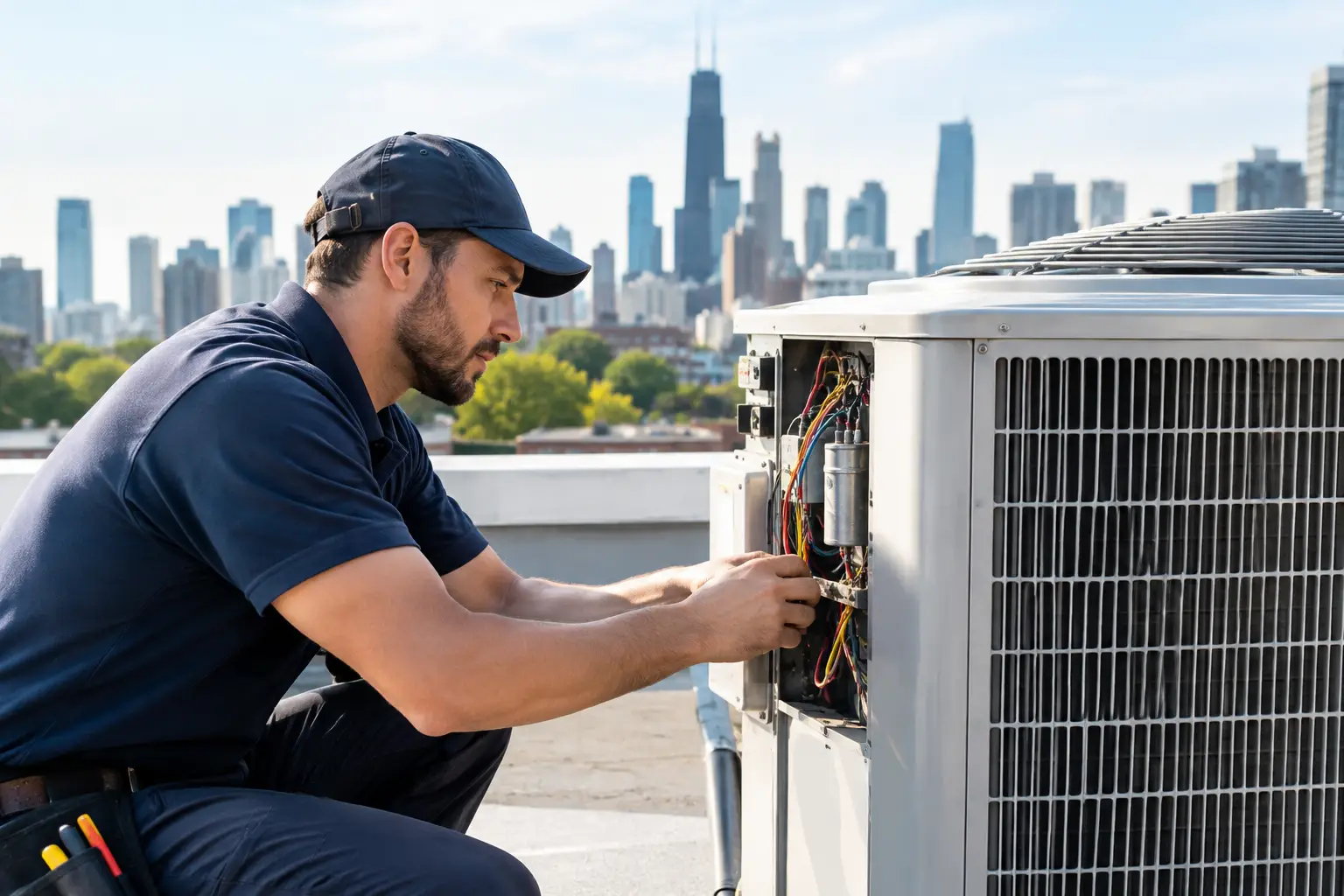
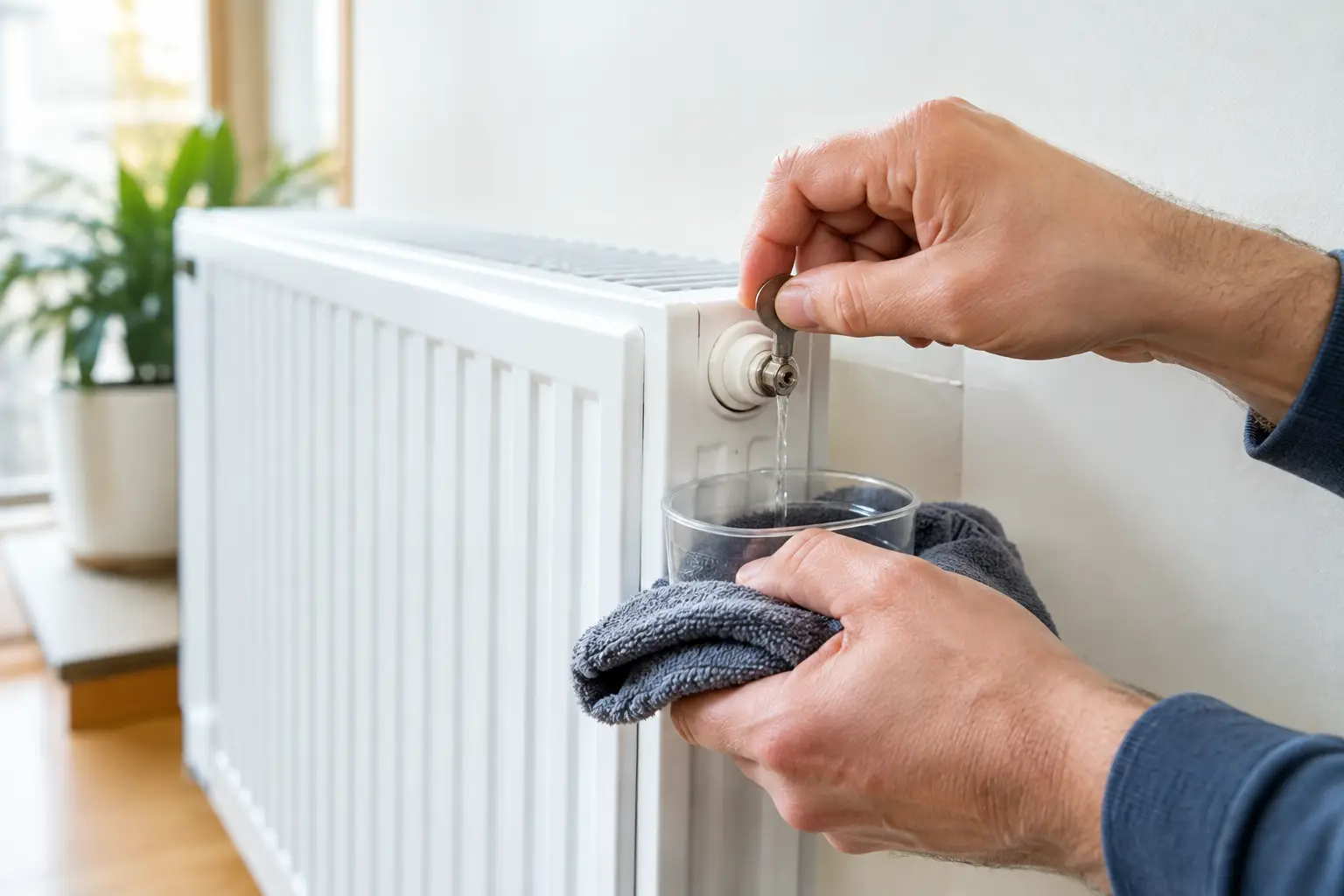
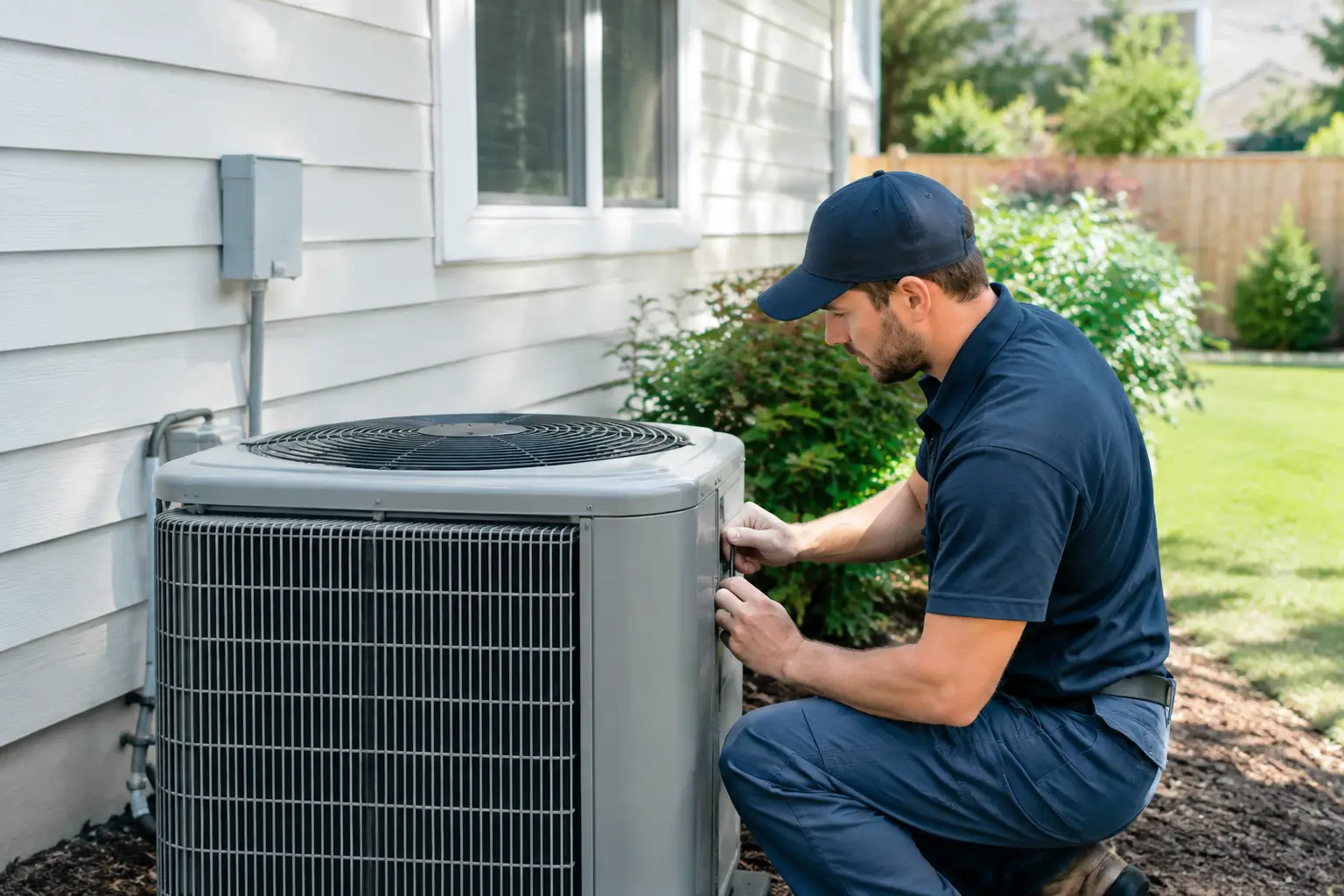
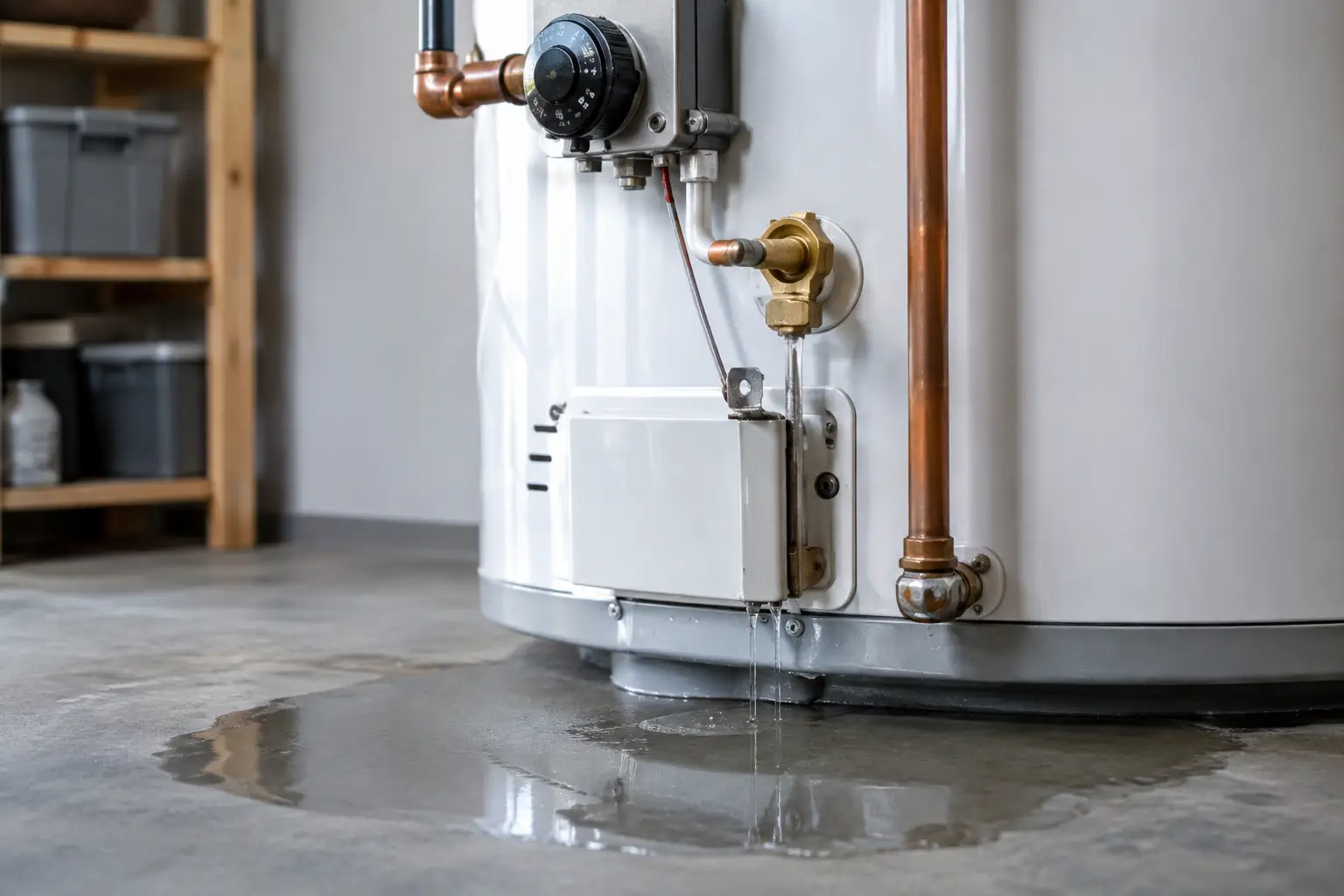
A thin coating of frost on the outdoor unit can look alarming on a cold Chicago morning, but it is not always a failure. If you are asking, “is my heat pump frozen,” the key is to look at where the ice is forming, how much is present, and whether the system is still heating your home reliably.
Heat pumps naturally collect moisture on the outdoor coil while operating in heating mode. When outdoor temperatures are low, that moisture can freeze. A properly working system periodically enters a defrost cycle to melt the frost and restore normal airflow. Thick ice that remains in place, however, can block the coil, reduce heating capacity, and point to a problem that deserves prompt attention.
Is My Heat Pump Frozen or Just Frosty?
Light, even frost on the outdoor coil is often normal during winter operation. Your heat pump should initiate defrost as needed, usually based on coil temperature, outdoor conditions, and runtime. During this cycle, you may notice water draining from the unit, a brief cloud of steam, or a temporary change in sound. Those are commonly normal signs that the system is clearing frost.
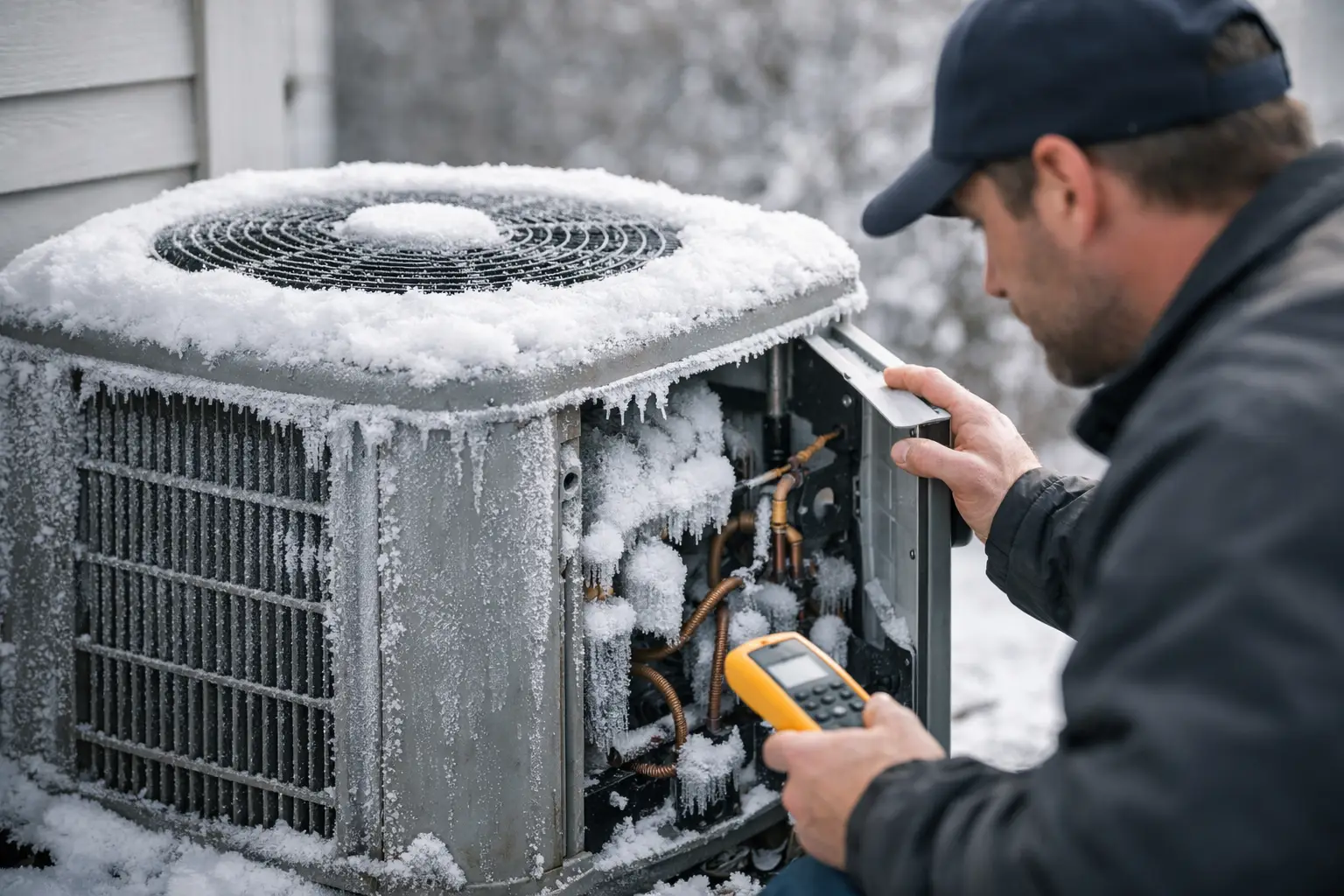
A frozen heat pump looks different. Ice may build across the coil, fan grille, base, or cabinet. The outdoor fan can become obstructed, and the system may run for long periods without delivering enough heat indoors. You might also notice cool air from supply vents, higher utility use, frequent system cycling, or an auxiliary heat setting running more often than usual.
Do not judge the condition by one quick glance during a snowstorm. Frost can return after a defrost cycle in cold, damp weather. What matters is whether the unit is able to clear itself and continue heating effectively.
Why a Heat Pump Freezes Up
Ice buildup has several possible causes. Some are weather-related, while others involve airflow, drainage, controls, or refrigeration performance. A professional inspection is the best way to separate a temporary winter condition from a repair issue.
Normal winter moisture and defrost operation
Cold, damp conditions create the most frost. This is common in Chicago winters, especially when temperatures hover near freezing and humidity is high. The unit should still defrost periodically. If it does, and the coil returns to normal, there may be no repair needed.
Restricted airflow around the outdoor unit
Leaves, windblown debris, snow piled too closely around the unit, or a blocked coil can interfere with airflow. Without adequate airflow, the heat pump cannot exchange heat efficiently, making frost buildup more likely. Snow should be kept clear from around the unit, but never forcefully chip ice from the coil or cabinet. Fins and refrigerant components can be damaged easily.
A drainage problem during defrost
When the unit defrosts, melted water needs a clear path away from the base. If that water refreezes beneath the unit or drainage openings are blocked, ice can accumulate from the bottom up. Over time, this can interfere with the fan or place strain on system components.
A malfunctioning defrost system
The defrost control board, sensors, reversing valve, or related electrical components may prevent the system from entering defrost when needed. This requires professional diagnosis. Repeatedly switching settings or trying to manually force defrost can make the issue harder to identify and may put additional stress on the equipment.
Refrigerant or mechanical concerns
Low refrigerant, a refrigerant leak, or a failing component can affect coil temperatures and lead to abnormal freezing. These issues are not safe or appropriate for homeowner repair. A licensed HVAC technician can test system operation, check pressures, inspect controls, and identify the underlying cause without guessing.
What to Do When Your Heat Pump Is Covered in Ice
If the outdoor unit has heavy ice buildup or heating performance has dropped noticeably, avoid treating it as a cosmetic issue. Continuing to run a severely iced system can reduce efficiency and may damage the fan, coil, or compressor.
Start with a few safe observations:
- Check whether snow, leaves, or other loose debris are blocking the area around the outdoor unit.
- Look for thick ice on the coil, fan grille, or base rather than a light layer of frost.
- Notice whether the home is reaching the thermostat setting and whether airflow from vents feels unusually cool.
- Listen for unusual noises, including fan scraping, grinding, or repeated cycling.
Do not pour hot water on the unit, use sharp tools to remove ice, or open panels to inspect electrical or refrigerant parts. Rapid temperature changes can damage components, and ice removal attempts can bend coil fins or create safety hazards. If the fan is hitting ice, the unit is making unusual noises, or the system is not providing adequate heat, turn the thermostat to a lower setting or use the system’s emergency heat option only if your equipment instructions support it, then schedule service.
For homes without another reliable heat source, loss of heat is an urgent comfort and safety concern. A qualified technician can determine whether the issue is a defrost failure, airflow restriction, drainage issue, or a larger system problem and explain the repair before work begins.
When Frost Means You Should Call for Service
A heat pump should not remain encased in ice through repeated operating cycles. Call for professional service when the unit does not appear to defrost, the outdoor fan is blocked by ice, indoor temperatures keep falling, or you see water refreezing into a thick base beneath the equipment.
You should also schedule an inspection if the issue comes back repeatedly. A unit may thaw on a warmer day and seem fine temporarily, but recurring freeze-ups often indicate a condition that will return during the next stretch of cold weather. Addressing it early can help protect comfort, avoid a complete heating interruption, and reduce the risk of a more extensive repair.
For landlords and property owners, a frozen heat pump deserves quick attention even if tenants still have partial heat. Uneven temperatures can lead to comfort complaints, higher operating costs, and avoidable strain on the equipment. Clear communication and a documented professional assessment help support both the property and the people living or working in it.
How Maintenance Helps Prevent Freeze-Ups
Preventive maintenance cannot eliminate normal winter frost, but it can help your heat pump manage it properly. During a professional tune-up, a technician can inspect the outdoor coil, verify defrost operation, check drainage, examine electrical connections, assess airflow, and look for signs of refrigerant or mechanical concerns.
Maintenance also creates an opportunity to correct smaller problems before a hard freeze turns them into an emergency. Clean equipment, proper airflow, and accurately functioning controls all support more reliable heating performance. For a system that has frozen before, mention that history during the appointment so the technician can pay close attention to the defrost and drainage process.
Shad Heating & Cooling provides careful heat pump diagnostics with transparent recommendations, so you can understand what is normal, what needs repair, and what can wait. The goal is not a quick temporary thaw. It is reliable comfort and a system that can handle the next cold spell safely.
Written by the Shad Heating & Cooling team
Frequently Asked Questions
Is it normal for my heat pump to have frost on it?
Yes. A light layer of frost on the outdoor coil can be normal in winter. The system should periodically enter defrost mode and clear it.
How long should a heat pump defrost cycle last?
Defrost timing varies by system and outdoor conditions, but it is generally brief. If heavy ice remains after repeated cycles, service is recommended.
Should I turn off a frozen heat pump?
If the unit is heavily iced, the fan is obstructed, or heating performance is poor, avoid continued operation and contact a qualified HVAC professional for guidance.
Can snow cause my heat pump to freeze?
Snow around the unit can restrict airflow or interfere with drainage, contributing to ice buildup. Keep the surrounding area clear of loose snow and debris, and seek service if the ice returns or the home is not staying warm. Acting early is the safest way to protect your comfort and equipment.