






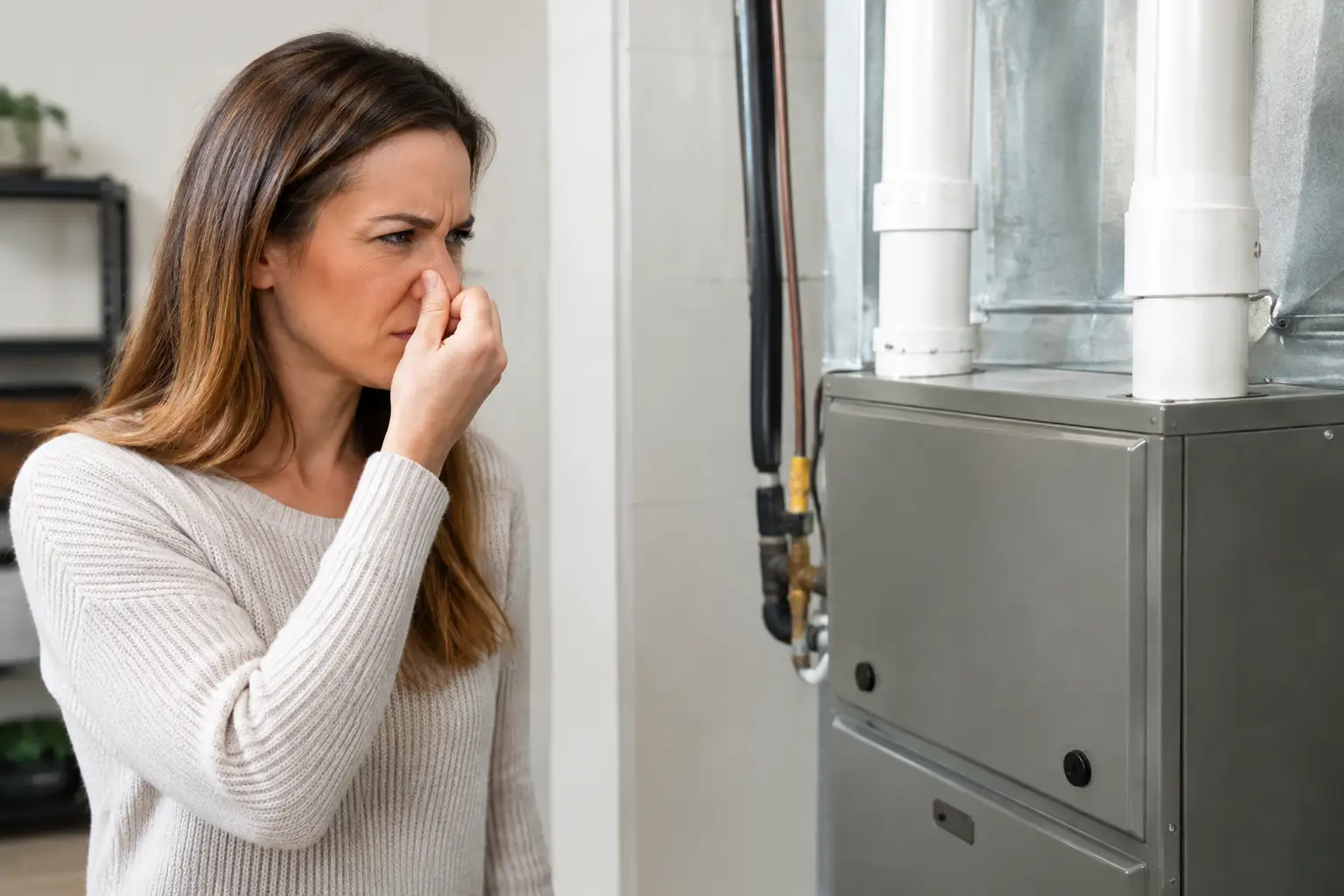
A furnace smell can turn an ordinary Chicago winter morning into a real safety concern. Learning to identify furnace odors helps you distinguish a brief, normal startup smell from a problem that needs immediate action. Trust what you notice. If an odor is strong, unfamiliar, worsening, or making anyone feel unwell, treat it seriously rather than waiting to see whether it goes away.
Some furnace odors are harmless for a short time. Others may point to a gas leak, an electrical issue, overheating equipment, or a combustion problem. The right response depends on the smell, its intensity, and whether it continues while the system runs.
Identify Furnace Odors by What They Smell Like
Dusty or lightly burning smell
A dusty, dry burning odor is common when a furnace runs for the first time after a long break. Dust settles on heat exchangers, burners, and other warm surfaces during the off-season. When heating begins, that dust burns away and may create an odor for a few heating cycles.
This should fade fairly quickly. If the smell lasts more than a day or two, becomes sharp or smoky, or appears every time the furnace starts, schedule a professional inspection. A clogged filter, dirty components, or airflow restriction can cause equipment to run hotter than it should.
Rotten egg or sulfur smell
Natural gas itself has no odor. Utilities add a sulfur-like odorant so people can recognize a potential leak. If you smell rotten eggs, sulfur, or a strong gas odor near the furnace, do not try to find the source or restart the equipment.
Leave the building immediately, taking people and pets with you. Do not operate light switches, use electronics, light a match, smoke, or start a vehicle nearby. Once you are safely away from the building, call the gas utility’s emergency line or 911. After the area has been declared safe, a licensed HVAC professional can assess the furnace and any connected gas piping as needed.
A faint gas smell that comes and goes still deserves prompt attention. Gas odors are not a wait-and-see maintenance item.
Burning plastic, rubber, or electrical smell
An odor like melting plastic, hot rubber, overheated wiring, or electrical insulation can signal a serious issue. Possible causes include a failing blower motor, overheating electrical connections, a damaged circuit board, or an object that has fallen against a hot component.
If there is no active fire and you can do so safely, turn the furnace off at the thermostat. Do not remove access panels or attempt electrical repairs. If you see smoke, sparks, flames, or a rapidly intensifying odor, get everyone outside and call 911. Otherwise, arrange professional service before running the furnace again. Continued operation can turn a contained component failure into more extensive damage.
Smoky or burning oil smell
A smoky odor is never something to ignore, especially if it is accompanied by haze, soot, visible smoke, or a tripped smoke alarm. A furnace may be overheating, debris may be burning inside the system, or another building issue may be circulating odors through the ductwork.
Turn the system off if it is safe to do so and investigate only from a distance. Keep combustible items away from the furnace area, including cardboard, paint, cleaning products, and stored clothing. Call for service promptly, and contact emergency services if you suspect a fire.
Musty, damp, or mildew-like smell
A musty odor is usually less urgent than a gas or electrical smell, but it can still affect comfort and indoor air quality. It may come from moisture in ductwork, a dirty filter, microbial growth around an air-conditioning coil, a humidifier issue, or water near the furnace.
The timing matters. If the odor appears only when the fan runs, the source may be in the duct system or an indoor air quality component rather than the furnace itself. If you also see water around equipment, hear dripping, or notice unusually high indoor humidity, have the system evaluated. Addressing moisture early can help prevent odors from becoming a larger cleanup problem.
Chemical, paint, or solvent smell
Fresh paint, household cleaners, stored chemicals, adhesives, or renovation materials can be pulled into a return vent and distributed throughout the home. This is especially common when materials are stored near mechanical equipment or when a return grille is close to a basement work area.
Move chemicals and flammable products away from the furnace and store them according to their labels. If the smell persists after removing the likely source, or if it causes headaches, dizziness, throat irritation, or nausea, turn the system off and seek help. Ventilation and filtration may be part of the solution, but the odor source should be identified first.
Exhaust, car fumes, or a sharp combustion odor
A furnace that burns fuel should vent combustion gases safely outside. Exhaust-like odors indoors may indicate a venting issue, a damaged flue connection, a blocked termination, or another combustion concern. This is especially important in attached garages, utility rooms, and multifamily properties where fumes can travel between spaces.
Carbon monoxide itself has no smell, color, or taste. You cannot identify a carbon monoxide risk by odor alone. Working carbon monoxide alarms on every level of the home and near sleeping areas are essential. If a carbon monoxide alarm sounds, move outside immediately and call 911 or your local emergency services from a safe location.
Why the Smell Appears Only When Heat Starts
Furnace odors often follow a pattern. A smell that appears at startup and fades could be dust on warming surfaces. One that gets stronger as the furnace runs may involve overheating, combustion, or a motor under strain. An odor that appears only when the blower operates may be coming from ductwork, a filter, or something being drawn into the return air.
Notice the details before calling for service: when the smell begins, how long it lasts, whether it is strongest near the furnace or at supply vents, and whether there are other symptoms such as reduced airflow, unusual noises, water, soot, or repeated cycling. This information helps a technician diagnose the issue efficiently without guesswork.
When to Stop Using the Furnace
It depends on the odor, but the safe threshold should be low. Stop operating the system and call for professional help when you notice persistent burning plastic or electrical odors, exhaust smells, smoke, soot, repeated strong burning smells, or any odor paired with unusual furnace behavior.
For a gas odor or a carbon monoxide alarm, do not stay inside to shut equipment down, inspect the furnace, or collect belongings. Leave first and contact emergency support from outside. For a brief dusty startup smell with no smoke, visible damage, or other warning signs, monitoring it for a short period is generally reasonable.
Prevent Odors With Routine Furnace Care
Many odor concerns are easier to prevent than diagnose during an emergency. Replace or clean filters on the schedule recommended for your system and household conditions. Keep the furnace area clean, dry, and free of stored materials. Make sure supply and return vents remain open and unobstructed so the system can move air properly.
Annual professional maintenance is also valuable before heavy heating season. A qualified technician can inspect burners, electrical components, venting, safety controls, airflow, and overall operation. For landlords and small-business owners, planned maintenance helps reduce disruptive failures during the times tenants and customers need reliable heat most.
When a furnace odor does not clearly fit the normal first-use dust smell, a careful inspection is the safer choice. Shad Heating & Cooling provides clear explanations, honest upfront pricing, and repair recommendations focused on safe, lasting performance rather than unnecessary work.
Written by the Shad Heating & Cooling team
Frequently Asked Questions
Is a burning dust smell from my furnace normal?
It can be normal at the beginning of heating season and should fade after a few cycles. If it persists, worsens, or comes with smoke, shut the system down and request service.
What should I do if my furnace smells like gas?
Leave the building immediately. Do not use switches, flames, phones, or vehicles near the suspected leak. Call the gas utility or 911 from a safe location.
Can I smell carbon monoxide from a furnace?
No. Carbon monoxide is odorless. Maintain working carbon monoxide alarms and leave immediately if one activates.
Why does my house smell musty when the furnace fan runs?
The source may be moisture, dirty ductwork, a filter, or an indoor air quality component. A professional evaluation can identify the cause and help restore cleaner, more comfortable air.