






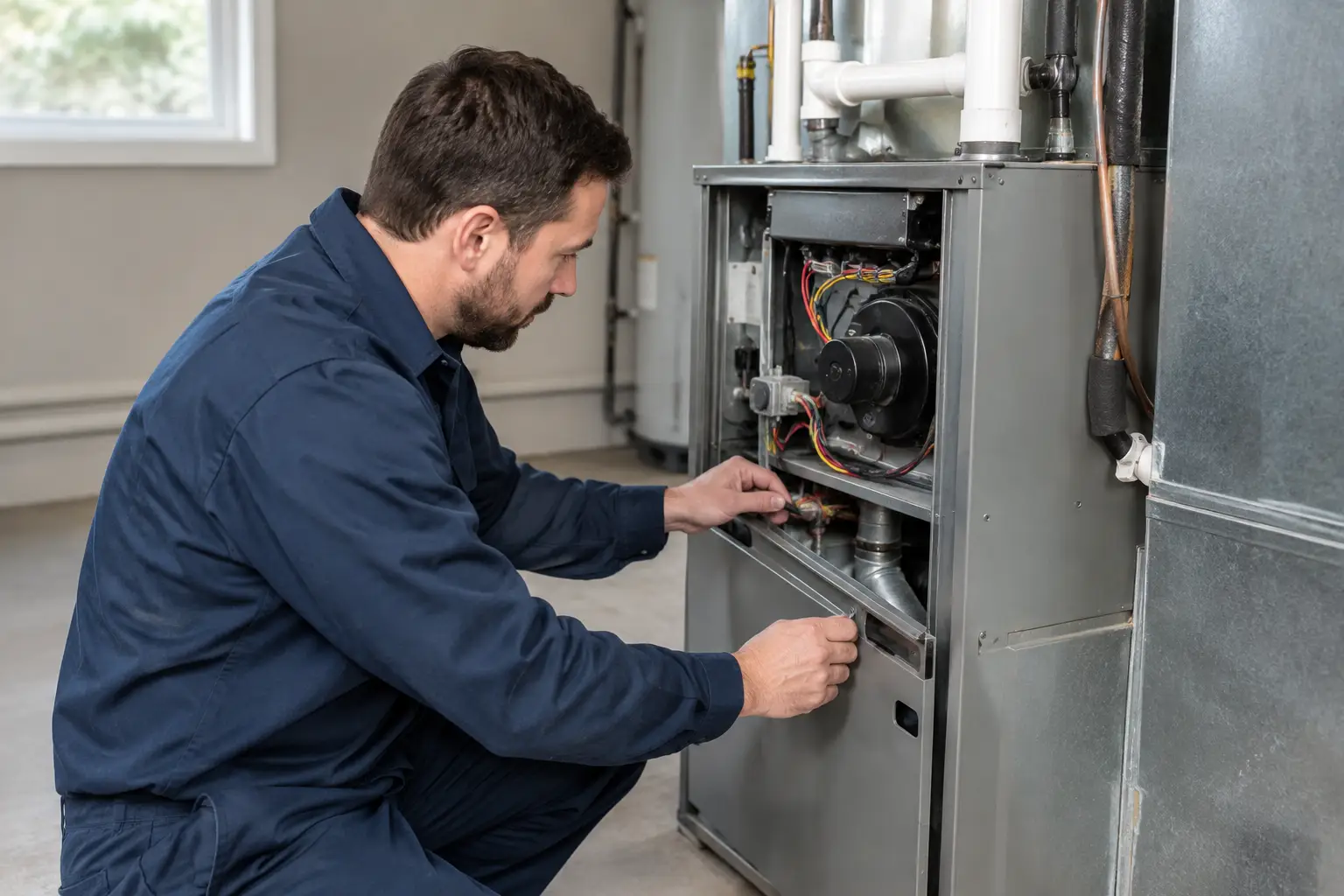
A furnace can seem perfectly fine on the first cool day, then struggle when Chicago temperatures drop hard a few weeks later. Knowing how to prepare a furnace for winter before you depend on it every day gives you time to address small concerns, protect your household, and avoid an inconvenient no-heat situation.
The goal is not to take apart a gas furnace or attempt electrical repairs yourself. A few simple homeowner checks, combined with professional seasonal maintenance, can support safer operation, better efficiency, and more reliable comfort through the heating season.
Start Before the First Extended Cold Spell
Fall is the best time to schedule furnace maintenance, ideally before the system has been running heavily. Once winter arrives, heating companies are often responding to urgent repair calls, and a minor issue can become a major comfort problem quickly.
Turn your thermostat to heat and raise the setting a few degrees above the room temperature. The furnace should begin its normal startup cycle, and warm air should reach the registers after a short period. Pay attention to anything unusual: repeated starting and stopping, delayed ignition, weak airflow, new rattling sounds, or an odor that continues beyond the brief dusty smell common at the first startup.
A light dust odor may clear after one or two heating cycles. A burning electrical smell, the smell of gas, loud banging, or a furnace that will not stay on requires prompt professional attention. If you smell gas, leave the area, avoid switches or open flames, and contact your gas utility or emergency services from a safe location before arranging HVAC service.
Replace the Air Filter
A clean filter is one of the simplest ways to prepare your furnace for winter. A clogged filter restricts airflow, making the furnace work harder to move heat through the home. That can reduce comfort, raise energy use, and contribute to overheating or short cycling.
Check the filter size and airflow direction printed on the filter frame before installing a replacement. The right replacement schedule depends on the filter type, household size, pets, indoor air concerns, and how often the system runs. Many homes benefit from checking the filter monthly during heating season and replacing it when it looks dirty or according to the manufacturer guidance.
Do not assume the most restrictive filter is automatically the best choice. Higher-efficiency filters can capture smaller particles, but some systems need a specific filter rating to maintain proper airflow. If you have questions about filter selection, allergies, pets, or indoor air quality, a qualified technician can recommend an option that fits your equipment.
Clear the Areas That Help Heat Move
Your furnace needs airflow around the equipment, and your rooms need clear supply and return vents to distribute heat properly. Before winter, remove stored items, paint cans, boxes, and cleaning supplies from the area surrounding the furnace. Keep combustible materials well away from the equipment.
Walk through the home and make sure furniture, rugs, curtains, and other belongings are not blocking registers or return grilles. Closing off too many vents is not a dependable way to save energy. It can create uneven temperatures and place extra strain on the heating system, particularly in homes with older ductwork or a single-zone setup.
If certain rooms are consistently colder than others, the answer may not be turning up the thermostat. Duct leakage, insulation gaps, thermostat location, equipment sizing, or airflow imbalance can all play a role. A professional assessment can identify the cause rather than treating the symptom season after season.
Check Your Thermostat and Carbon Monoxide Alarms
Your thermostat is the control center for winter comfort. Replace batteries if your model uses them, confirm that the display is working, and verify that the system is set to heat rather than cool or fan-only mode. If you use a programmable or smart thermostat, update the schedule for your household’s winter routine.
Avoid large temperature setbacks if your home is difficult to reheat or has rooms that run cold. A moderate schedule is often more comfortable and can help prevent temperature swings. The best settings depend on the building, occupants, insulation, and heating equipment.
Carbon monoxide alarms are equally important. Test alarms according to the manufacturer’s instructions, replace batteries where applicable, and make sure alarms are installed in appropriate locations, including near sleeping areas. Carbon monoxide has no color or odor, so an alarm is a vital safety layer for homes with fuel-burning equipment.
Schedule Professional Furnace Maintenance
A seasonal tune-up goes beyond changing a filter. A trained HVAC technician can inspect the components homeowners should not service themselves, including the burners, ignition system, heat exchanger area, electrical connections, safety controls, venting, condensate drainage on high-efficiency equipment, and overall operation.
During maintenance, the technician should also evaluate airflow, inspect the blower system, confirm thermostat performance, and look for developing wear that could lead to a winter breakdown. This is not about replacing parts that do not need replacement. It is about giving you clear information on the system’s condition, any safety concerns, and practical next steps.
For landlords and owners of multifamily properties, preventive service is especially valuable. One neglected furnace can affect tenants, create after-hours calls, and complicate building operations. Establishing a maintenance schedule before the coldest weather helps keep decisions planned rather than rushed.
Pay Attention to Humidity and Dry Winter Air
Winter comfort is not only about the thermostat setting. Cold outdoor air holds less moisture, and indoor heating can leave a home feeling dry. Dry air may contribute to static electricity, irritated skin, dry throats, and discomfort even when the thermostat is set properly.
A whole-home humidifier can help maintain more balanced indoor humidity when it is properly sized, installed, and maintained. Portable units may help in a limited area, but they require frequent cleaning and monitoring. Too much humidity can also cause window condensation and moisture problems, so the right level depends on your home and outdoor conditions.
If your furnace has a humidifier attachment, seasonal maintenance should include checking its condition. Water panels, drains, and controls need attention to keep the system operating cleanly and correctly.
Know When to Call for Furnace Service
Some furnace problems should not wait for a convenient appointment. Contact a qualified HVAC professional if your furnace blows cool air, cycles on and off repeatedly, makes loud or unusual noises, leaks water, trips a breaker, or leaves parts of the building without heat.
You should also arrange service if your heating bills rise sharply without a clear reason, rooms become noticeably uneven, or the furnace is nearing the end of its expected service life and needs frequent repairs. Repair may be the sensible choice for a localized issue on a well-maintained system. When repairs are recurring, efficiency is poor, or safety concerns are present, replacement may deserve a straightforward discussion.
A reputable contractor should explain what was found, what repair options are available, and why a recommendation is being made. Shad Heating & Cooling provides clear assessments, honest upfront pricing, and professional service focused on lasting reliability rather than temporary fixes.
A Practical Winter-Readiness Routine
Once your furnace has been serviced, keep an eye on the basics throughout the season. Check the filter regularly, listen for changes in operation, keep vents open and clear, and test carbon monoxide alarms on schedule. If you will be away during freezing weather, keep the home heated to a safe temperature and arrange for someone to check the property if the absence will be extended.
For businesses, rental homes, and vacant units, confirm that occupants or property managers know who to contact if heating stops. Fast communication can limit discomfort and reduce the risk of frozen pipes during severe cold.
Written by the Shad Heating & Cooling team
Frequently Asked Questions
How early should I prepare my furnace for winter?
Schedule maintenance in early fall whenever possible. This gives you time to address concerns before the furnace is needed every day and before winter service demand increases.
Can I run my furnace if it smells dusty?
A mild dusty smell can occur when the system runs for the first time after months of inactivity and should fade quickly. Shut the system down and request service if the odor is strong, persistent, electrical, or similar to gas.
How often should I change my furnace filter in winter?
Check it monthly. Many homes need a replacement every one to three months, but pets, allergies, construction dust, and filter type can change that schedule.
What is the most useful first step if my furnace is not heating?
Confirm the thermostat is set to heat, check the filter and circuit breaker, and then call for professional service if the furnace still will not operate normally. Addressing the issue early helps protect your comfort when the next cold front arrives.