






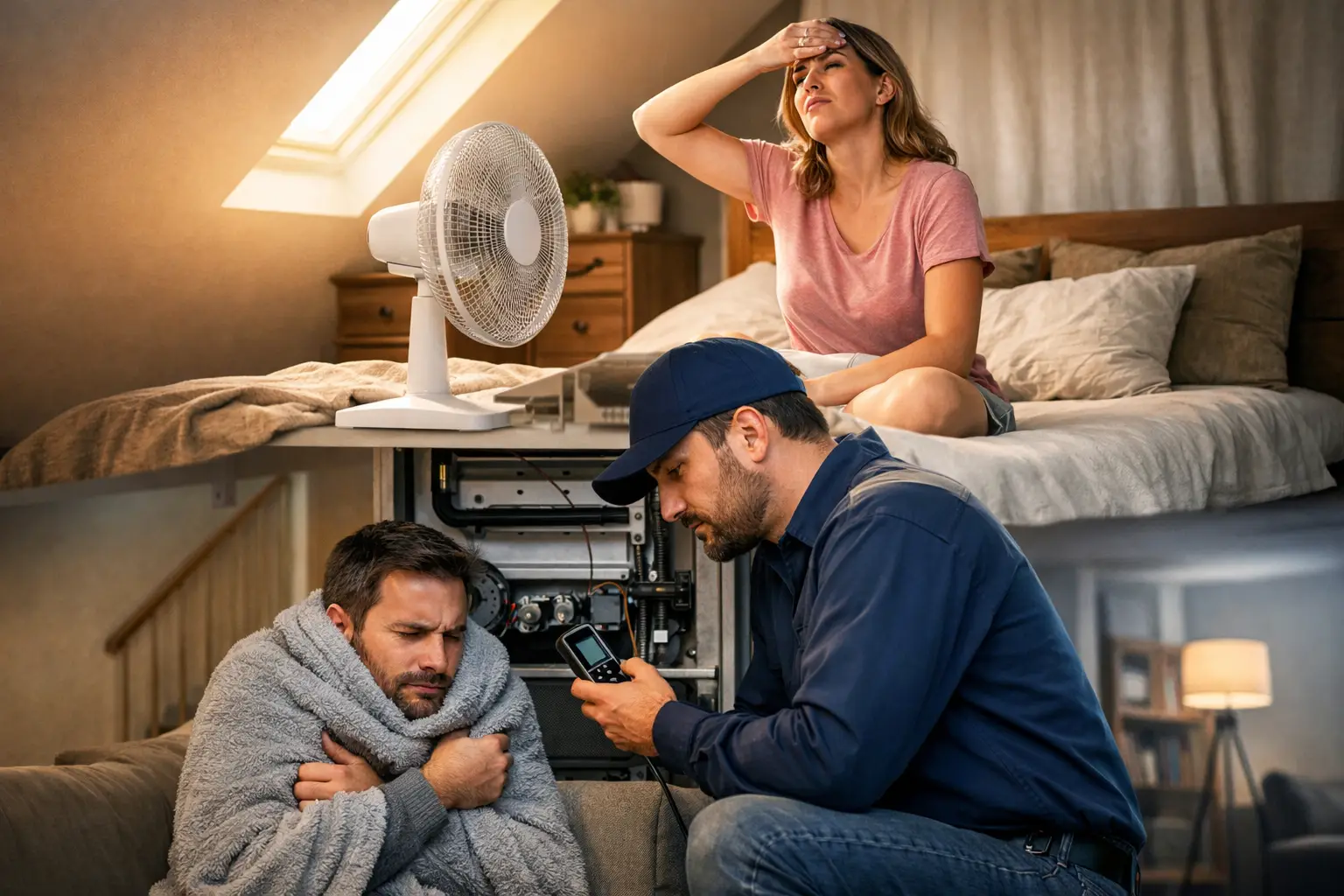
A bedroom that feels stuffy while the living room is cold enough for a sweater is more than a minor annoyance. Uneven cooling can make a home uncomfortable, raise energy use, and put extra strain on an air conditioner that is already working hard through a humid Chicago summer. Knowing how to fix uneven cooling starts with identifying whether the issue is airflow, thermostat control, insulation, ductwork, or the cooling system itself.
Some causes are simple homeowner checks. Others need professional testing to avoid damage, safety concerns, or an expensive repair that does not solve the real problem. The goal is not to force more cold air into one room. It is to restore balanced, reliable comfort throughout the home.
Start With the Rooms That Feel Different
Before adjusting anything, notice the pattern. Is the top floor always warmer than the first floor? Does one room stay hot only in the afternoon? Is the problem limited to a room above a garage, an addition, or a space with large west-facing windows?
Those details point to different causes. A consistently warm upper level may indicate normal heat rise combined with insufficient return airflow or inadequate zoning. A single uncomfortable room may have a closed register, blocked return, leaky duct, poor insulation, or too much sun exposure. If every room feels warmer than usual, the air conditioner may be losing capacity rather than distributing air unevenly.
It also helps to check the temperature at the thermostat and in the problem room after the system has run for at least 20 to 30 minutes. A small difference between rooms can be normal, especially in older Chicago homes. A persistent difference of several degrees deserves a closer look.
How to Fix Uneven Cooling With Basic Checks
A few safe checks can rule out common airflow problems before scheduling service. Start with supply registers and return grilles. Supply registers deliver conditioned air into a room, while returns pull air back to the system to be cooled again.
Make sure supply registers are fully open and not blocked by rugs, furniture, curtains, or storage. Closing vents in unused rooms often seems logical, but it can increase pressure in the duct system and reduce overall performance. Modern systems are designed around a specific amount of airflow, so closing multiple vents can create new comfort problems elsewhere.
Next, look at the return grilles. Keep them clear, especially in hallways, bedrooms, and common areas. A bedroom with its door closed may become warmer if it has a supply vent but no dedicated return path. Opening the door can be a useful test. If the room cools noticeably with the door open, the home may need improved return airflow or a professionally evaluated transfer path.
Check the Air Filter
A clogged filter is one of the most common and preventable reasons for weak or uneven airflow. When the filter is loaded with dust, the blower has to work harder to move air. Rooms farthest from the equipment may receive the least cooling first.
Check the filter according to its type and household conditions. Homes with pets, construction dust, frequent open windows, or high summer use may need more frequent replacement. Use the filter size and rating recommended for your system. A filter that is too restrictive can also reduce airflow, even when it is clean.
Use Ceiling Fans Correctly
Ceiling fans do not lower room temperature, but they help occupants feel cooler by moving air across the skin. In summer, the fan should rotate counterclockwise when viewed from below, creating a downward breeze.
This is particularly helpful in second-floor bedrooms and rooms with high ceilings. Turn fans off when a room is empty, since the benefit is comfort for people, not lower air temperature.
Why One Floor Is Often Warmer Than Another
Multi-level homes naturally present a cooling challenge. Heat rises, upper floors absorb more roof heat, and attic temperatures can become extreme on sunny days. In a two-story home with one thermostat, the main floor may reach the set temperature before the upstairs has had enough cooling time.
A thermostat located near a kitchen, sunny window, supply register, or exterior door can make this worse. It may sense a temperature that does not reflect the conditions in bedrooms or upper-level living areas.
The right solution depends on the home. Sometimes a thermostat adjustment or better airflow resolves the issue. In other homes, zoning, a second thermostat, a ductless unit, attic insulation improvements, or return-air modifications offer a more lasting answer. A qualified technician should evaluate the full system before recommending an upgrade, because adding equipment without correcting airflow can leave the underlying problem in place.
Ductwork Can Be the Hidden Cause
Ducts are out of sight, but they have a major effect on comfort. A disconnected, crushed, undersized, or leaking duct can keep cool air from reaching a particular room. Ducts running through a hot attic, crawl space, or unconditioned area can also gain heat before the air reaches the register.
Signs of a duct-related issue include weak airflow from one vent, rattling noises, dust around registers, rooms that never cool properly, or a sudden change after remodeling work. Older homes may also have duct systems that were not designed for additions, converted attics, or changes in room use.
Duct repairs require more than adding tape to an accessible joint. A proper assessment considers duct sizing, static pressure, insulation, connections, balancing, and the capacity of the blower. Professional testing helps identify where air is being lost and whether the system can deliver the airflow each room needs.
When the Air Conditioner Is the Problem
Uneven cooling is not always a duct issue. If cooling has declined throughout the home, the system may have a maintenance or mechanical problem. Dirty indoor or outdoor coils, a failing blower component, low refrigerant caused by a leak, drainage issues, or an aging system can all reduce cooling performance.
Watch for warning signs such as longer run times, warm air from multiple vents, ice on refrigerant lines or equipment, unusual noises, frequent cycling, water near the indoor unit, or a noticeable increase in utility bills. Turn the system off and request service if you see ice or suspect an electrical issue. Continuing to run it can cause further damage.
Annual air-conditioning maintenance is one of the best ways to catch these issues early. During a thorough tune-up, a technician can inspect electrical components, clean key areas, verify drainage, assess airflow, and identify concerns before a small performance issue becomes a no-cooling call during a heat wave.
Avoid Fixes That Can Make Cooling Worse
Homeowners understandably want fast relief, but a few common approaches can backfire. Avoid closing most of the vents to push air toward a warm room. Do not cover returns or use portable fans to blow directly into return grilles. And do not attempt to adjust refrigerant, wiring, or internal equipment components.
It is also wise to be cautious about replacing an air conditioner solely because one room is uncomfortable. An oversized or poorly matched replacement can short-cycle, leave humidity behind, and still fail to cool distant rooms evenly. The right recommendation should account for the home’s layout, insulation, windows, duct design, equipment condition, and comfort goals.
When to Call for Professional Help
Schedule an HVAC evaluation when simple airflow checks do not improve the problem, when one area is consistently several degrees warmer, or when the system is showing signs of reduced performance. For landlords and property owners, addressing uneven cooling early can also help prevent tenant complaints, moisture concerns, and unnecessary wear on the equipment.
A dependable service visit should include clear explanations of what is causing the imbalance, what repairs or improvements are appropriate, and which options can wait. Shad Heating & Cooling provides careful system evaluations, clean workmanship, and honest upfront pricing so homeowners can make a decision based on the condition of their system rather than pressure.
Comfort should not depend on which room you are standing in. A careful diagnosis can turn a frustrating hot room into a lasting, whole-home solution.
Written by the Shad Heating & Cooling team
Frequently Asked Questions
Why is my upstairs warmer than downstairs in summer?
Heat rises, upper floors receive more roof heat, and a single thermostat may satisfy the lower floor before upstairs rooms cool. Airflow, insulation, and zoning can all affect the solution.
Should I close vents in rooms I do not use?
Usually, no. Closing several vents can restrict airflow and create pressure problems in the duct system. Keep vents open unless an HVAC professional recommends a specific balancing adjustment.
Can a dirty air filter cause uneven cooling?
Yes. A clogged or overly restrictive filter can reduce airflow, often making distant rooms or upper floors less comfortable first.
When is uneven cooling an emergency?
Request prompt service if you see ice on equipment or lines, smell burning, hear alarming electrical noises, find significant water around the unit, or lose cooling during extreme heat.