
Written by the Shad Heating & Cooling team
An air purifier for home allergies can make a noticeable difference when pollen is high, pets shed year-round, or dust seems to return the day after cleaning. But the right unit is not simply the largest machine on the shelf. It needs to match the room, the allergens affecting your household, and the way air moves through your home.
For many Chicago-area homes, allergy symptoms become more frustrating during spring and fall pollen seasons, humid summer months, and winter periods when windows stay closed. A well-chosen purifier can reduce airborne particles in the rooms you use most. It cannot replace cleaning, moisture control, or proper HVAC maintenance, but it can be a useful part of a healthier indoor-air plan.
What an Air Purifier Can Help Remove
Most household allergies are triggered by tiny airborne particles. These can include pollen brought indoors on clothing or through open windows, pet dander, dust-mite particles, mold spores, and fine dust. A quality purifier pulls room air through a filter and captures a portion of those particles before returning cleaner air to the space.
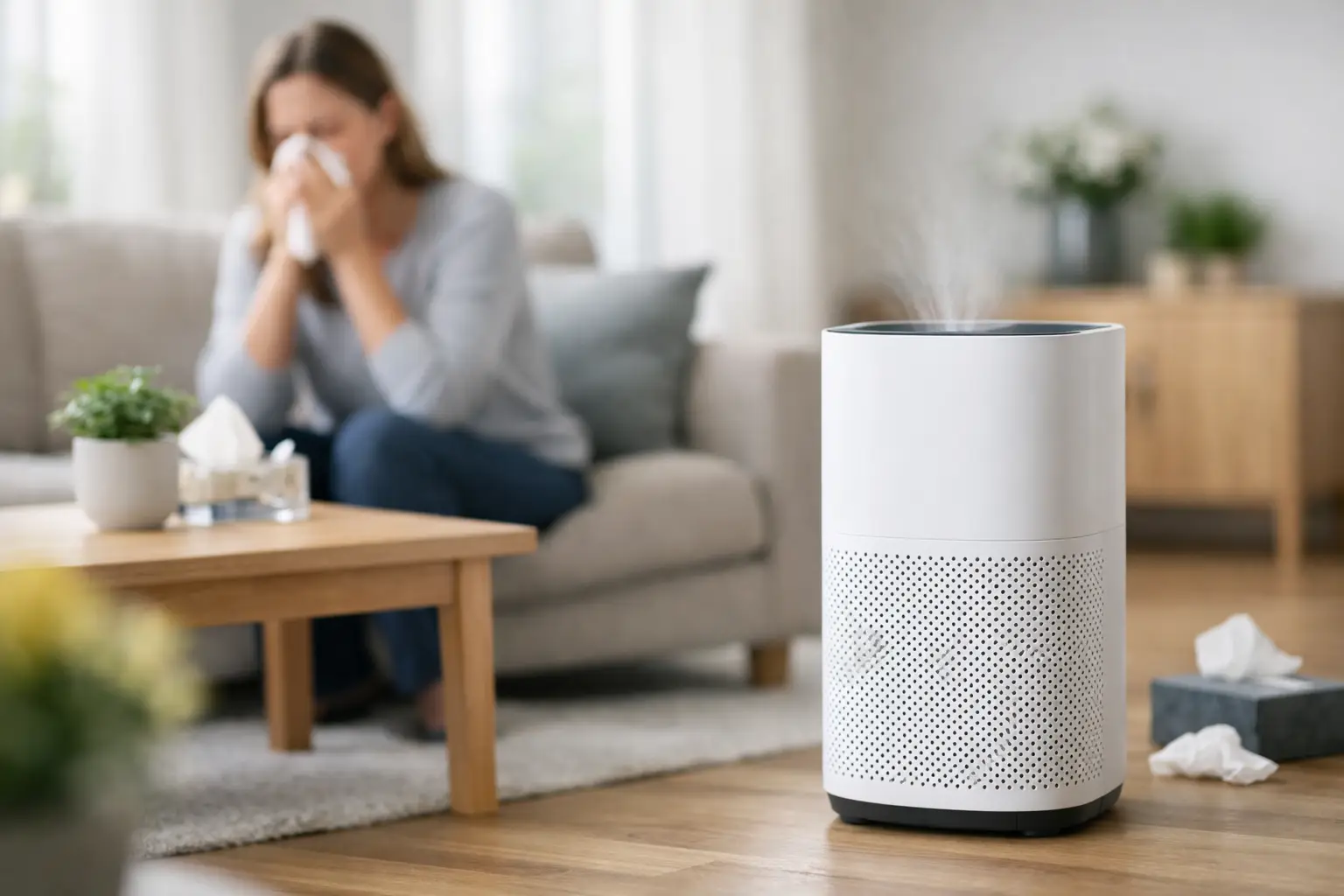
Portable units are usually most effective in a closed bedroom, nursery, home office, or living room. That matters because allergies often interfere with sleep. Running a properly sized purifier in the bedroom overnight can reduce the concentration of airborne particles near where you spend hours breathing.
There are limits. A purifier does not remove allergens already embedded in carpeting, upholstery, bedding, or pet fur. It also will not correct a damp basement, a leaking duct, or a ventilation problem. If mold is actively growing or moisture is persistently high, the source needs to be addressed rather than covered up with more filtration.
How to Choose an Air Purifier for Home Allergies
Start with particle filtration. For allergy relief, look for a unit with a true HEPA filter. HEPA filters are designed to capture very small airborne particles, including common allergy triggers such as pollen, dander, and many mold spores. Be cautious with vague phrases such as “HEPA-type” or “HEPA-style,” which do not necessarily meet the same performance standard.
The purifier also needs enough capacity for the room. Check the manufacturer’s recommended room size and the clean air delivery rate, commonly called CADR. Higher CADR ratings generally mean the unit can clean more air in a given period, but the rating should be evaluated for the type of particles that concern you, especially pollen and dust.
Room-size claims can be optimistic if they assume low ceilings, closed doors, and light use. It is often wise to choose a unit rated for a somewhat larger space than the room where it will operate. A unit working at a moderate fan speed is generally quieter and more practical than a small unit that must run at full speed all day.
Consider Noise, Filter Cost, and Daily Use
An air purifier only helps when people actually run it. In bedrooms and work areas, noise level matters. Review the sound rating at the speed you expect to use most often, not only at the lowest setting. A quiet unit on a medium setting may be more useful than a louder model that gets turned off overnight.
Also check the replacement-filter schedule and availability before buying. A purifier with inexpensive upfront pricing can become less appealing if replacement filters are costly or difficult to find. Filters should be changed on schedule or sooner when the home has multiple pets, heavy outdoor pollution, construction dust, or frequent cooking particles.
Some units include activated carbon. Carbon can help reduce certain odors and gases, which may be useful for cooking smells or pet odors. However, carbon is not a substitute for a HEPA filter when allergies are the main concern. Allergy sufferers should prioritize particle filtration and proper room coverage first.
Portable Purifiers and Whole-Home Filtration Work Differently
A portable purifier treats the air in one room. It is often a practical starting point for a bedroom or another area where symptoms are strongest. It also works independently of the heating and cooling system, which can be useful in homes with radiator heat, window units, or ductless equipment.
Whole-home air filtration works through a forced-air HVAC system. It filters air as the system circulates it through the ductwork, helping improve air quality across multiple rooms. The effectiveness depends on the equipment, duct condition, filter fit, airflow, and how often the system operates.
A higher-efficiency HVAC filter can capture more particles, but more filtration is not always better. Filters that are too restrictive for the system can reduce airflow, strain equipment, and affect comfort. This is why a technician should evaluate filter upgrades rather than assuming the densest filter available is the best choice.
Homes with boilers or other non-forced-air heating systems may benefit more from room-by-room filtration, targeted ventilation improvements, humidity control, or a combination of these measures. The right approach depends on how the home is heated and cooled, where allergens are concentrated, and whether family members have asthma or more severe sensitivities.
Do Not Overlook Humidity and Airflow
Humidity has a direct effect on several indoor allergy concerns. Dust mites and mold tend to thrive when indoor moisture stays too high. During humid Chicago summers, a properly operating air conditioner and a whole-home dehumidifier can help keep indoor humidity in a more comfortable range.
Very dry winter air can create a different problem. It may irritate nasal passages and make allergy symptoms feel worse, even when allergen levels are not especially high. Balanced humidity is more helpful than simply adding or removing moisture without measuring conditions.
Airflow is equally important. Dirty filters, poorly maintained equipment, and duct issues can reduce the amount of air reaching certain rooms. If one bedroom feels stuffy, dusty, or consistently triggers symptoms, the issue may involve more than a portable purifier. A professional indoor-air assessment can identify whether filtration, humidity, duct performance, or ventilation needs attention.
Practical Habits That Make Filtration More Effective
An air purifier performs best when it is part of a routine that reduces allergens at the source. Keep windows closed on high-pollen days when possible, and place the purifier away from walls, curtains, and furniture that could block intake or discharge airflow. Avoid placing it in a corner where it can only circulate a small pocket of air.
Wash bedding regularly, vacuum with appropriate filtration, and groom pets when practical. If pets are allowed in bedrooms, expect to change purifier filters more often. For homes with visible dust shortly after cleaning, inspect HVAC filters and make sure they fit securely without gaps around the frame.
For landlords and property owners, recurring allergy complaints in the same unit deserve a closer look. Moisture intrusion, poor bathroom exhaust, aging filters, or neglected maintenance can affect comfort and tenant satisfaction. Addressing the underlying condition is more reliable than treating each complaint as an isolated issue.
When Professional Guidance Is Worth It
A portable air purifier is often an easy improvement, especially for one room. Professional guidance becomes more valuable when symptoms affect several rooms, the HVAC system has airflow concerns, humidity stays high, or the home has persistent dust and odors.
A qualified HVAC technician can assess the system’s filter capacity, inspect airflow concerns, and discuss whole-home air purification or humidity options without recommending equipment your system does not need. At Shad Heating & Cooling, the goal is to provide clear options, clean workmanship, and recommendations that support lasting comfort.
The best air-quality solution is usually the one that matches the actual problem. A properly sized purifier in the right room, combined with clean filters and controlled humidity, can give allergy sufferers a more comfortable place to rest, work, and breathe.
Frequently Asked Questions
Should I run an air purifier all day for allergies?
Yes, continuous operation on a low or moderate setting is often effective, especially in bedrooms and frequently used rooms. Keep doors and windows closed when possible for best results.
Is a HEPA filter necessary for home allergies?
For pollen, pet dander, dust, and similar particles, a true HEPA filter is a strong choice. It is generally more dependable than filters labeled only as HEPA-type or HEPA-style.
Can an HVAC filter replace a portable air purifier?
Sometimes, but it depends on your system and the rooms affected. Whole-home filtration can help throughout a ducted home, while a portable unit provides targeted cleaning where symptoms are strongest.
Will an air purifier get rid of mold?
It can capture some airborne mold spores, but it will not eliminate active mold growth. Moisture problems and mold sources should be corrected promptly.
A cleaner indoor environment does not have to mean buying the most complicated equipment. Start with the allergens you are dealing with, the rooms where comfort matters most, and an air-quality plan your home can support.