






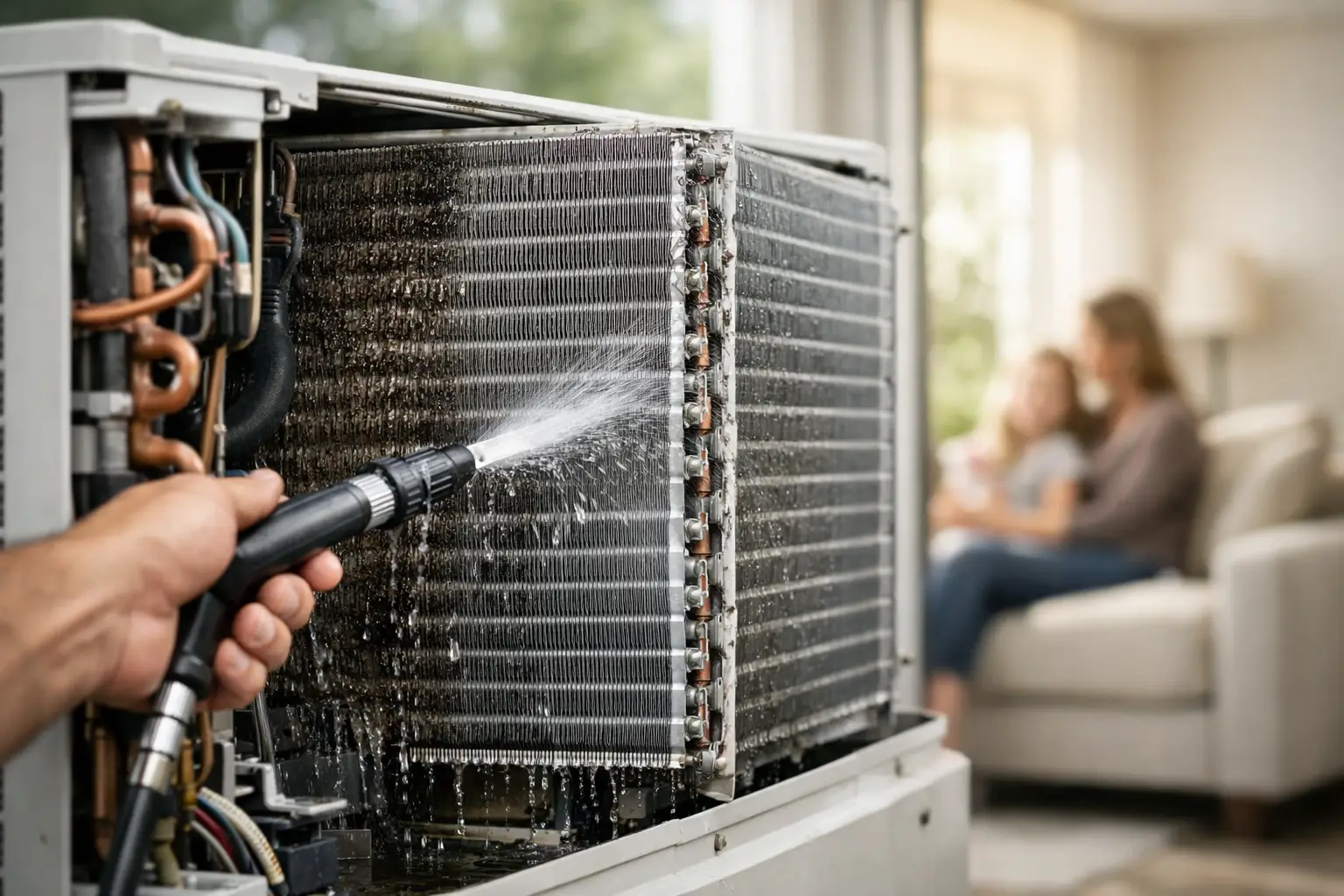
When your AC runs for long stretches but your home still feels sticky, unevenly cooled, or slower to reach the thermostat setting, the problem may be hiding in plain sight. Air conditioner coil cleaning addresses one of the most common sources of lost cooling performance: dirt and buildup on the components that move heat out of your home.
A clean system does not just feel better on a hot Chicago afternoon. It can operate more efficiently, manage indoor humidity more effectively, and avoid unnecessary strain on expensive parts. The key is understanding what coil cleaning does, when it is needed, and why a thorough professional service is different from a quick surface rinse.
Written by the Shad Heating & Cooling team
What Air Conditioner Coils Do
Your central air conditioner relies on two primary coils. The indoor evaporator coil absorbs heat from the air inside your home. The outdoor condenser coil releases that heat outside. Refrigerant carries heat between these components, while the blower, compressor, and fans keep the cooling cycle moving.
Both coils need open airflow and clean heat-transfer surfaces to do their jobs well. When dust, pollen, cottonwood, grass clippings, pet hair, or oily residue coat a coil, they create an insulating layer. The system must then run longer and work harder to remove the same amount of heat.
Indoor coils often collect fine dust and residue that pass through or around an air filter. Outdoor coils are exposed to Chicago’s changing weather, landscaping debris, and airborne pollution. Neither issue is unusual, but both deserve attention before they turn into a comfort or reliability problem.
Signs Your AC Coils May Need Cleaning
A dirty coil is not always obvious from the thermostat. Many homeowners first notice changes in comfort rather than a clear equipment failure. Cooling may feel weaker in upstairs rooms, the air may seem more humid than usual, or the system may run almost continuously during normal summer weather.
Other signs can include higher utility use without a major change in household habits, warm air from supply vents, repeated cycling, water around the indoor unit, or ice forming on refrigerant lines or equipment components. These symptoms do not automatically mean the coils are dirty. Low refrigerant, blower problems, drainage issues, thermostat concerns, duct leakage, and electrical faults can produce similar results.
That is why a professional evaluation matters. A technician should identify the actual cause instead of treating coil cleaning as a catch-all answer. If cleaning is appropriate, it should be explained clearly as part of a complete maintenance or repair recommendation.
Why Dirty Coils Create Bigger Problems
A dirty outdoor condenser coil cannot release heat efficiently. That extra heat can increase pressure in the refrigeration system and make the compressor work harder. Since the compressor is one of the most important components in an air conditioner, reducing avoidable strain is a practical way to support long-term reliability.
A dirty indoor evaporator coil creates a different set of concerns. Restricted heat transfer can leave the coil excessively cold, increasing the risk of icing. Ice restricts airflow further, which can quickly reduce cooling output. As the ice melts, it may also create excess water that challenges the condensate drainage system.
There is an indoor-air-quality consideration as well. Coil surfaces and nearby drain pans operate in cool, damp conditions during the cooling season. Keeping these areas clean helps limit the accumulation of debris that can contribute to unpleasant odors and poor airflow. Cleaning alone is not a substitute for filtration, humidity control, or air-quality improvements, but it is an important part of keeping the cooling system clean and functional.
What Professional Coil Cleaning Should Include
Proper coil service starts with inspection, not chemicals. A qualified technician checks the condition of the indoor and outdoor equipment, airflow, electrical connections, the condensate drain, and visible signs of wear. This broader assessment helps determine whether dirt is the main issue or one part of a larger problem.
For the outdoor unit, service typically includes safely removing accessible debris from around the cabinet and carefully cleaning the condenser coil without damaging its delicate fins. Bent fins, compacted debris, and blocked airflow can all reduce performance. The technician also confirms that the unit has adequate clearance from vegetation and other obstructions.
The indoor evaporator coil may require more involved access because it is housed within or near the air handler or furnace cabinet. A professional can inspect it for buildup, clean it using methods appropriate for the coil and system design, and assess the drain pan and condensate line. The work should be completed carefully, with respect for your home and the equipment.
Good maintenance also includes checking the air filter and discussing replacement intervals. A clean filter does not eliminate the need for coil care, but it helps reduce the dust that reaches the indoor side of the system.
Why a Quick Rinse Is Not Always Enough
Homeowners sometimes see dirt on the outdoor unit and assume a garden hose will solve the problem. Light rinsing can remove loose surface debris in some situations, but it does not replace an inspection or address buildup inside the equipment. High water pressure can bend coil fins, force debris deeper into the coil, or damage surrounding components.
The indoor coil is even less suitable for casual cleaning. It may be difficult to access, and incorrect cleaning methods can damage the coil, create drainage problems, or leave residue behind. Refrigerant lines and electrical components should also be handled by trained HVAC professionals.
There is a trade-off to consider. Not every system needs aggressive cleaning every year, and unnecessary chemical use is not good maintenance. The right approach depends on coil condition, filter habits, pets, landscaping, local debris, system age, and how hard the equipment runs. A thorough inspection supports a recommendation based on your system rather than a one-size-fits-all service.
When to Schedule Air Conditioner Coil Cleaning
For many homes, coil inspection fits naturally into annual AC maintenance before or during the cooling season. This gives a technician the opportunity to find restricted airflow, drainage concerns, worn electrical parts, and early performance issues before a heat wave puts the system under maximum demand.
Some properties may need closer attention. Homes with multiple pets, nearby construction, heavy tree or cottonwood exposure, indoor smoking, or high dust levels can experience faster buildup. Rental and light commercial properties may also benefit from a consistent maintenance schedule because equipment use is often heavier and comfort complaints affect more people.
If you are already calling for a repair because the AC is not cooling, it makes sense to ask whether coil condition is contributing to the issue. A trustworthy technician should explain what was found, show you relevant evidence when practical, and separate necessary work from optional improvements. Clear recommendations and upfront communication protect you from paying for work that does not address the underlying problem.
Simple Habits That Help Keep Coils Cleaner
You do not need to service the coils yourself to support better AC performance. Start with the filter. Check it regularly during cooling season and replace it according to its condition, your system’s requirements, and household factors such as pets or allergies. A filter that is visibly loaded with dust should not be left in place simply because a calendar date has not arrived.
Keep the area around the outdoor unit reasonably clear of leaves, tall grass, stored items, and dense shrubs. This supports airflow and makes professional inspections easier. Indoors, pay attention to recurring musty odors, unexplained water near the furnace or air handler, and changes in cooling consistency. Reporting these details helps a technician diagnose the problem faster.
A well-maintained air conditioner is less likely to surprise you when summer humidity arrives. If your system is running harder than it should, a careful inspection can turn a frustrating comfort problem into a clear, practical plan for reliable cooling.
Frequently Asked Questions
How often should air conditioner coils be cleaned?
Coils should be inspected during annual AC maintenance. Cleaning frequency depends on the amount of buildup, local debris, filter condition, pets, and how heavily the system operates.
Can dirty coils cause my AC to freeze up?
Yes. A dirty indoor coil can restrict heat transfer and airflow, contributing to conditions that allow ice to form. Other issues can cause freezing too, so professional diagnosis is recommended.
Will coil cleaning lower my energy bills?
If dirty coils are making your system work harder, cleaning can improve efficiency and reduce unnecessary runtime. Actual savings depend on the system’s condition and other factors affecting performance.
Is coil cleaning included in AC maintenance?
A maintenance visit typically includes coil inspection. If significant cleaning is needed, the technician should explain the condition and recommended service before proceeding.