
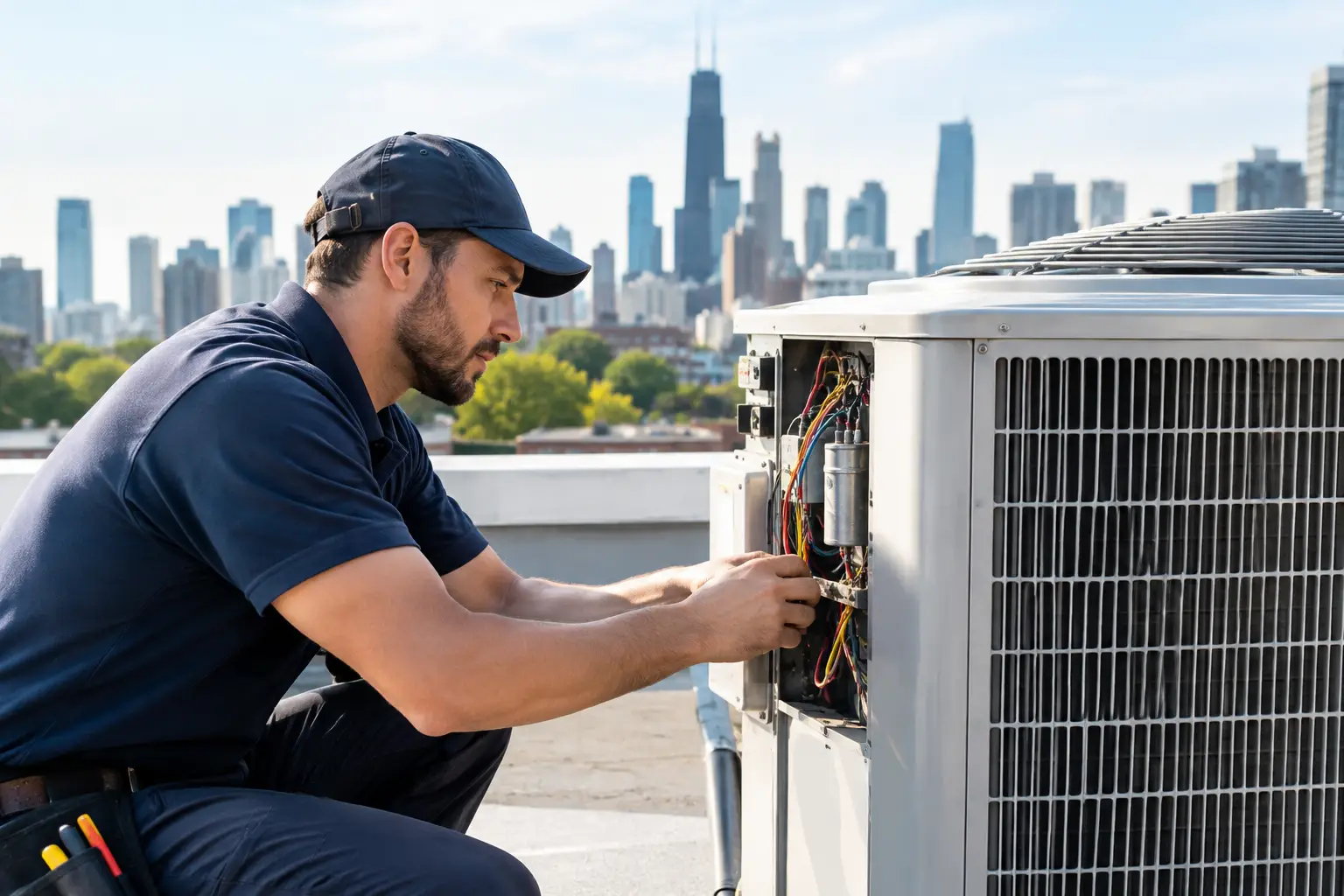
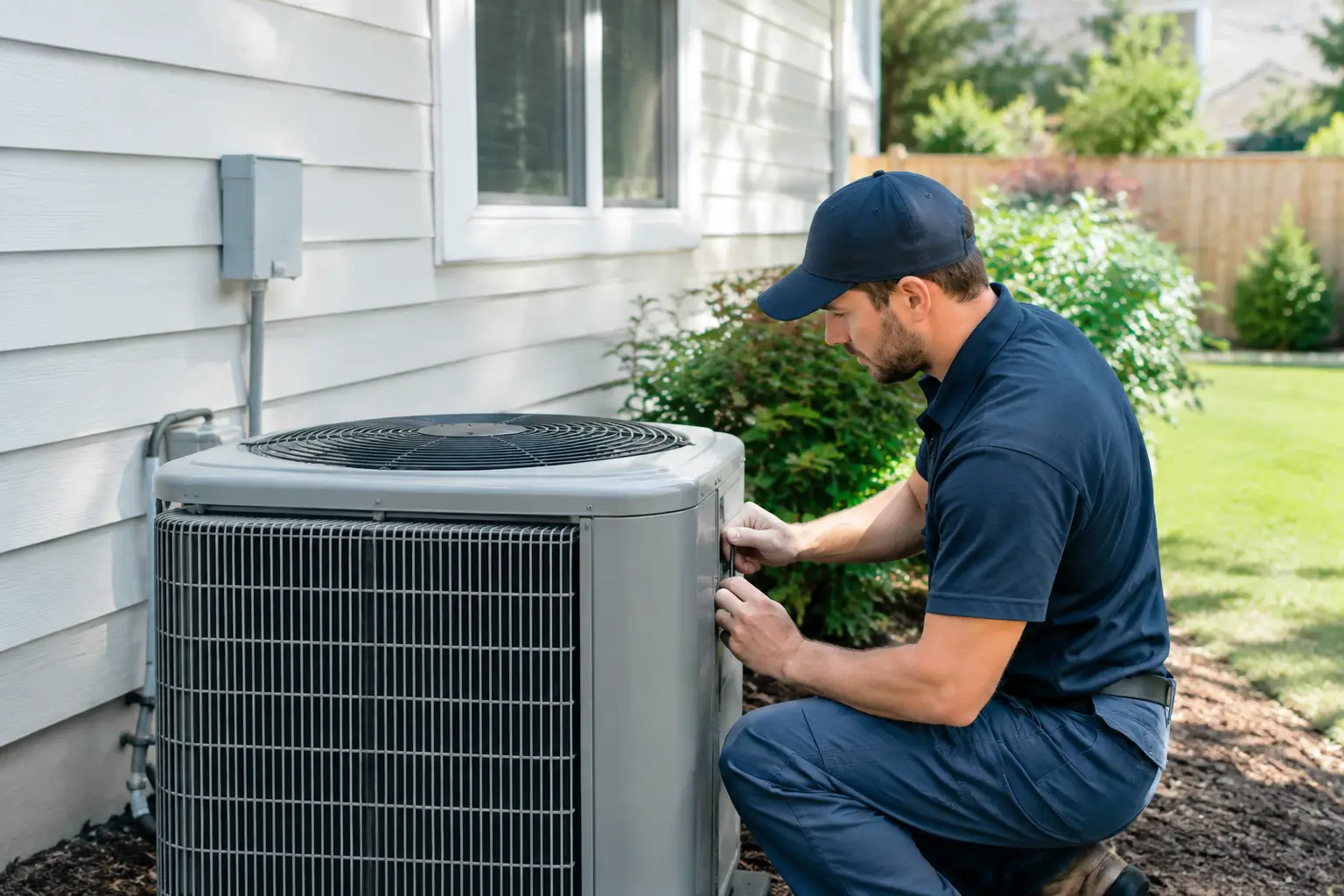

A warm Chicago afternoon can turn stressful quickly when your air conditioner hums but does not cool, blows warm air, or will not start at all. AC compressor replacement or AC capacitor replacement may both come up during diagnosis, but these are very different repairs with different causes, costs, and long-term implications. A careful inspection matters because replacing the wrong part wastes money and may leave the actual problem unresolved.
The compressor and capacitor work together, but they do not do the same job. One is the central pumping component of the cooling system. The other is an electrical part that helps the system start and run. Understanding the difference can help homeowners, landlords, and business owners make an informed decision when the AC stops keeping up.
What the Compressor and Capacitor Do
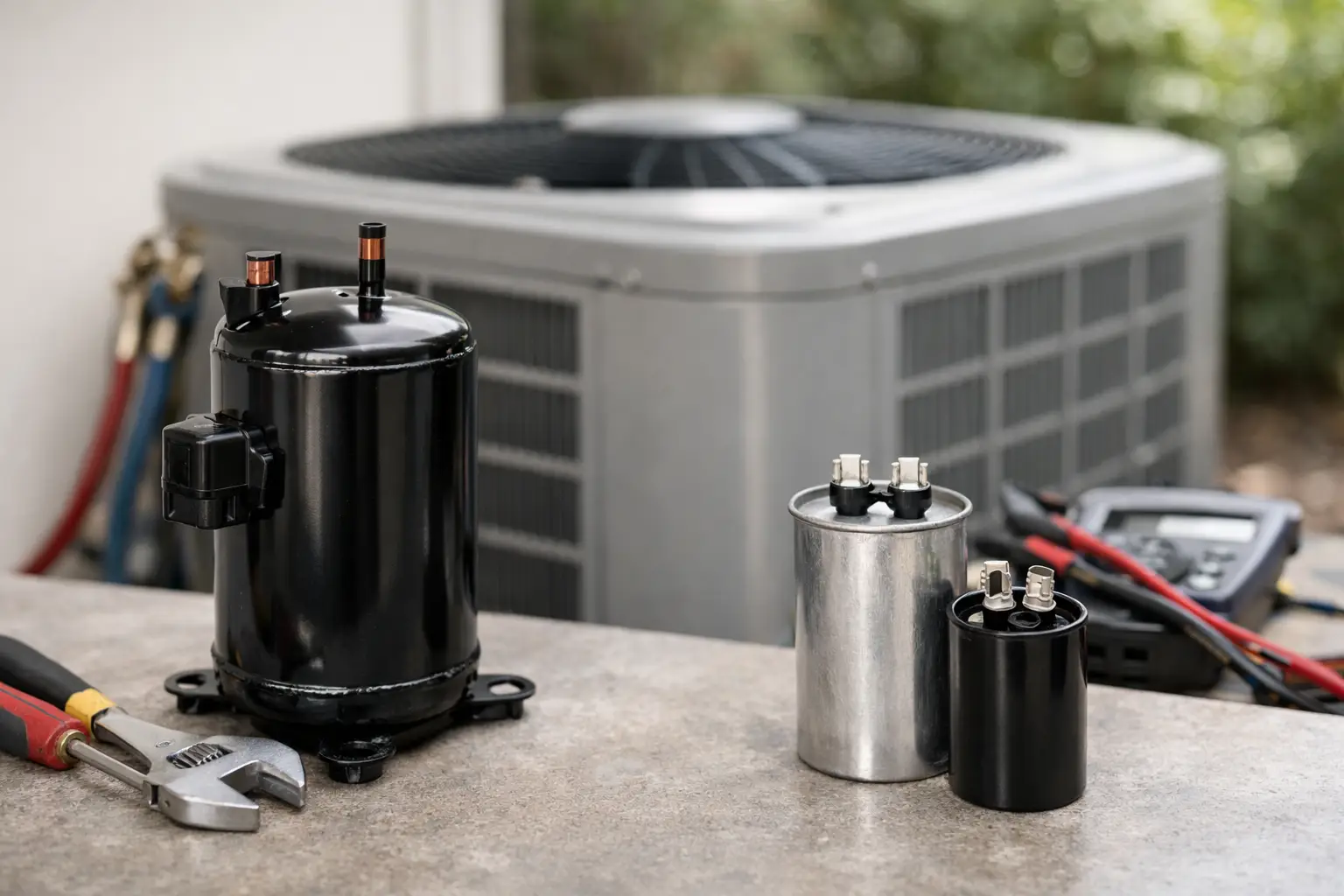
The compressor is often described as the heart of an air-conditioning system. Located in the outdoor unit, it pressurizes refrigerant and moves it through the system so heat can be removed from your indoor air. When the compressor cannot operate correctly, the entire cooling cycle is affected.
A capacitor is a smaller electrical component, also commonly located in the outdoor unit. It stores and releases electrical energy to give the compressor and fan motor the extra boost they need to start and continue running. Many systems use a dual-run capacitor that supports both the compressor and the condenser fan.
Because both parts are in the outdoor unit, the symptoms can overlap. For example, an AC system that will not start could have a failed capacitor, a compressor problem, a damaged contactor, a wiring issue, or a safety switch preventing operation. This is why a technician should test the system rather than rely on symptoms alone.
Signs You May Need AC Capacitor Replacement
Capacitors wear over time, particularly when an air conditioner works hard through humid weather. Heat, electrical fluctuations, age, and frequent cycling can shorten their service life. A capacitor failure is generally a repairable issue, but it should be addressed promptly so other components are not forced to work harder than they should.
Common warning signs include a clicking or humming outdoor unit that does not fully start, an AC system that starts and stops repeatedly, or a condenser fan that does not run properly. You may also notice that the thermostat calls for cooling but warm air continues to come from the vents.
A failing capacitor can sometimes allow the system to run inconsistently before it fails completely. That does not mean it is safe to wait. Continued operation can put unnecessary strain on the compressor and fan motor. Shutting the system down and arranging professional service is often the better way to protect the equipment.
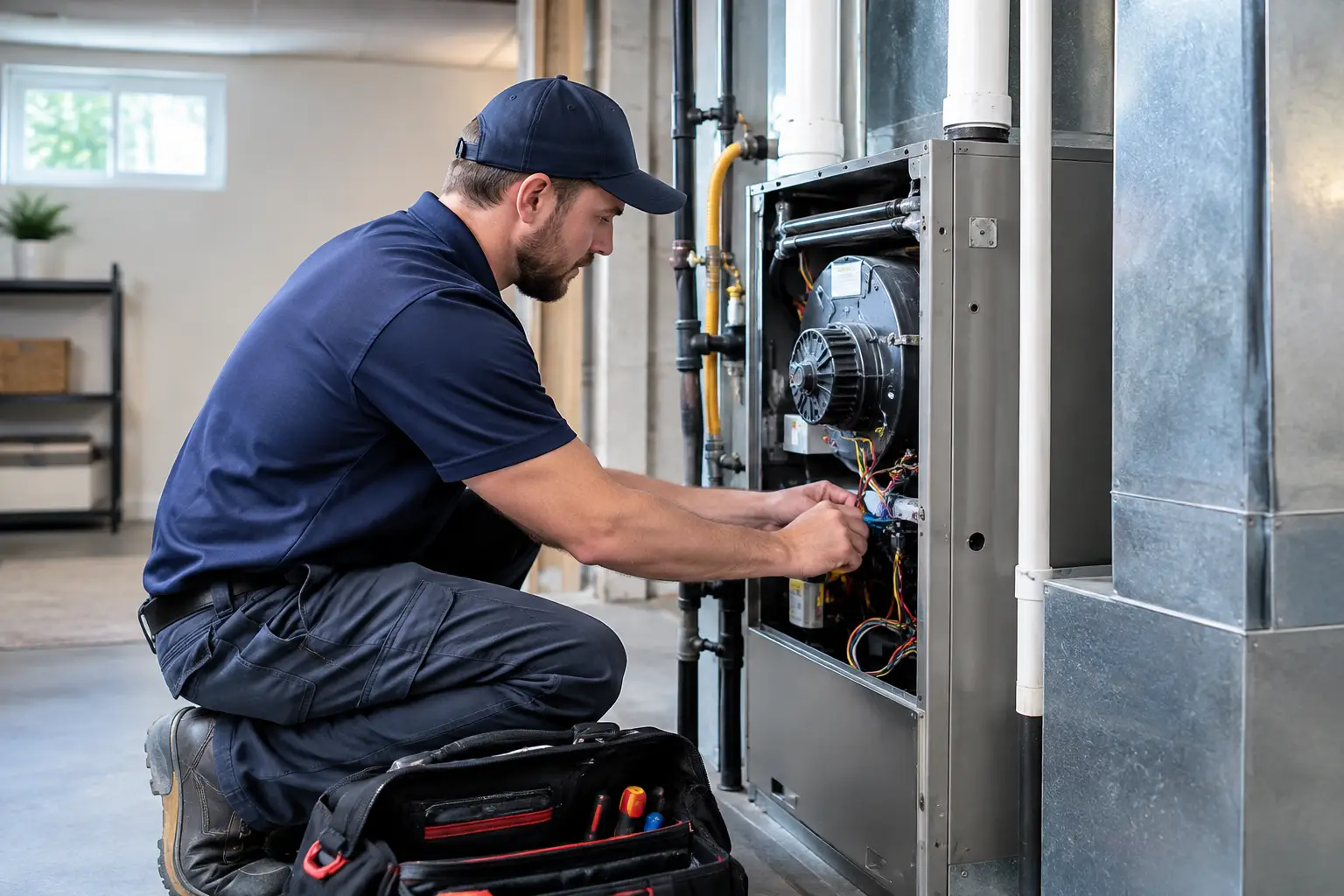
Capacitors involve high-voltage electricity even after power is switched off. They are not a safe homeowner repair. A licensed HVAC professional can confirm the correct electrical rating, inspect related components, and replace the part safely.
When AC Compressor Replacement Becomes the Better Option
A compressor problem is more significant. Since the compressor circulates refrigerant, a failure can leave the system unable to cool at all. Replacement may be considered when the compressor has electrical damage, mechanical wear, internal failure, or damage related to a refrigerant issue.
Possible signs include poor or no cooling, loud grinding or rattling from the outdoor unit, a breaker that trips when the system starts, or an outdoor unit that runs but does not produce cold air indoors. However, those signs are not a diagnosis by themselves. Similar symptoms can result from a failed capacitor, dirty coils, electrical problems, a refrigerant leak, or an airflow issue.
Before recommending compressor replacement, a qualified technician should evaluate electrical readings, refrigerant performance, system condition, and the cause of the failure. That last step is essential. If a compressor failed because of a leak, contaminated refrigerant, a damaged electrical component, or poor maintenance, simply replacing the compressor without correcting the underlying issue can create another costly failure.
Compressor replacement also requires specialized handling of refrigerant and electrical components. It is not a quick swap, and it should never be treated as one. Proper installation includes system cleanup, testing, and verification that the equipment is operating within manufacturer specifications.
AC Compressor Replacement vs. AC Capacitor Replacement
The practical difference comes down to scope. A capacitor is a relatively small electrical component that can often be replaced when testing confirms it is weak or failed. A compressor is a major mechanical component at the center of the refrigeration cycle, and its replacement involves more extensive labor, refrigerant work, and system evaluation.
That difference affects the decision-making process. If the capacitor has failed but the compressor is healthy, capacitor replacement is the sensible repair. If the compressor is damaged, the next question is whether replacing it provides reliable value compared with replacing the full air-conditioning system.
System age, overall condition, repair history, efficiency, and available warranty coverage all matter. A newer system in good condition may be a strong candidate for compressor replacement. On an older unit with recurring repairs, declining efficiency, or other worn components, a full replacement may offer more dependable comfort and fewer surprises over the next several years.
There is no one-size-fits-all answer. The right recommendation should be based on measured system performance, not pressure or guesswork.
Why Accurate Diagnosis Protects Your Home and Budget
Air-conditioning failures can feel urgent, especially during a heat wave or when tenants, customers, children, or older family members depend on a comfortable indoor environment. Still, a rushed diagnosis can lead to unnecessary work.
A thorough service visit should include an inspection of the outdoor and indoor equipment, electrical components, airflow, thermostat operation, and visible signs of refrigerant or drainage issues. The technician should explain what failed, why it likely failed, and what options are available before work begins.
For property owners with multiple units, accurate diagnosis is also a maintenance advantage. Replacing a capacitor when needed and correcting electrical issues early can help prevent a smaller problem from contributing to motor or compressor damage. Keeping service records also makes it easier to identify recurring concerns and plan future equipment decisions responsibly.
Shad Heating & Cooling approaches these calls with clear explanations, honest upfront pricing, and attention to the condition of the entire system. The goal is not to sell the biggest repair. It is to restore reliable comfort with work that supports lasting performance.
Steps to Take When Your AC Stops Cooling
Start by checking that the thermostat is set to cool and that the air filter is not severely clogged. If the system is not running, is making unusual noises, or is tripping a breaker, turn it off rather than repeatedly trying to restart it. Repeated starts can add stress to electrical and mechanical components.
Then schedule a professional evaluation. Be ready to describe what you noticed, including whether the system was blowing warm air, making noise, cycling on and off, or failing after a storm or power interruption. Those details can help speed up diagnosis, but testing is what confirms whether the issue is a capacitor, compressor, or another part of the system.
Regular maintenance remains one of the best ways to reduce unexpected breakdowns. Seasonal tune-ups can identify weakening capacitors, loose electrical connections, dirty coils, drainage problems, and airflow restrictions before they become an emergency on the hottest day of the year.
FAQ
Can a bad capacitor damage an AC compressor?
It can. A weak or failed capacitor may prevent the compressor from starting correctly or cause hard starts, which can increase strain over time. Prompt professional repair helps protect the system.
How can I tell whether my compressor or capacitor is bad?
The symptoms often overlap. Electrical testing and a full system inspection are needed to identify the failed component accurately.
Is compressor replacement always better than replacing the AC unit?
No. It depends on the unit’s age, condition, efficiency, repair history, and the reason the compressor failed. A technician can explain both options clearly.
Should I keep running my AC if it hums but will not start?
No. Turn the system off and arrange service. Protecting the equipment now can help avoid a larger repair later.