
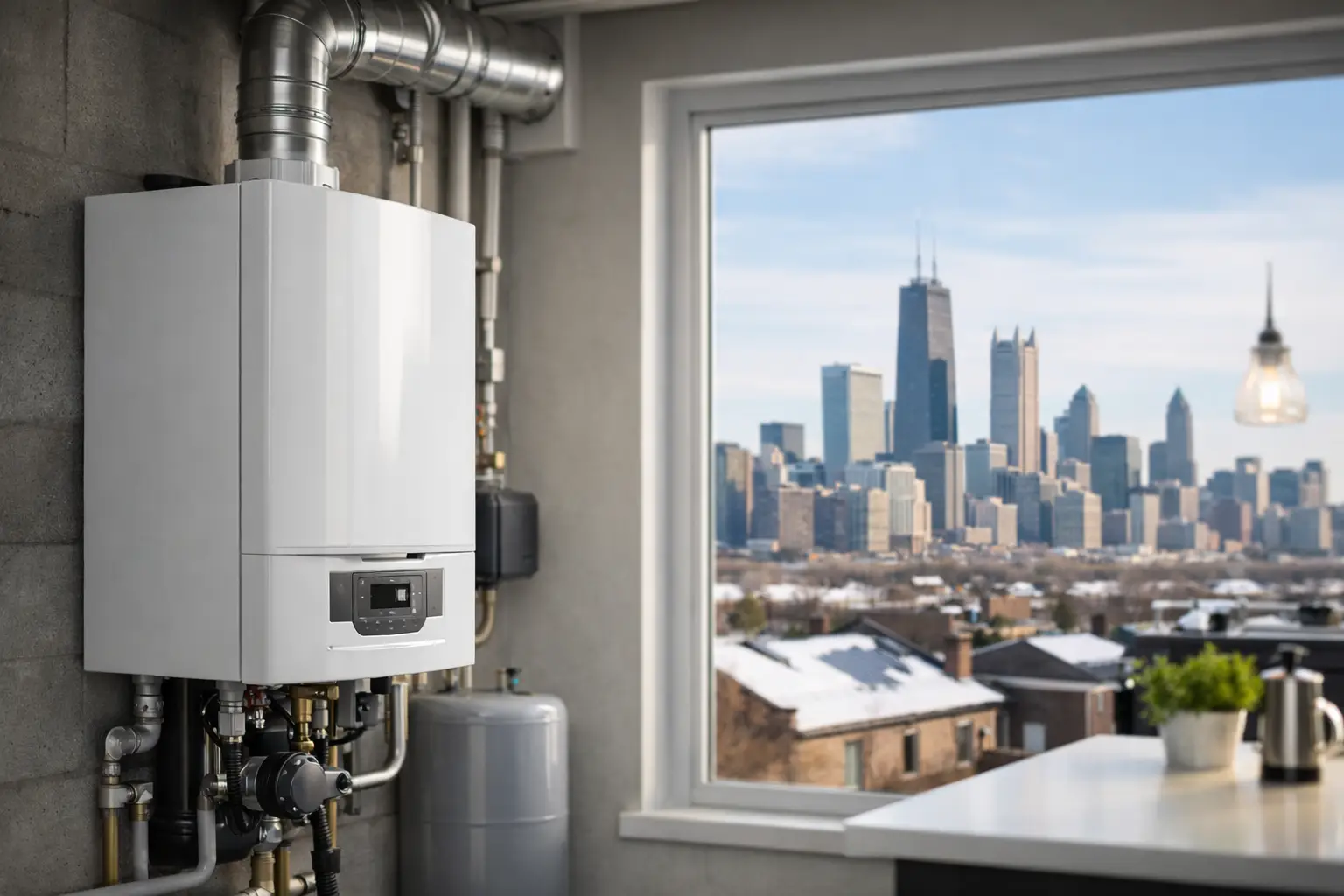
A Chicago winter can expose every weakness in a heating system. If certain rooms stay cold, the boiler runs for long stretches, or utility bills climb without a clear reason, the issue may be more than an aging thermostat. Energy efficient boilers reduce wasted fuel while providing steadier, more dependable heat – but the best results come from selecting and installing the right system for the building.
For homeowners, landlords, and small-business owners, boiler efficiency is not just about a label or a single feature. It involves the boiler itself, the building’s heat loss, the piping and radiators, controls, water quality, and regular maintenance. A thoughtful plan protects comfort now and helps avoid costly surprises later.
What Makes a Boiler Energy Efficient?
A boiler creates heat by burning fuel and transferring that heat into water. The heated water then moves through radiators, baseboards, or radiant-floor tubing before returning to the boiler to be reheated. Every step creates an opportunity for heat to be delivered efficiently or lost unnecessarily.
High-efficiency boilers are designed to capture more heat from the combustion process than older conventional equipment. Many use sealed combustion, variable-capacity operation, and advanced controls to closely match heat output to the building’s actual demand. Instead of repeatedly firing at full output, a properly matched unit can adjust its operation during milder weather and maintain more even indoor temperatures.
Efficiency ratings are useful for comparing equipment, but they are not a promise of identical savings in every property. A larger, older home with drafty windows and uninsulated piping will use heat differently than a well-insulated condo or a renovated two-flat. The boiler must be evaluated as part of the complete heating system.
Choosing Energy Efficient Boilers for Your Property
The right boiler depends on how the building is heated, how much heat it loses, and whether the existing distribution system is in good condition. This is especially important in Chicago-area homes, where long cold spells place real demand on boilers and radiators.
Start with proper sizing
An oversized boiler can short-cycle, meaning it turns on and off too frequently. That cycling can waste fuel, increase wear on components, and make temperatures less consistent. An undersized boiler may struggle during the coldest weather and leave occupants uncomfortable.
A professional assessment should consider the building’s layout, insulation levels, window condition, pipe configuration, number of zones, and heating emitters. Replacing a boiler with the same capacity as the old unit is not always the right answer. Older systems were often oversized, and improvements to insulation or windows may have changed the building’s heating needs.
Match the boiler to the distribution system
Not all hydronic systems operate at the same water temperature. Traditional cast-iron radiators, fin-tube baseboards, radiant floors, and steam systems have different requirements. A high-efficiency condensing boiler often performs best when it can operate with lower return-water temperatures, allowing it to recover additional heat that would otherwise leave through the venting system.
That does not mean every older radiator system should be replaced. In many properties, existing radiators can work very well with a modern boiler when the equipment is properly sized and the controls are set up correctly. Steam systems require especially careful evaluation because their piping, venting, and operating characteristics differ from hot-water systems.
Consider controls, not just equipment
A new boiler cannot correct every comfort problem on its own. Smart controls, outdoor-reset controls, zoning, and properly located thermostats can help the system respond more accurately to changing conditions. Outdoor reset adjusts water temperature based on the weather, reducing unnecessary fuel use during milder days.
For a multifamily property or a small commercial space, zoning can also prevent one area from being overheated simply because another area needs more warmth. The best control strategy depends on the layout, occupancy patterns, and existing piping. More controls are not automatically better if they are poorly designed or difficult for occupants to use.
Installation Quality Has a Direct Effect on Efficiency
A boiler can be highly rated on paper and still underperform if installation details are overlooked. Correct piping, venting, combustion setup, condensate management, electrical connections, and safety controls all matter. Clean, organized workmanship also makes future service safer and easier.
Before a replacement, a qualified technician should inspect the current boiler room, distribution piping, circulators, expansion tank, vents, flue or venting path, and any signs of leaks or corrosion. Water quality deserves attention as well. Dirty system water or internal debris can restrict flow, reduce heat transfer, and shorten the life of pumps and heat exchangers.
A reliable installation should include a clear explanation of what is being replaced, what supporting repairs are needed, and why those recommendations affect performance. Transparent upfront pricing and documented scope help property owners make informed decisions without pressure.
Signs Your Existing Boiler May Be Wasting Energy
A high utility bill does not automatically mean a boiler replacement is necessary. Sometimes the solution is maintenance, a control adjustment, air removal, or a repair to a failing component. Still, several patterns can indicate that the system deserves a closer look:
- The boiler runs frequently but rooms heat unevenly.
- Heating bills rise while usage habits remain about the same.
- The system needs repeated repairs or has recurring leaks.
- Some radiators stay cold, make persistent noise, or heat slowly.
- The boiler is near the end of its expected service life and parts are becoming difficult to source.
These symptoms can overlap with circulation issues, thermostat problems, poor insulation, or aging radiators. A complete evaluation helps separate a repairable issue from a replacement decision. This protects you from spending money on a temporary fix when a larger problem is developing, or replacing equipment that still has useful life left.
Maintenance Keeps Efficiency From Slipping
Even energy efficient boilers need regular professional maintenance. Over time, combustion settings can drift, components can wear, vents can become obstructed, and system water can create problems inside the equipment. Small issues that are caught early are generally easier to correct than a no-heat emergency in the middle of winter.
Annual boiler service typically includes inspecting safety controls, checking combustion performance, examining venting, looking for leaks, verifying pressure and circulation, and confirming that the system is operating as intended. The exact service needs depend on the equipment type and the building’s system design.
Property owners should also pay attention to changes between appointments. New banging sounds, water around the boiler, unusual odors, error messages, or a noticeable drop in comfort are reasons to request service promptly. Gas-fired heating equipment should always be serviced by qualified professionals, particularly when combustion or venting is involved.
When Replacement Is the Better Long-Term Choice
Repair is often the sensible first option when a boiler has a contained problem and the rest of the system is in sound condition. Replacement becomes more compelling when repairs are recurring, reliability is declining, efficiency is poor, or a major component failure would require a large investment in aging equipment.
The decision should account for more than the immediate repair. Consider the boiler’s age, repair history, expected remaining life, fuel use, comfort complaints, and whether planned property improvements may change heating needs. For landlords and business owners, downtime, tenant comfort, and predictable operating costs also matter.
A careful recommendation should explain the trade-offs plainly. The least expensive option today is not always the lowest-cost option over the next several winters. At the same time, the most advanced boiler is not automatically the best fit for every older building.
Shad Heating & Cooling evaluates boilers with the full system in mind, focusing on safe operation, clean installation, and dependable comfort rather than unnecessary upgrades. A professional assessment gives you a clear starting point, whether the right next step is maintenance, targeted repair, or a planned replacement.
Reliable heat begins with informed decisions made before the next severe cold snap. Addressing efficiency concerns early gives you more time to compare options, plan the work, and choose a solution that fits your property.
Written by the Shad Heating & Cooling team
Frequently Asked Questions
Are high-efficiency boilers worth it in older homes?
They can be, especially when the boiler is properly sized and matched to the existing radiators or piping. An assessment is needed to confirm the expected performance benefits.
Can boiler maintenance lower heating costs?
Regular maintenance can help the boiler operate closer to its intended efficiency by identifying combustion, circulation, control, and water-quality issues early.
How often should a boiler be serviced?
Most residential and light commercial boilers benefit from professional service once a year, ideally before the heating season begins.
Does a new boiler fix cold radiators?
Not always. Cold radiators may result from air, circulation problems, control issues, or piping concerns. A technician should diagnose the full system before recommending replacement.